From its humble beginnings, the Swedish company Thule has grown into a massive global brand and is recognized as a leader in gear and accessories that support active lifestyles. Founded in 1942 with a fishing trap as its first product, Thule expanded into other markets with ski, surf, and bike racks to help people transport their toys more easily. Over the years, the brand’s product lineup has grown to include strollers, luggage, rooftop tents, and much more, and is arguably one of the most recognizable outdoor brands in the world.
My experience with Thule began as a youngster in the early 1990s. I spent a significant part of my childhood in the town of Seymour, CT, which is, coincidentally, also where Thule’s U.S. Headquarters are located. It was one of the biggest buildings in the town’s industrial park, and, despite being relatively new to cycling at that time, I recognized the name from the roof bike rack on my dad’s car. Years later, I’d pass it on long road rides, wondering what the heck they did in there, but also why a large, global brand like Thule chose a relatively small town like Seymour for its U.S. HQ.
I didn’t know it at the time, but decades later, I’d ultimately end up working in outdoor media, testing, reviewing, and writing about Thule’s bike racks and other cycling-related products. Then, a few months ago, everything came full circle when I was invited to attend the “Thule Experience.” This trip included a sneak peek of Thule’s Spring 2026 products as well as a tour of the massive facility and Test Center in Hillerstorp, Sweden. Twelve-year-old me would have been really jealous.
Thule’s Hillerstorp Facility
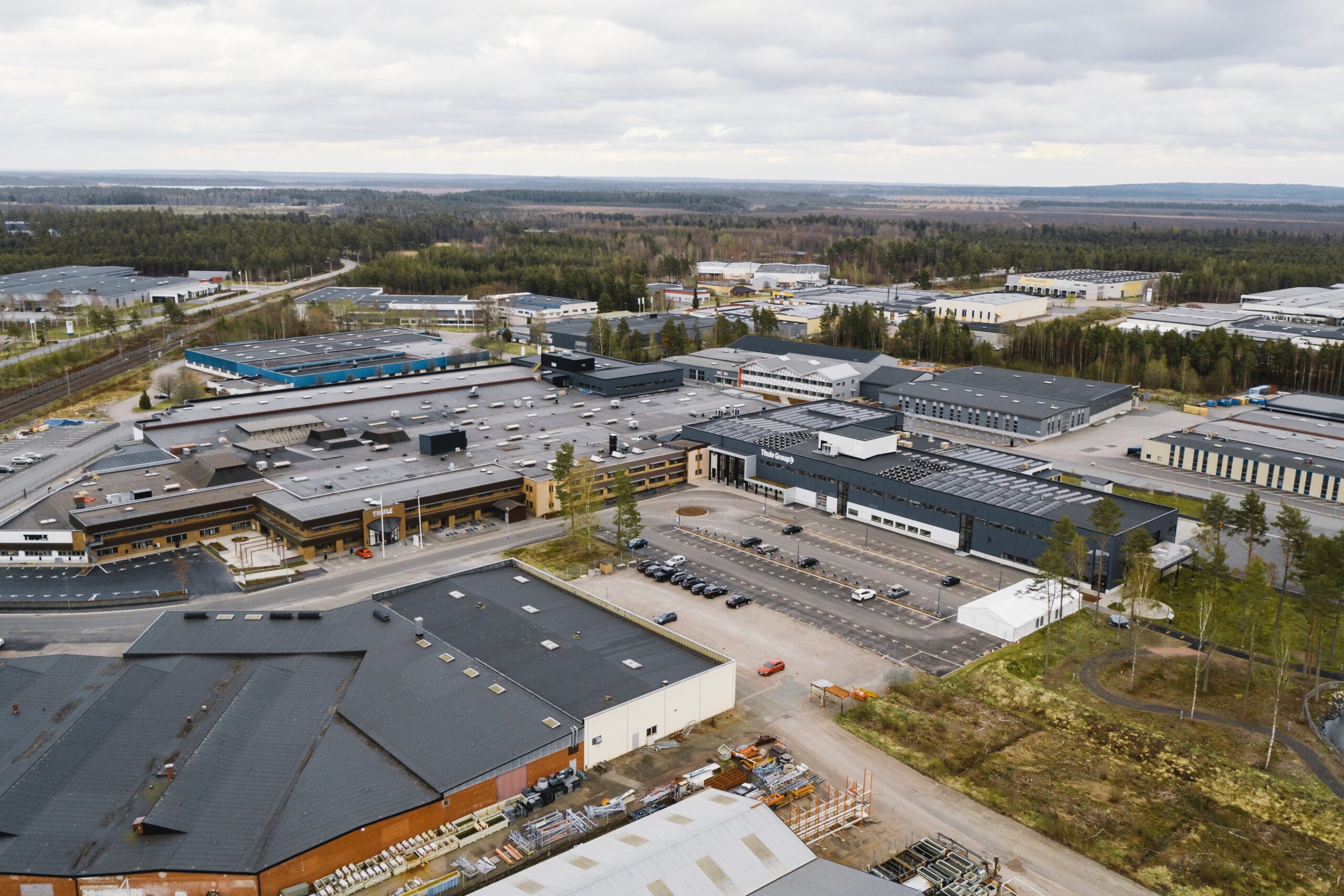
Thule has numerous production facilities around the world, including at the U.S. HQ in Seymour, CT, where many of the bike racks are manufactured. The Hillerstorp facility, however, could be considered the beating heart of the brand. Hillerstorp is where Thule was founded in 1942, and remains the site of the brand’s primary design, research and development, roof rack production, and testing. It has grown significantly over the years, of course, and is now a sprawling facility, or “campus,” if you will. In Hillerstorp, many Thule products go from an idea to a packaged product — with many, many steps in between — in the same facility. Perhaps most notably, it’s the home of the brand’s state-of-the-art Test Center, which I learned is one of Thule’s favorite things.
It was really quite eye-opening and very impressive to see Thule’s Hillerstorp operation. Our tour took us through every step in the process, meeting with designers, engineers, prototyping, tooling, stamping, assembly (human and robotic), textiles, technology, packaging, and perhaps most importantly, crash and durability testing. It was like being in an episode of How It’s Made instead of watching it on TV.

With the teams working together without the need for outside design, prototyping, manufacturing, or testing, Thule ensures it has total control over every step in the process. Through the entire tour, the influence of Scandinavian culture was apparent not only in the process but in the design, practicality, durability, style, and commitment to safety in everything Thule makes.
Unfortunately, Thule did not allow me to take any pictures during the tour. With new designs, prototypes, and unreleased products out in the open as well as proprietary technologies, processes, and testing apparatuses, the brand clearly wants to keep its secrets secret. Other than the photo I took of the building’s exterior, all the other images have been provided by Thule.
Designovation

Hillerstorp is where the majority of Thule’s R&D, design, and engineering takes place, with the team always striving to create innovative new products that align with the brand’s “bring your life” motto. They referred to this process as “designovation.” But even with a fun play on words, new products don’t get made overnight. The design team told us it typically takes about 3 years to go from a concept to a finished product on store shelves.
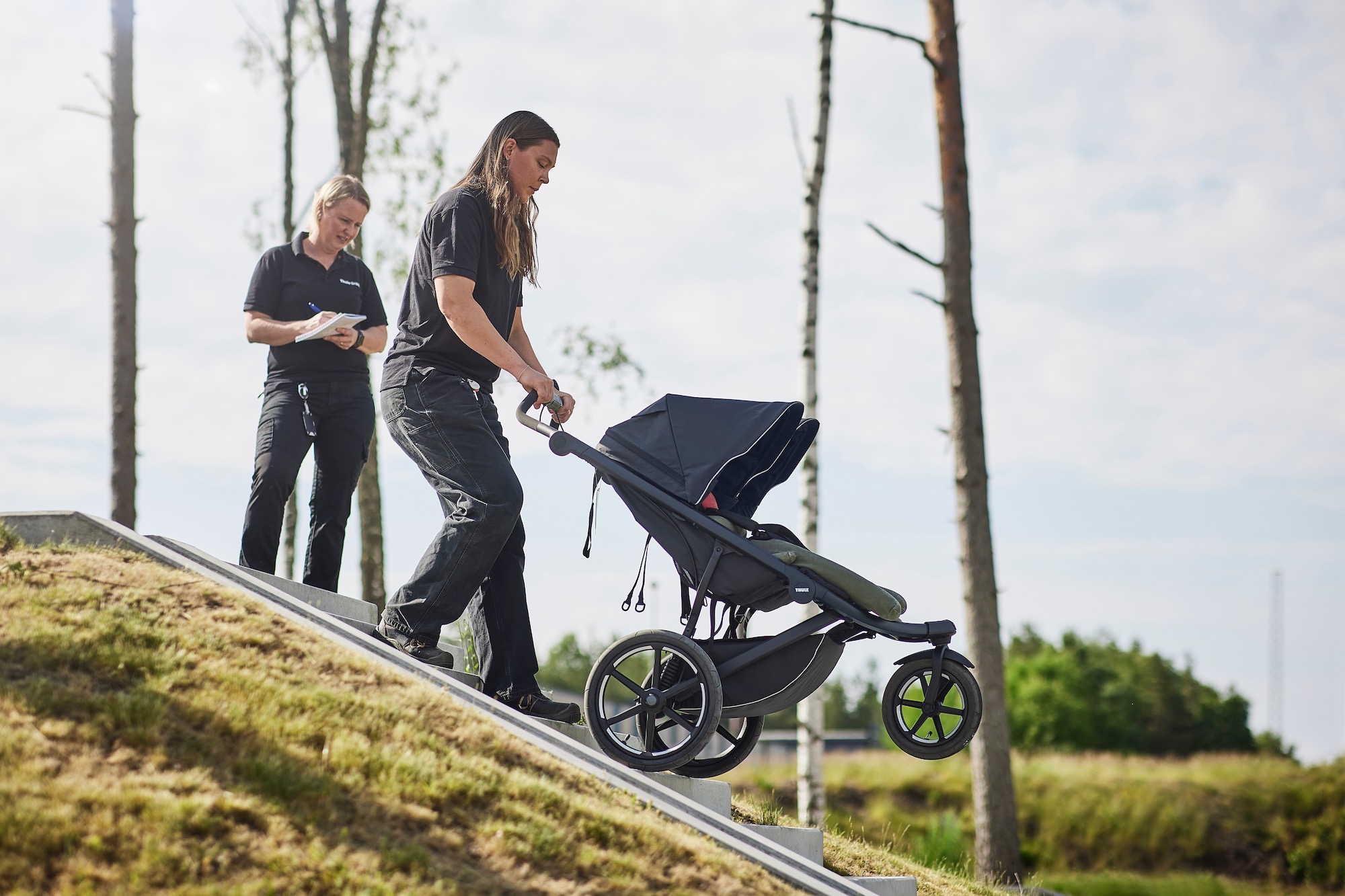
Fortunately, the designers and engineers are in the same building, and the prototyping department is just down the hall. In fact, virtually everyone involved in every step of the product development process is under the same roof or in an adjascent building. Having all these departments and employees working together in the same facility seems incredibly helpful when tweaking designs, iterating, testing, or needing a new 3D-printed part. Using one of its latest child strollers as an example, the design team walked us through the stages of development, from drawings to proof of concept, prototypes, multiple iterations, and ultimately, the latest version of the Thule Urban Glide Stroller.
In-House Everything
As mentioned above, in-house prototyping helps to streamline the product development process. Using 3D printers and plastic molds, the team is able to work closely with designers and engineers to whip up prototypes and iterate until products move to production. Having both indoor and outdoor testing facilities on the premises also allows for efficient validation of materials, designs, and concepts. Once finalized, the in-house tooling department gets to work creating progressive dies to stamp aluminum parts.
Until this tour, I’d never seen anything like this in person, so it was quite intriguing to inspect the progressive stamping dies and gain a better understanding of the stamping process. If you aren’t familiar, progressive stamping refers to a number of steps, or progression, in the stamping process. In this case, we watched as a sheet of raw metal was fed into the stamping machine and stamped four times on the progressive die. Each stamp progressively changed the metal’s shape until it popped out the other end as a finished bracket for roof rack crossbars.
This was just one of the 16 massive stamping machines, rhythmically churning out various roof rack parts, which make up a large portion of the products made at the Hillerstorp facility. Once finished, these parts move on to mostly automated assembly lines where ~80 robotic stations precisely and progressively assemble Thule roof racks, crossbars, and various fit kits needed to mount them on vehicles. Again, I haven’t seen something like this in person before, and it was almost mesmerizing to see the robots working so steadily, precisely, and tirelessly. I recognize this is the nature of modern manufacturing, but I was impressed by how advanced it all was.
Speaking of fit kits, the folks at Thule stated they have around 1700 variants of feet for roof bars to fit nearly every vehicle on the road. To create these, Thule gets actual rooftops from current and soon-to-be-released vehicles. They literally have shelves upon shelves of the latest vehicle rooftops so they can design their products for perfect compatibility and verify fitment across their product range. Additionally, these vehicle roofs, or copies of them, are used in Thule’s in-house crash test simulator and durability testing.
Thule Test Center

Thule’s Swedish heritage is a big part of the brand’s identity, as Scandinavian culture influences both how and what they make. Like the legendary and famously Swedish brand Volvo, which is renowned for its practical and notoriously safe vehicles, Thule takes a similarly fastidious approach. They obviously aim to make products that are practical, functional, and well-designed, but Thule hangs its hat and reputation on testing and safety.
As a bike rack tester, I’ve seen Thule’s Hillerstorp Test Center referenced in product descriptions on its website for years. I always considered it more or less just marketing fluff, trying to make their racks sound better or safer than the next. Well, it turns out that assumption was wrong, and the folks at Thule do, in fact, take testing and safety incredibly seriously. I’m not saying that other brands don’t, just that at Thule it appears to be an obsession.
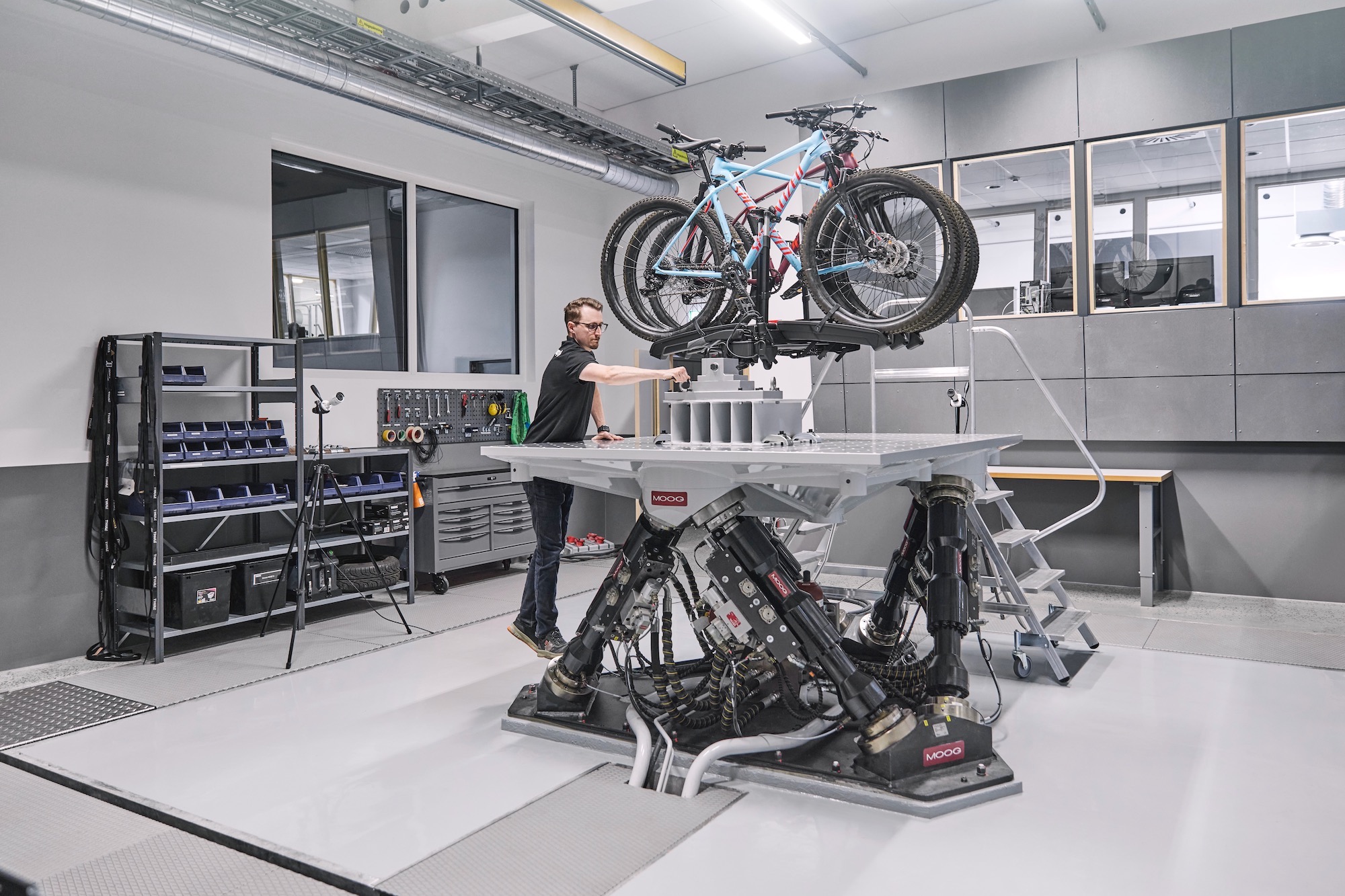
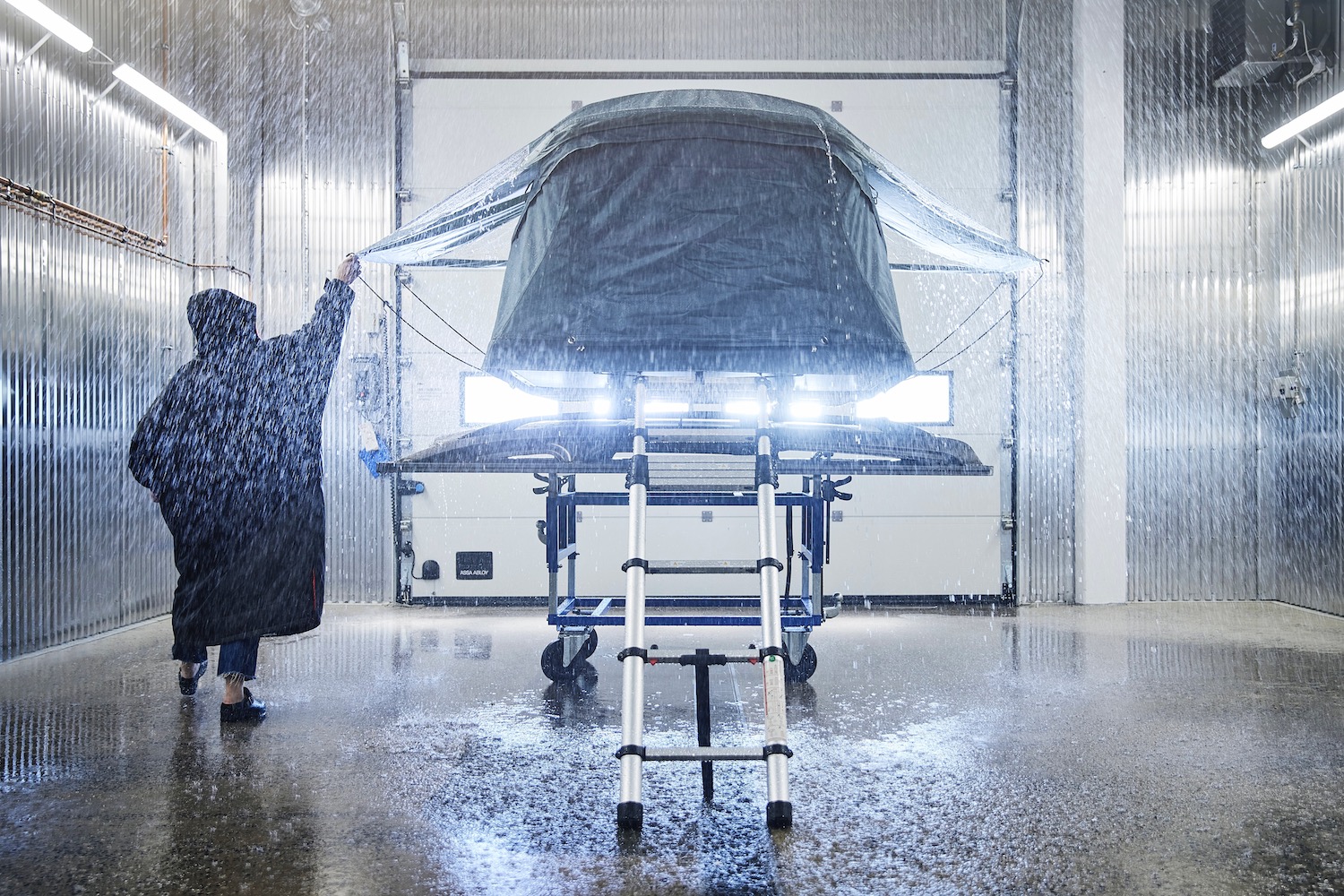
Thule takes testing so seriously, in fact, that the Hillerstorp Test Center is one of the most advanced in the industry. This also makes sense given that Thule is one of the biggest brands in the industry, and it produces lots of vehicle- and child-related products where safety is of the utmost importance. The brand has cleary dedicated significant resources to ensure its facility is state-of-the-art, which I was also impressed to see being all done in-house. Thule doesn’t need to send products to 3rd-party testers; they can do it all themselves.
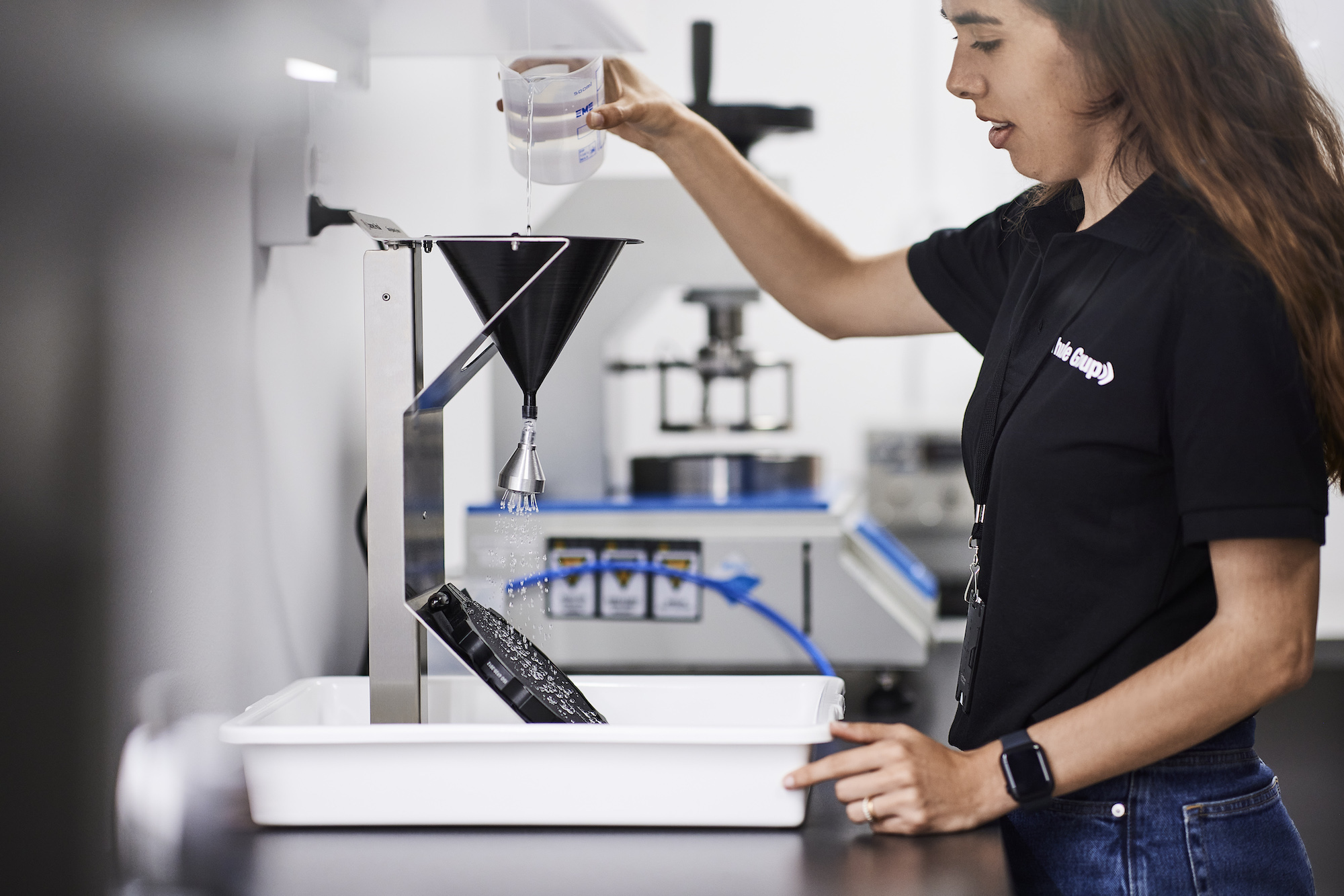
In Hillerstorp, Thule has outdoor driving, walking, and biking tracks with a range of surfaces and obstacles to simulate those encountered in the real world. Inside, they have a wind tunnel and a full environmental conditions lab to simulate rainfall and extreme temperatures, both hot and cold. In another room, the hydraulic pistons of the indoor durability simulator bump and vibrate an elevated platform relentlessly. This testing apparatus is claimed to simulate the equivalent forces exerted from driving “twice around the world” compressed into a span of just 35 hours.

Another test lab was full of bumpy treadmills, putting rolling luggage and strollers through rigorous, long-term torture testing. An enormous hamster wheel spun with luggage inside, abusing it well beyond normal airport baggage handling. Ramps and a drop tester were being used to simulate slamming into curbs or walls and products being dropped from a height. I was also impressed to learn that Thule uses the drop tester when designing its packaging to ensure that its products aren’t damaged in shipping before they ever get used.
Thule Crash Lab
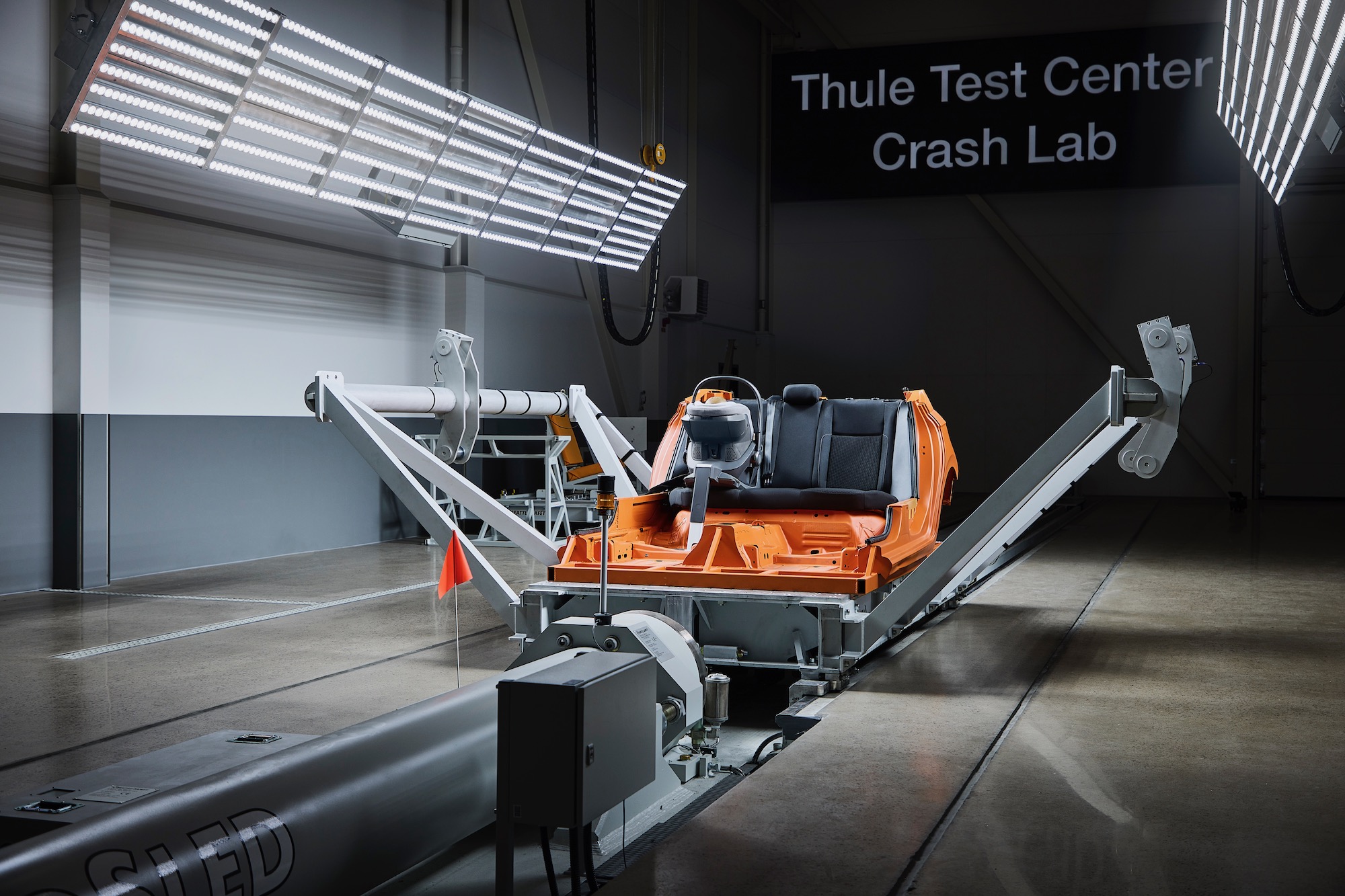
Arguably, the most impressive part of the test center, in my opinion, was the Crash Lab. With the number of vehicle-related products Thule makes, it makes sense that they’d want to do this type of testing in-house. But I’ve got to imagine it was an enormous expense and not one that most bike rack brands can afford. Not to mention the amount of space it occupies. This thing is absolutely massive. Thule told us it has been operational for the past three years, and they’ve run over 1,600 crash tests as of early November 2025.
The crash simulator is essentially a large sled attached to a huge hydraulic ram. On the sled, they can mount the various vehicle rooftops, trunks, seats, or hitch receivers, loaded up with the Thule products being tested, along with bikes, kayaks, fake humans, or whatever is most applicable. Crash simulations are performed with cameras shooting video in super slow motion, with incredibly bright lights — a warning would have been nice — to illuminate it all.

So, in addition to visual inspection, they can do in-depth video analysis to see exactly what happens in crash scenarios. This shows strengths, weaknesses, points of failure of the product being tested, but also what happens to the cargo it’s carrying. They can then use this information to refine designs to ensure that the products are not just durable but also up to the industry’s and Thule’s own standards for safety.
For bike racks, for example, they want to ensure they keep not just your bike safe, but also your vehicle, your family, and other motorists. The same applies to all of the other vehicle-related products like ski racks, cargo boxes, roof-top tents, etc. And as Thule continues to expand into pet and child carriers, this in-house crash testing is critical and even more valuable as their product range grows.
While I’m sure that other brands also test their products to meet requirements and ensure their durability and safety, most don’t have the advantage of such a high-tech test facility and must rely on 3rd parties. Thule’s ability to do all of this in-house helps streamline processes and validation across all phases of product development, without ever needing to leave Hillerstorp.

A Culture of Safety
I’ve been reading about Thule’s Hillerstorp Test Center over and over again for years, and now, I finally understand why. After seeing it firsthand, I’m not at all suprised by the pride that Thule has in its Hillerstorp Facility, and particularly the Test Center, which enables them to create innovative, practical, and functional products that meet their high safety standards. The facility is not just modern and high-tech, but it’s completely in-house, giving Thule’s product development teams an upper hand. Not to mention the brand’s Swedish heritage, which undoubtedly plays a large role in the culture of safety that permeates everything Thule does and makes.
I’ve never seen anything quite like it, and I was legitimately very impressed with the entire operation Now, the next time I read about something being tested at the Hillerstorp Test Center, I’ll know darn well it isn’t just some marketing fluff.
The post Safety First: Behind the Scenes at Thule’s Hillerstorp Test Center appeared first on Bikerumor.