For the past century and then some, Schrader and Presta have been the dominant valve types in pneumatic tires, like those used in all genres of cycling. In the past several decades, Presta valves have become the most common valve used on both the tubes and tubeless valve stems of most high-performance bicycles. These simple and cheap little bits of threaded metal have become ubiquitous, and realistically, there are probably billions of them in use on bikes around the world.
To their credit, Presta valves get the job done. But, even if they work well enough, the advent and proliferation of tubeless bike tires exposed some of their faults. The limited rate of airflow through a Presta valve can make it tricky to seat many tubeless tires. The narrow gaps that limit airflow have also proven to be prone to clogging with sealant, and the tips of the valves are prone to damage if treated carelessly. Of course, there are workarounds to most of Presta’s issues, and many cyclists may never even experience them to begin with. There are plenty of people perfectly happy with the status quo, and that’s completely understandable.

But as we’ve seen over the past several years, not everyone is content with Presta’s “good enough” performance, and the “alt-valve” (copyright-pending) is having a moment. One of the things that I find most interesting about this valve revolution is the amount of innovation and energy being put toward such a seemingly insignificant aspect of the overall cycling experience. But having used several of these Presta alternatives, I recognize that our valve performance and experience can definitely be improved.
Now, if you’re among the many who are perfectly content with Presta valves, don’t worry, nobody is forcing you to change. There’s close to a zero percent chance that any of these new alt-valves will miraculously take over and become a new “standard.” But if you’re willing to try something new to potentially improve your tire inflation experience, you’ve got quite a few options, and there’s probably more on the way. Whether you’re getting pumped or feeling deflated about alt-valves, here’s a list of all the different valves and adapters that we’ve written about in the past few years, starting with the most recent.
Topeak TurboFlow
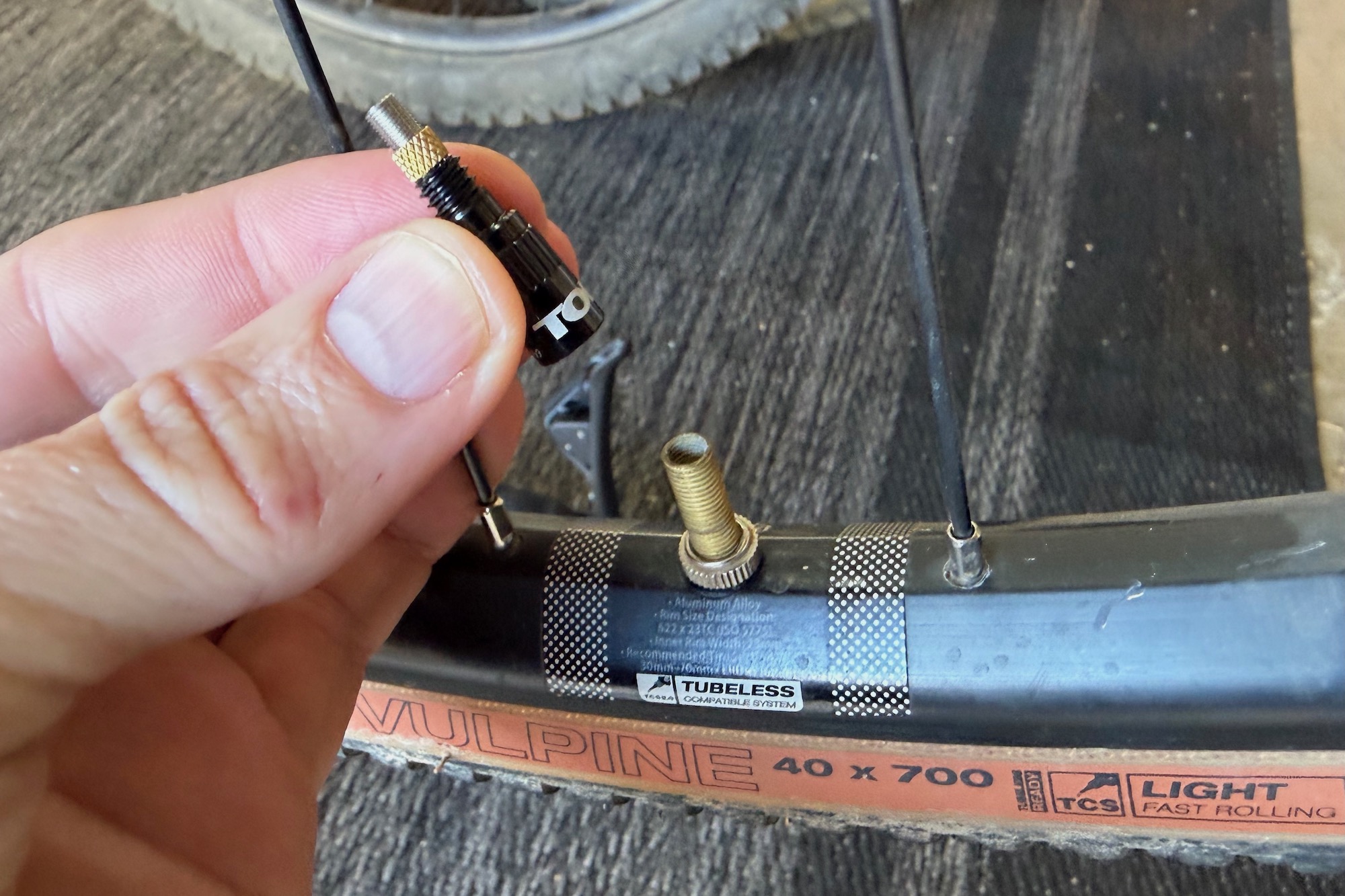
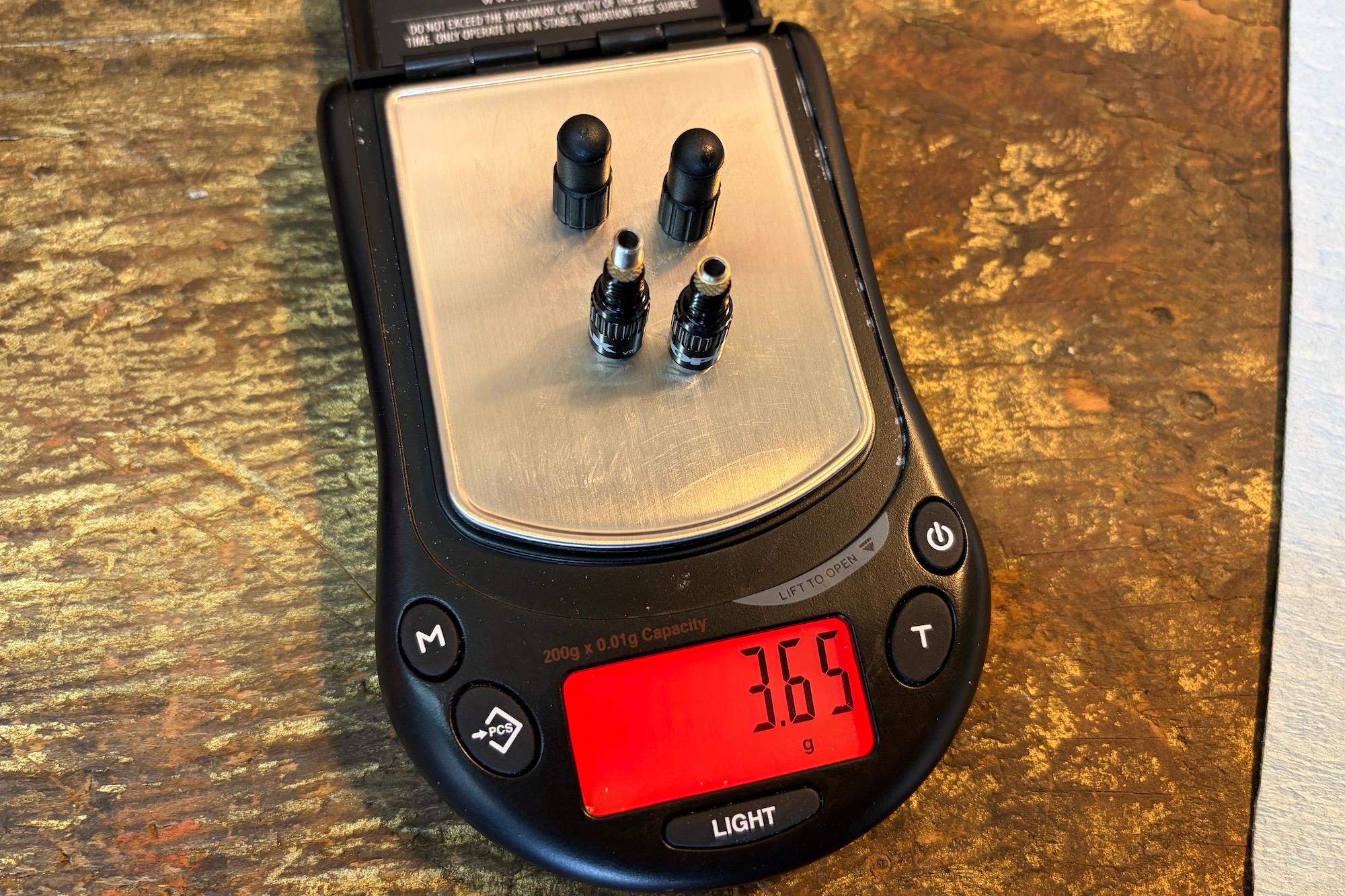
One of the latest valves to hit the market is Topeak’s TurboFlow. These are sold as a set of adapters that attach to Presta valve stems with external threads. Simply remove the Presta core, then thread the adapters on by hand. With its larger diameter valve opening and fairly simple internal seal design, Topeak claims 300% more airflow and a reduced likelihood of clogging with sealant. The design is strikingly similar to the 76 Projects valves described below, but is a thread-on adapter rather than a full valve system.
With a threaded lock nut at the valve tip, we found ease of use to be roughly on par with Presta valves, given that you still need to lock and unlock the valve by hand each time. In terms of airflow, however, these valves put the “turbo” in TurboFlow, and it is a dramatic improvement, whether you’re just topping off your pressures or seating a tubeless tire. On the scale, the set of Turboflow valves and caps was just 0.3 grams heavier than the Prestas they replaced. They retail for $35 a set, come with a valve core tool, and are incredibly easy to install. Bontrager sells its High-Flow Valve Adapters for $27, which appear to be nearly identical.
BBB CoreCap
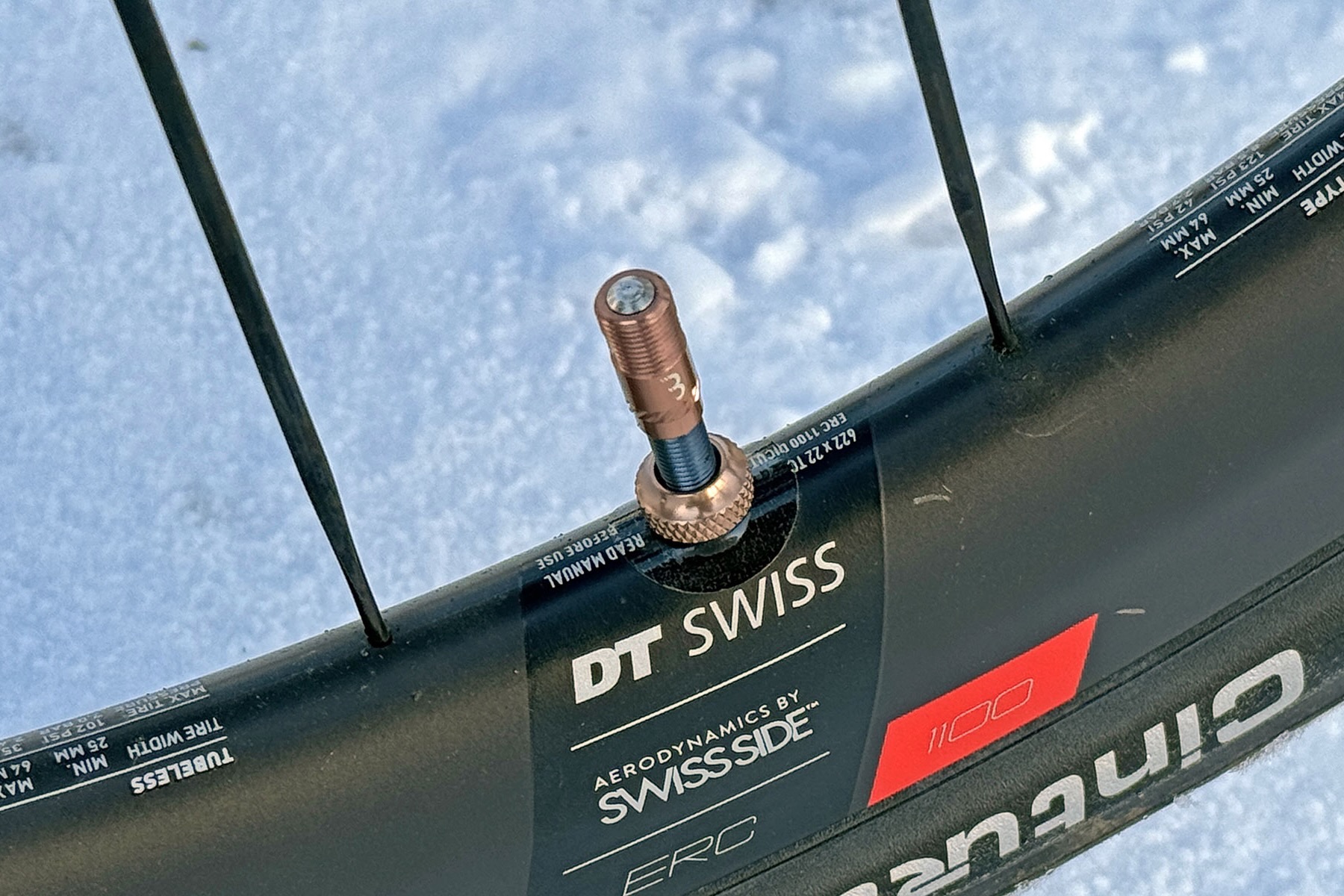
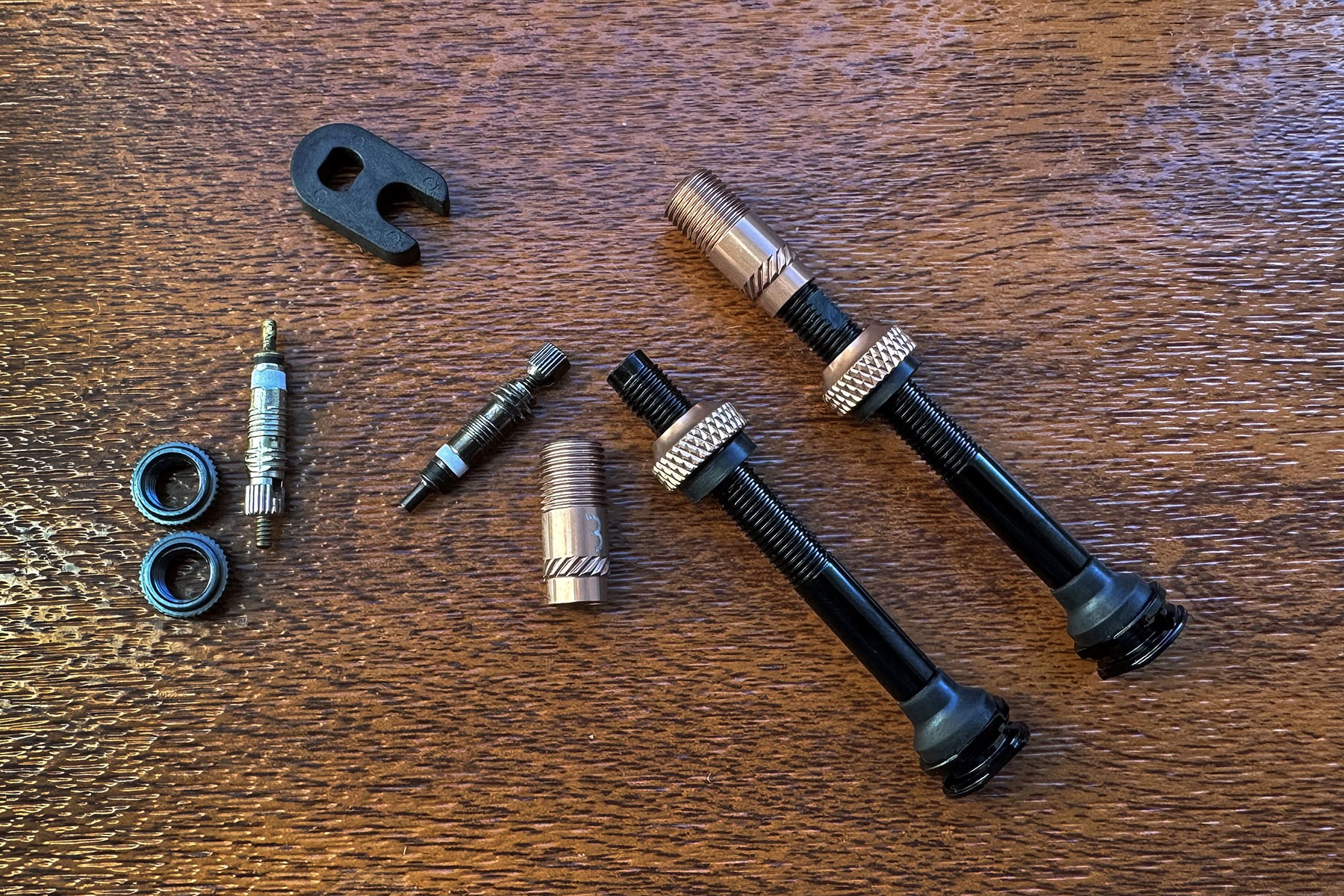
Similar to the TurboFlow described above, the BBB CoreCap replaces the Presta Core from your existing tubeless valve stems with a thread-on adapter (also available as complete tubeless valves). Up to 300% more airflow and reduced likelihood of clogging with sealant are the stated performance improvement claims, as well. Swapping them out is also as simple as removing your Presta cores and threading these on in their place. Unlike the TurboFlow, however, the BBB CoreCap essentially turns your valve into a threaded alloy Schrader valve.
The CoreCap’s triple-sealed spring-loaded bleed valve is apparently so effective that it doesn’t require an external cap. This capless design eliminates a step in the inflation process, and the Schrader tip should provide relatively broad pump compatibility. We found them to be very easy to get along with, while certainly living up to their claim of increased airflow. They’re also a tad lighter than the Presta cores and caps they replaced, plus they come in a range of anodized colors. The BBB CoreCap upgrade set sells for £15 / 17€ and includes a pair of CoreCaps, two rubber washers, and a pair of color-matched alloy valve nuts. The complete CoreCap tubeless valves come in 40, 60, and 80mm lengths and sell for £25-32 / 30-35€, depending on length.
Clik Valve

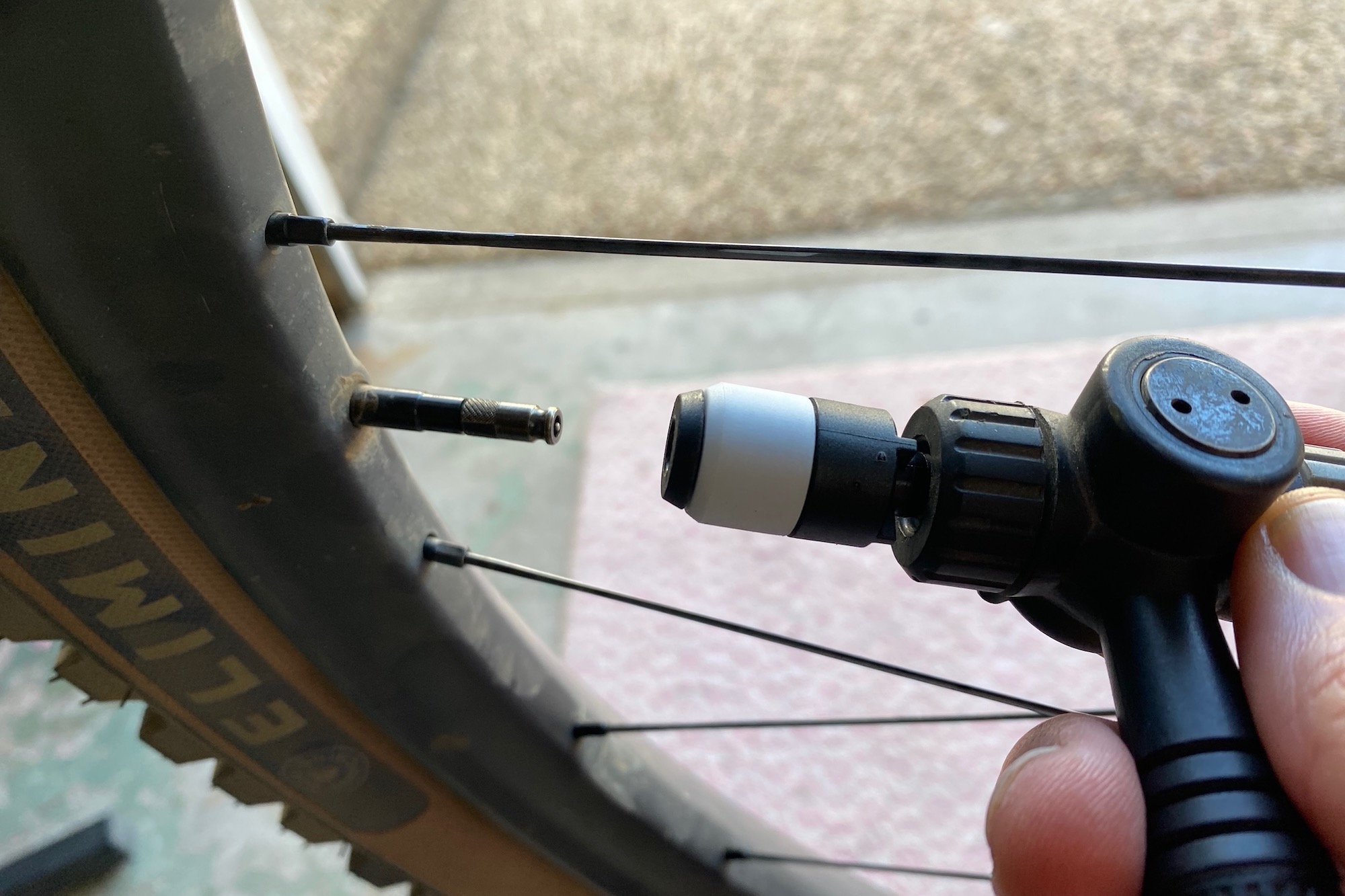
Clik Valves made a splash when they were introduced in the summer of 2024, promising increased airflow and a supremely user-friendly design. These valves quickly racked up awards at Eurobike and the Taipei Cycle Show, and appeared poised to give Presta a run for its money. Like several of the other options listed here, Clik valves are sold as adapter kits and replace the Presta cores in your existing valve stems (complete valves are also available), and the conversion is quick and easy.
While other valves boast “up to 300%” more airflow, Clik is more modest, claiming a 50% improvement. Clik’s bigger selling point is its user-friendliness. When used with a Clik-compatible pump head (or adapter), it is simply a click-on and click-off affair. We’ve used them and can attest that they are spectacularly easy to use; there’s no fiddling with lock nuts required, no fragile tip to bend or break, and no pump head to thread-on or lever lock. The caveat is that to truly enjoy the benefits of this system, however, you really need to have a pump or pumps with Clik heads or adapters.
Fortunately, Schwalbe and Clik sell kits that include pump heads or adapters. Plus, brands like Lezyne and Wolf Tooth sell pumps and inflators with Clik-compatible heads. A set of Clik Valves costs $13; valves plus a pump head adapter cost $17; and valves with a pump head cost $20.
schwalbetires.com or clikvalve.com
Capless Speed Valve
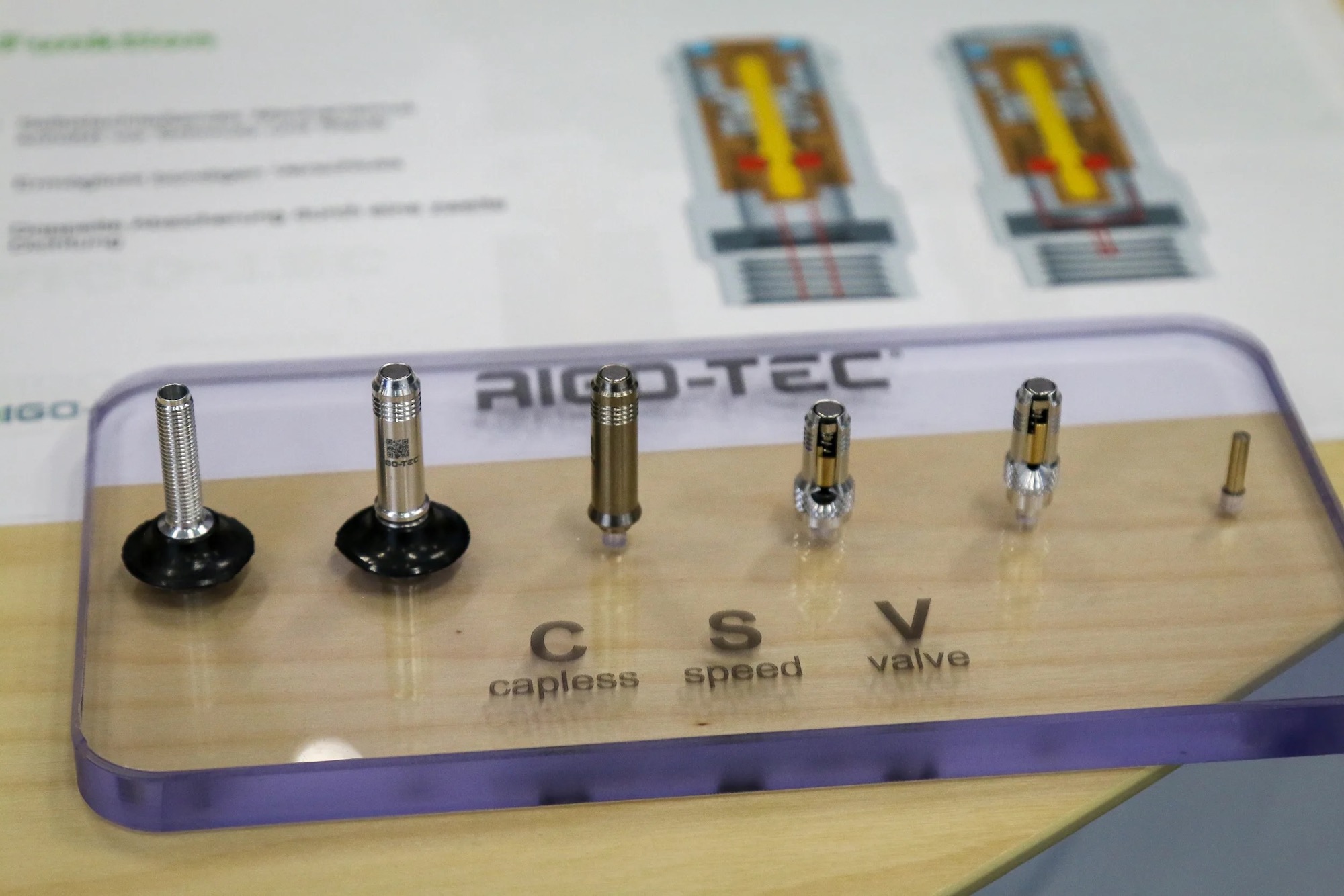
We reported on the Capless Speed Valve (CSV) last summer. The German brand AIGO-TEC has been involved with tire valves for roughly a century, and the CSV is one of its latest designs. As the name suggests, the capless design skips the step of fiddling with a valve cap every time you need to adjust your pressure. Instead, it relies on a double-sealed design to keep air in and water, dirt, and contaminants out.
Like some other designs, you remove the Presta core from your existing tubeless valves and thread the CSV on in its place. In addition to the capless design being quicker and easier to use, the CSV reportedly offers a higher rate of airflow compared to Presta. Interestingly, the CSV doesn’t appear to be widely available yet, with just one online retailer that we’re aware of offering them for sale at €9.95. The BBB CoreCap is a very similar system that appears to be a bit more refined and compact, while also being more widely available for purchase.
Muc-Off Big Bore

Muc-Off’s Big Bore valves might have one of the simplest designs in the alt-valve market. The Big Bore relies on a ball valve to open and close airflow, allowing a straight shot for air to quickly and easily pass through. Simply twist the little knob/lever on the valve to open and close it. With no core in the way, airflow is claimed to be 230% to 254% better, and there’s a very low chance of it getting clogged by sealant.
Muc-Off sells the Big Bore Valves as complete valves only in both Lite and Hybrid versions. Both retail for $50. The Big Bore Lite is designed for Presta rims and Presta pump heads, promises 230% more airflow, and comes in 30, 35, 45, 60, 70, and 80mm lengths and six anodized colors. The Big Bore Hybrid is also made for Presta rims, but for use with a Schrader pump head, which boosts airflow to a claimed 254%. The Hybrid is offered in 30, 35, 45, and 60mm lengths, and the same six anodized colors.
Stan’s Exocore
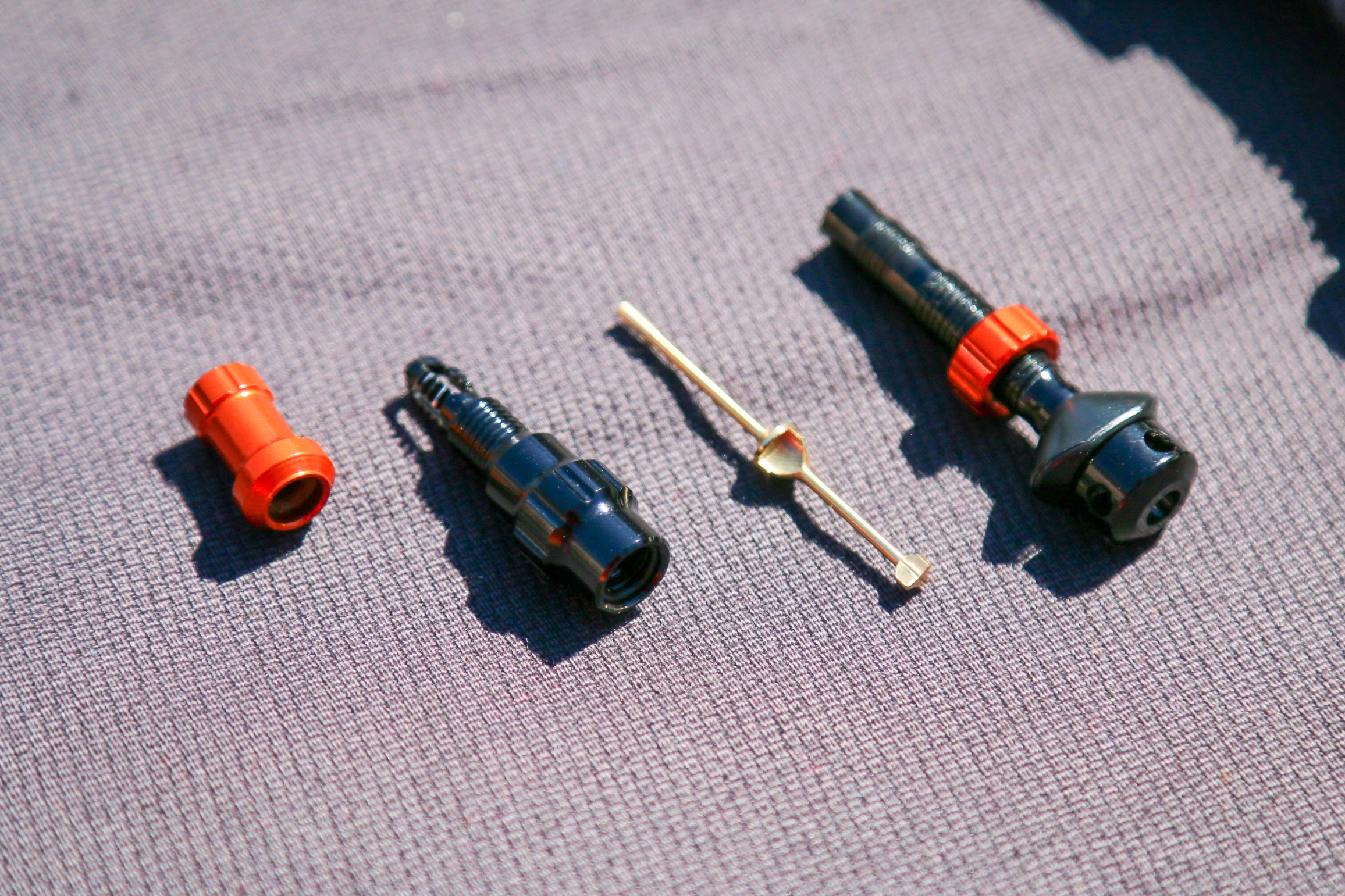
As one of the leaders and innovators in tubeless tire technology, it stands to reason that Stan’s would have an alt-valve. Called Exocore, we checked it out at Sea Otter back in 2024. This multi-piece valve design features a solid brass core inside. While it looks somewhat complex, the idea is quite simple. The sealing surfaces are in the upper half, external to the valve itself, which, according to Stan’s, makes it virtually clog-free. The shape and size of the brass core allow for unimpeded airflow, which, Stan’s claims, is up to 4-5x better than Presta with the valve fully open.
These are sold as complete valves only and are reportedly compatible with tubeless tire inserts. The design is said to be intuitive to use, serviceable, and engineered to work with existing pumps and gauges, which is nice. The Stan’s Exocore valves come in four lengths to suit varying rim depths. The regular and medium lengths sell for $59, while the tall and extra-tall lengths are priced at $70.
Funn FastAir Valve
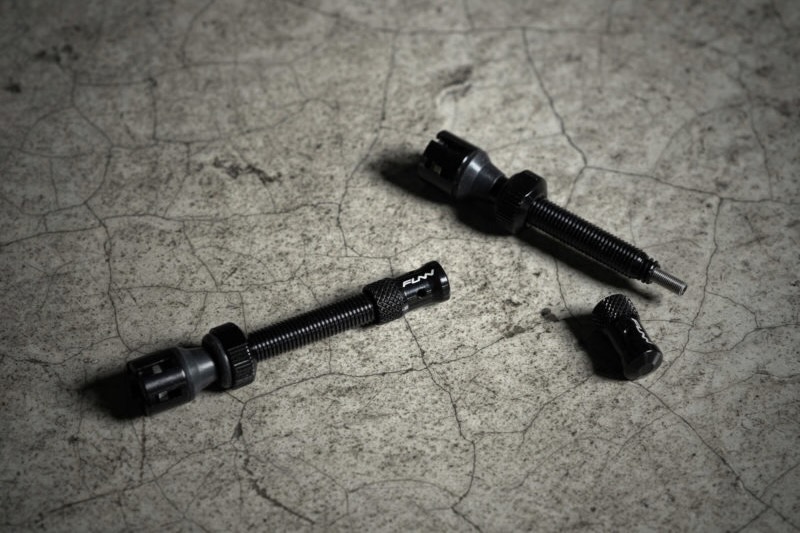
Funn joined the fast-inflation competition in 2023 with its aptly named FastAir Valves. With a design that looks like a cross between the Reserve Fillmore and the Topeak TurboFlow, the FastAir promised 3x the airflow compared to a Presta valve. Similar to the Fillmore, the Funn valves have a core that runs full length with the stopper at the base of the valve stem. Like the Topeak Turboflow, the valve core is essentially a hollow tube that allows a higher volume of air to pass through it when open. Additionally, these are intended to be clog-resistant, and sealant can allegedly be injected through the valve if needed.
For whatever reason, the FastAir Valves are listed as discontinued on the Funn website. Perhaps they infringed on another brand’s design, or maybe they simply didn’t sell enough to keep them as part of the product lineup. Either way, Funn’s appearance at the alt-valve party was short-lived.
e*thirteen Quick-Fill
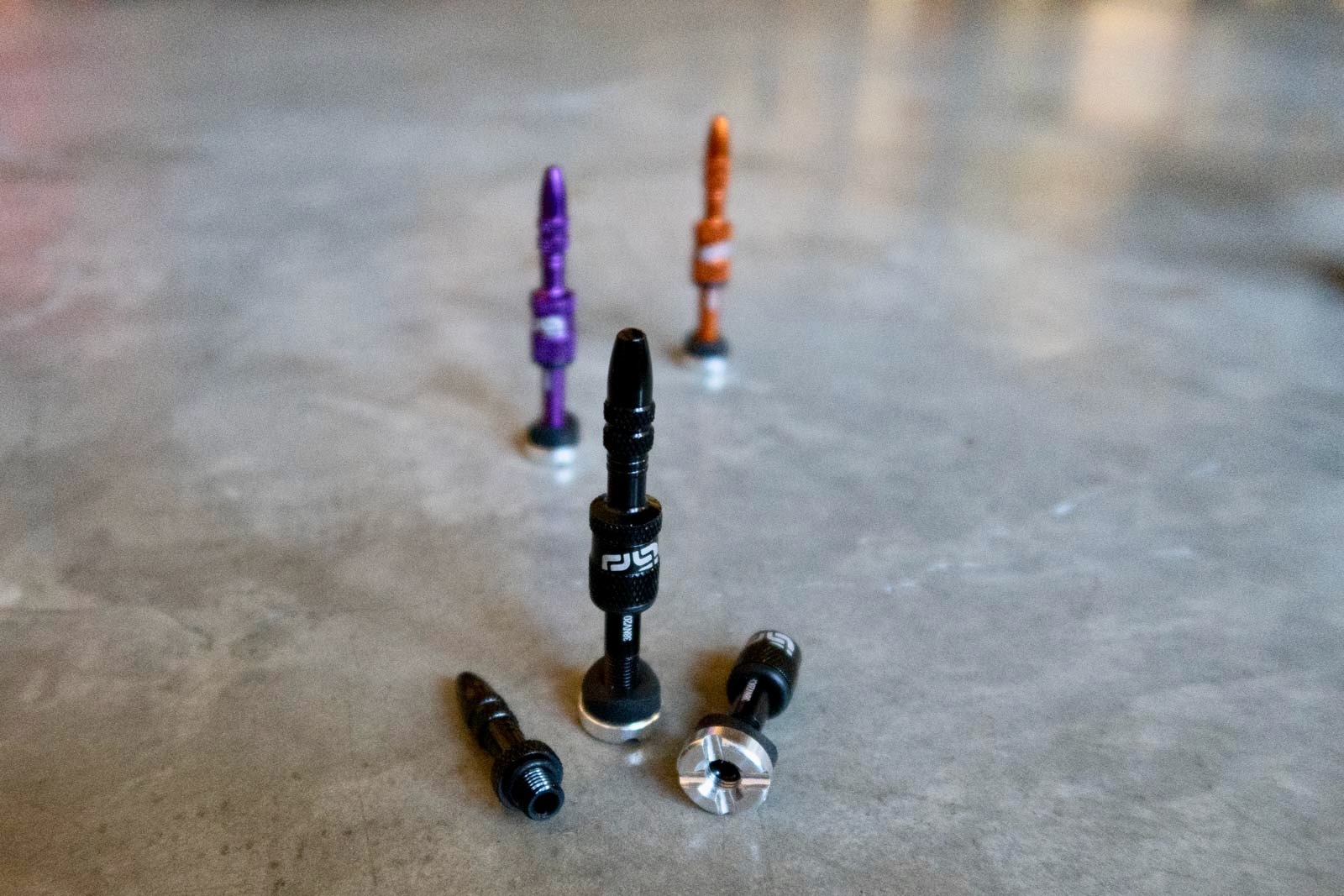
e*thirteen’s Quick-Fill Valve is an interesting option in that it doesn’t try to reinvent the valve; it just separates it. This design essentially divides the tubeless valve into upper and lower halves with a threaded coupler in the middle. The upper half houses a standard Presta valve in a “carrier”, which can be removed by hand without tools. When removed, the lower portion of the valve stem is wide open, with a 3.5mm diameter, making it easy to inject sealant while allowing a high airflow rate.
The two-part e13 system basically makes it really easy to remove and replace the Presta valve core. As such, it stands out from the rest of the alt-valve field by still using a Presta valve but attempting to make it more user-friendly. The Quick-Fill Valves come in two lengths and seven anodized color options and retail for $26.
76 Projects Hi-Flow No-Clog

The 76 Projects Hi-Flow No-Clog Valve was among the earliest hi-flow valves on the market when it launched back in 2021. The valve design looks nearly identical to that used in the new Topeak TurboFlow, with a simple, wide hollow tube, internal seal/stopper, and threaded lock nut. Unlike the TurboFlow, however, the 76 Projects is a complete valve system rather than a thread-on adapter. Regardless, the Hi-Flow No-Clog claims up to 4x the airflow of Presta, with no clogs, as the name implies.
Fitting the multi-piece 76 Projects valves was a bit more fiddly than the Topeak adapters, but once on the bike, they impressed by living up to their name with hugely improved airflow and no clogs. They’re compatible with push-on lever locking pumps, but an adapter is required for thread-on pump heads. They come in black and magenta, five lengths, and retail for €23.50.
Reserve Fillmore
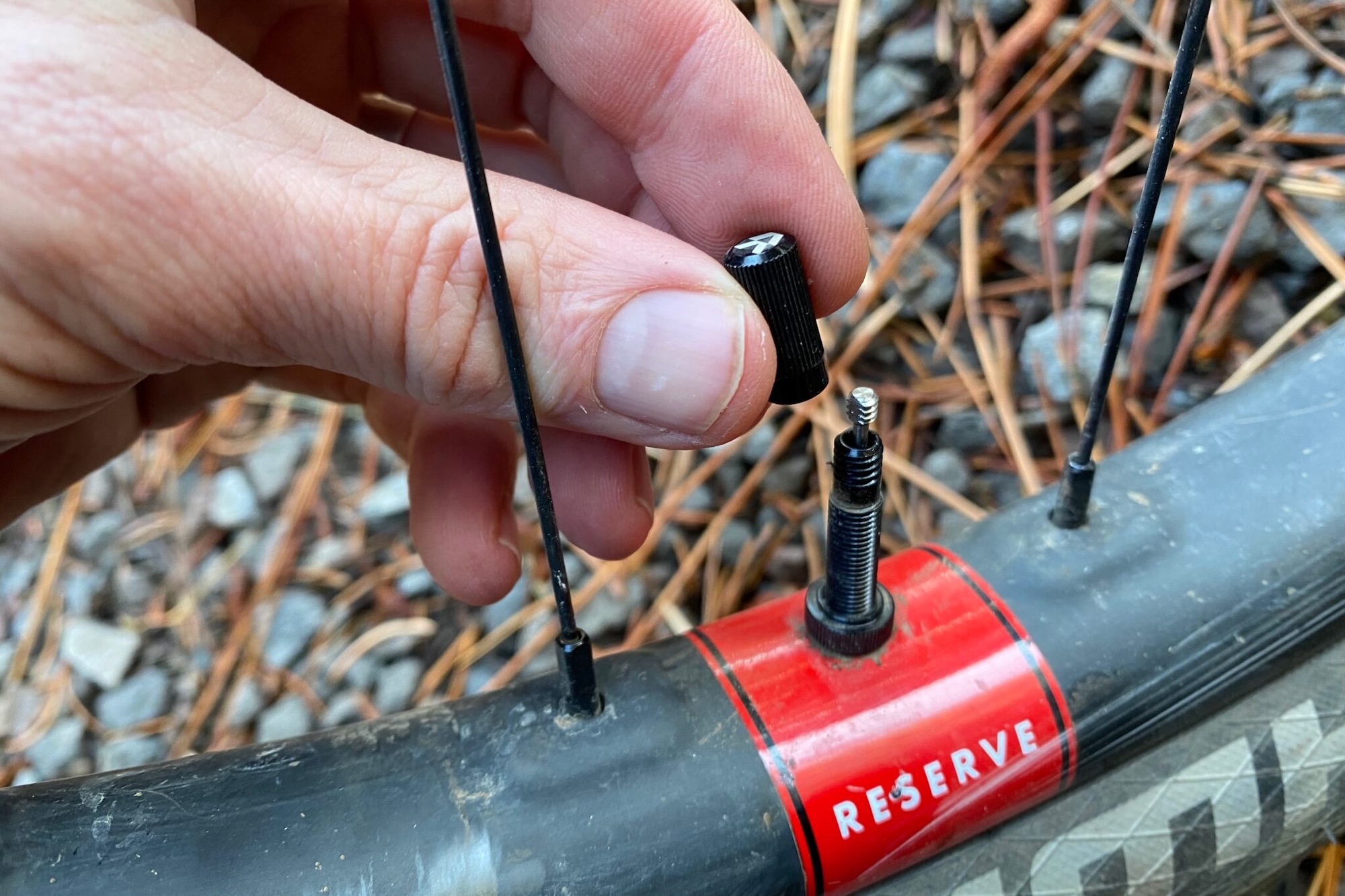
The Fillmore Valves made some serious headlines when they were introduced late in 2021. Improved airflow and clog-free performance claims aside, the $50 price tag had people shook and shaking their fists angrily the way I do about gas prices. Beyond that lofty price tag, Reserve’s claim of 300% more airflow was something that could previously only be achieved by removing a Presta valve core. Which is essentially what Reserve did with the Fillmore.
While it looks somewhat similar to a standard Presta valve from the outside, the Fillmore has just a thin metal rod running from the tip to a stopper/seal at the base of the valve stem. This leaves nearly the full volume of the valve stem open for air to pass through, dramatically increasing airflow and making it much easier to seat tubeless tires. This also makes it possible to inject sealant through the valve, and there aren’t really any tight gaps or threads to get clogged with sealant. Should your Fillmore ever clog, they’re easily serviceable, plus they work with virtually all Presta pump heads.
We’ve been using Fillmore valves for years and have nothing but positive things to say about them. No, they aren’t cheap, but they perform exactly as advertised and seem to last forever. They come in 50, 70, and 90mm lengths and cost $50, $60, and $70, respectively.
ConvertAir
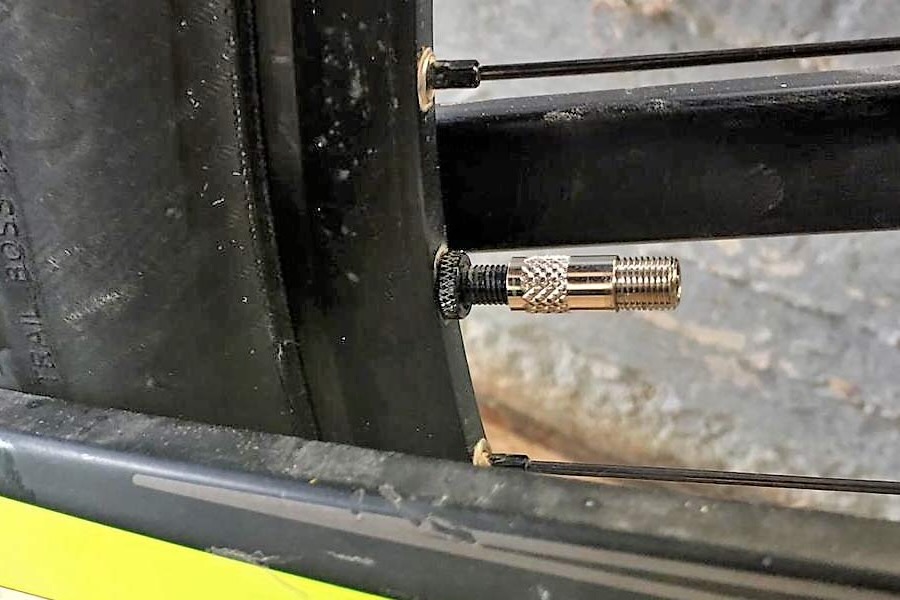
Taking it waaaayyyy back to 2019, ConvertAir was one of the first valve conversion products that we reported on. As the name suggests, this simple product converts your Presta valves to Schrader heads. With the Presta valve core removed, the ConvertAir head threaded onto the valve stem. This system appeared to be compatible with any externally threaded Presta Valve stem, and left you with a metal Schrader valve head instead of a fragile Presta tip.
While this system was relatively novel at the time, the alt-valve market has matured a bit since then. For example, the BBB CoreCap appears to be a refined version of this concept, with a user-friendly cap-free design, lighter weight, and a more polished appearance. We could be mistaken, but the company that was producing these doesn’t seem to be in business anymore, and we can’t find the ConvertAir for sale, either.
Is That All?
There are plenty of other valves available, but most aftermarket options we’re aware of use Presta cores and relatively straightforward designs. But given the rate of new valve designs hitting the market in recent years, we’re pretty confident we’ll be adding to this list sooner rather than later. While we think this list is fairly comprehensive, we won’t claim to know everything. Other than “my Presta valves work fine” or “we should all be using Schrader,” are there any other alternative valves that we missed?
The post Get Pumped, The “Alt-Valve” Revolution is Upon Us appeared first on Bikerumor.