You can trust Cyclingnews
Our experts spend countless hours testing cycling tech and will always share honest, unbiased advice to help you choose. Find out more about how we test.
Tech Specs: BBB Signal Radar
- Price: £119.99 / €139.95 / $NA
- Weight: 88g with mount
- Light modes: 6
- Field of view: 35˚
- Batter life: 14 hours claimed
Image 1 of 2
It does lack the total light output of some competitors, as well as the total range of the radar. The battery life is also interestingly quoted without the radar function on. However, it also undercuts the prices of many competitors significantly, which should increase its attractiveness to budget conscious buyers.
Design and specifications
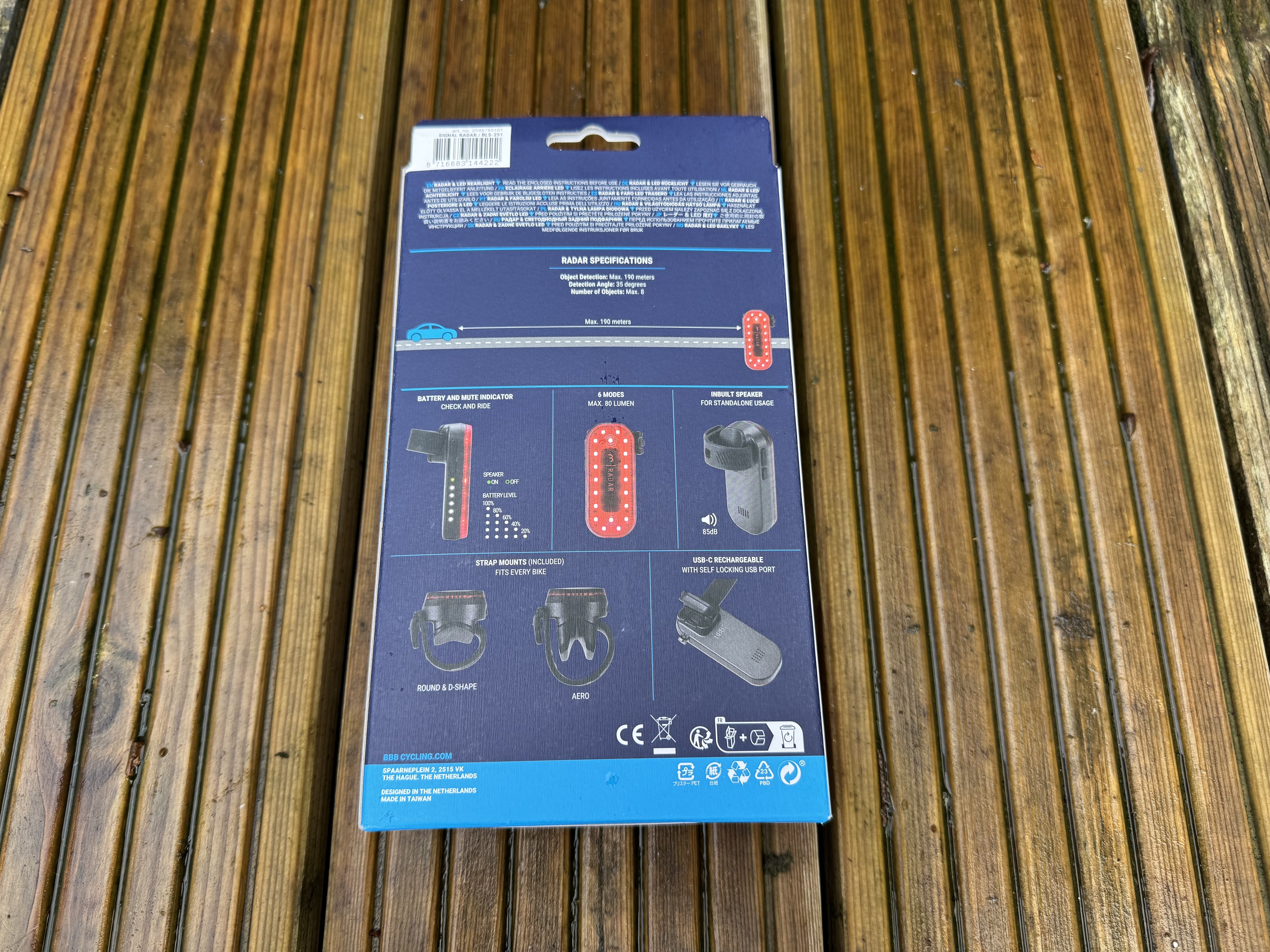
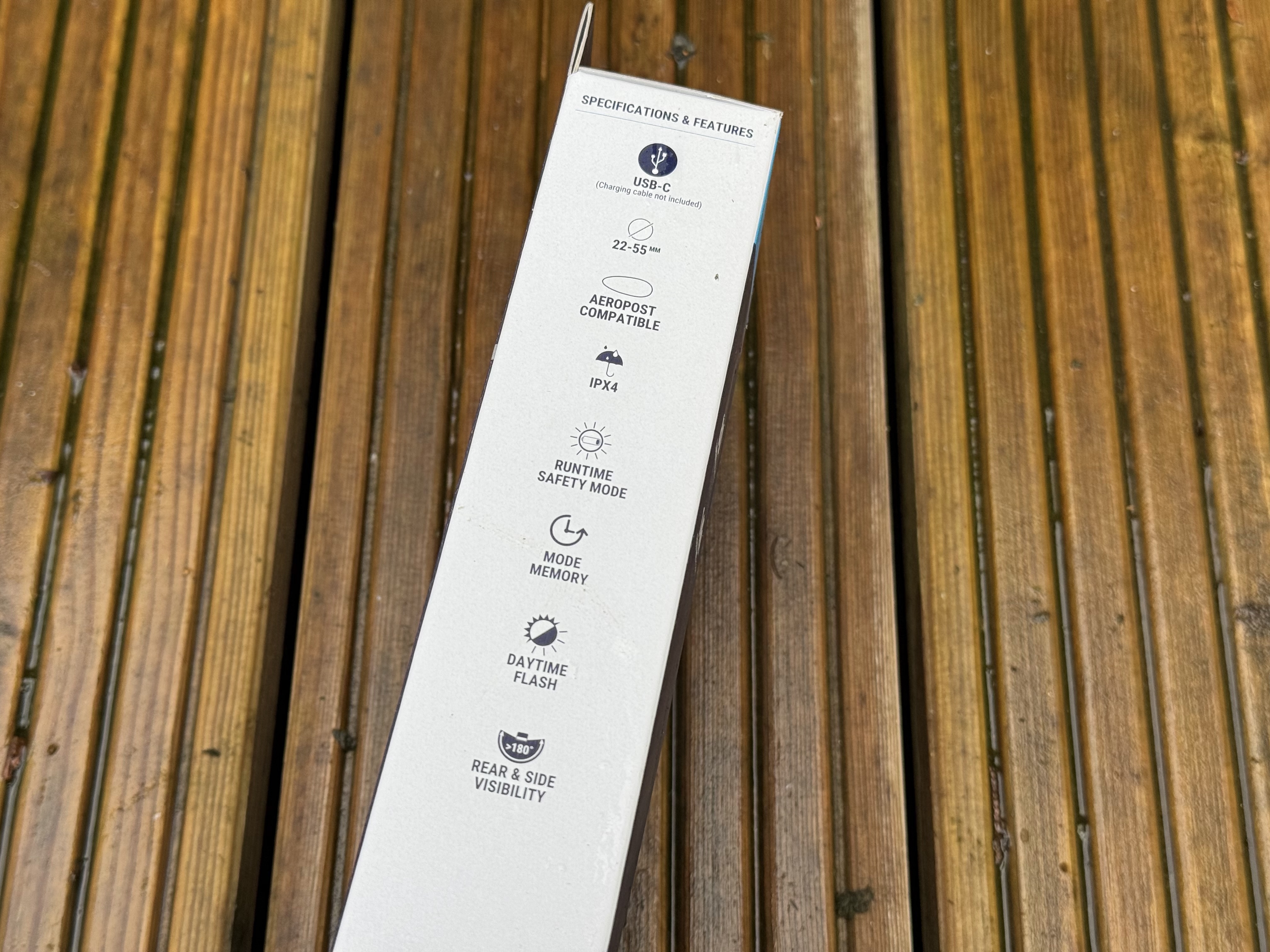
As with most rear radar lights, the BBB Signal Radar features a longer design profile to house both the lights as well as the radar detection unit within its form. In terms of those radar stats, BBB states a detection range of 190m away and within a 35˚ angle. The light has a maximum brightness of 80 lumens on the daylight flash mode, made up from 20 small LEDs in total. The light also has 180˚ visibility for added safety.
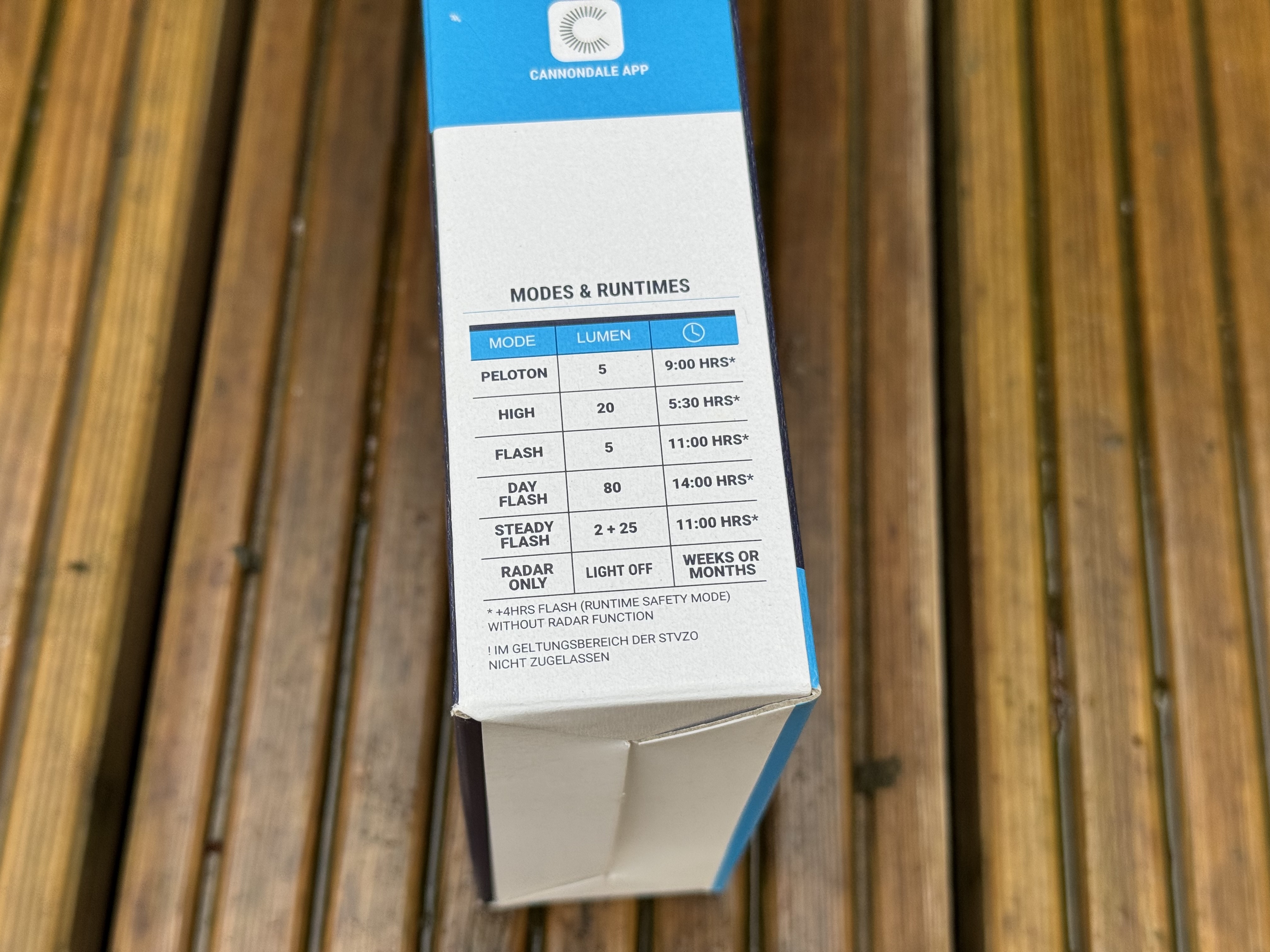
As for modes, there are six in total. These modes are Peloton, High, Flash, Day Flash, Steady Flash, and Radar Only. High and Steady Flash are solid beams of 20 and 2+25 lumens. Flash and Day Flash are, as the name suggests, flash modes of 5 and 80 lumens. Radar only uses just the radar detection without the light being on. Peloton mode meanwhile reduces brightness so as to not glare anyone riding behind you.
All of these modes feature quoted battery times, but these are without the radar function, which does drain the battery. Quoted life is between 5:30hr for the Flash mode, and 14hr on day flash. Radar only is quoted as ‘weeks or months’. Battery life for light and radar combined is not quoted. Interestingly when the battery drops to a certain level, it defaults to a flash without radar function to try and persevere life until you get back to charge it.
Image 1 of 2
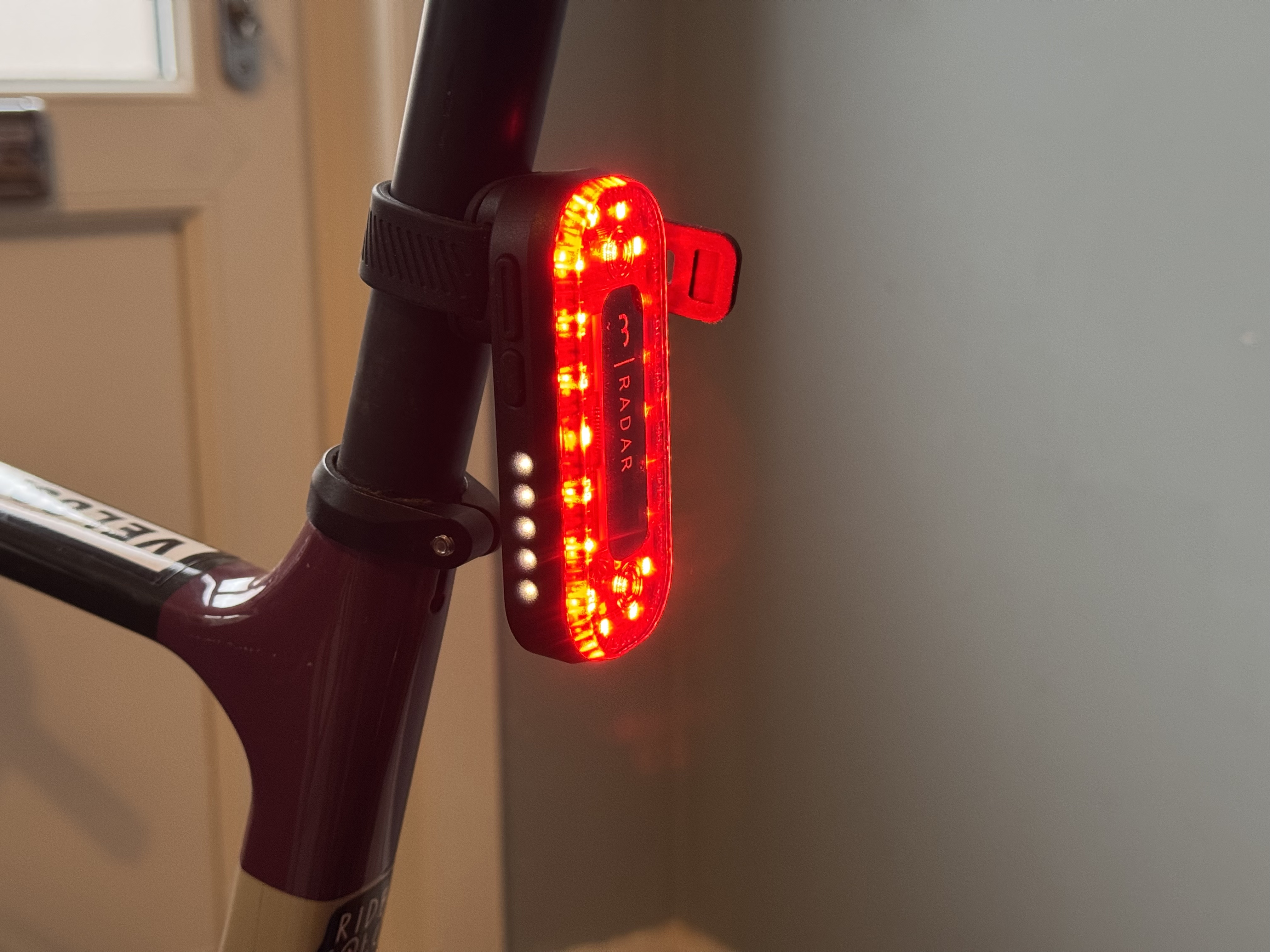
The battery itself can be determined via the five LED indicator lights at the side of the light. Each light represents a 20% battery life span. A smaller green LED is present at the top to show if the speaker is on or off.
That speaker allows the radar to be used without a bike computer or phone. Instead, the radar unit itself will make a noise when a car is detected, and continues to beep until the car passes by and things are clear. It is 85dB so it offers quite the noise, certainly one that you won’t miss. It is of course compatible with phone and computers via Bluetooth or ANT+.
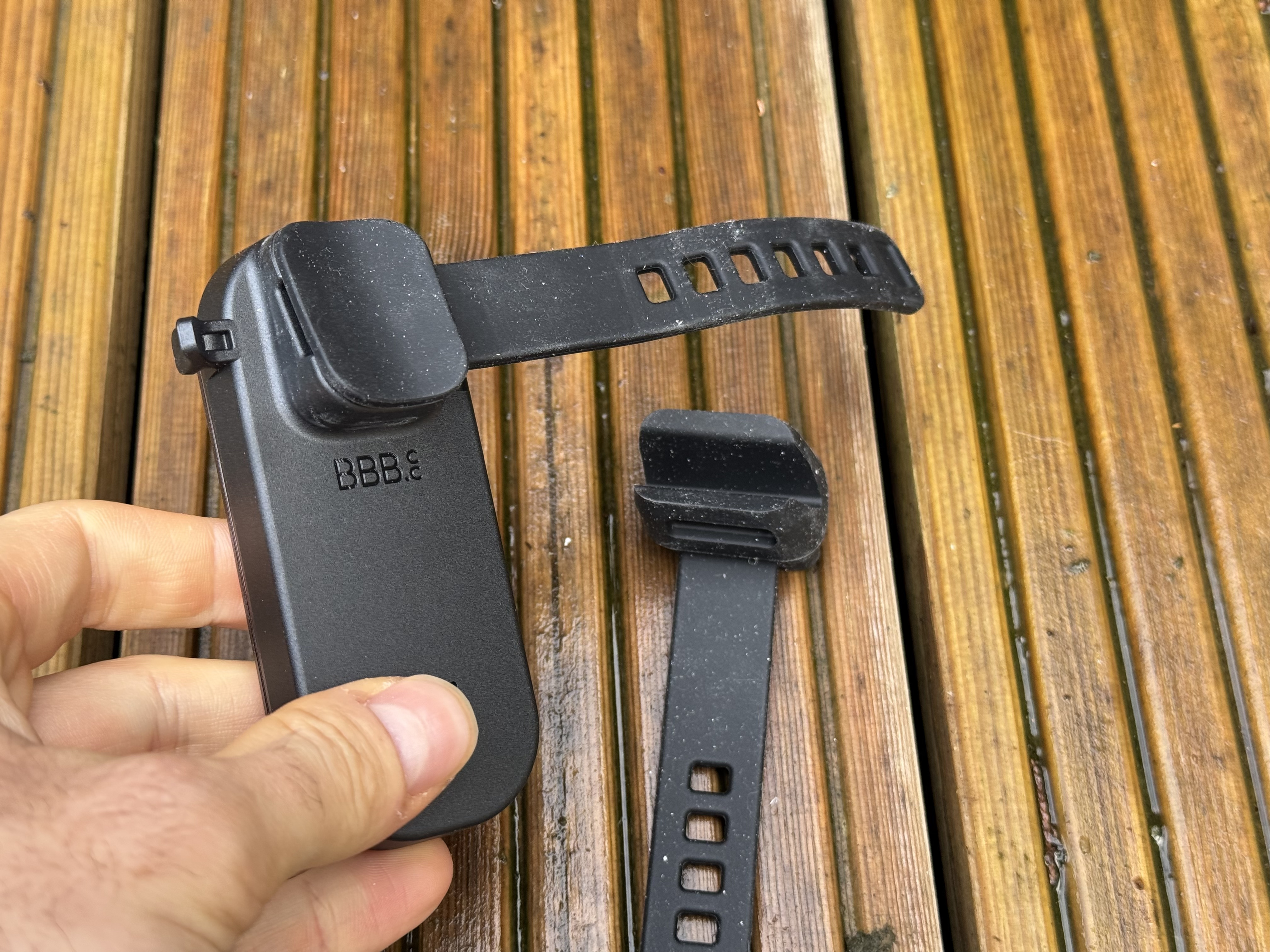
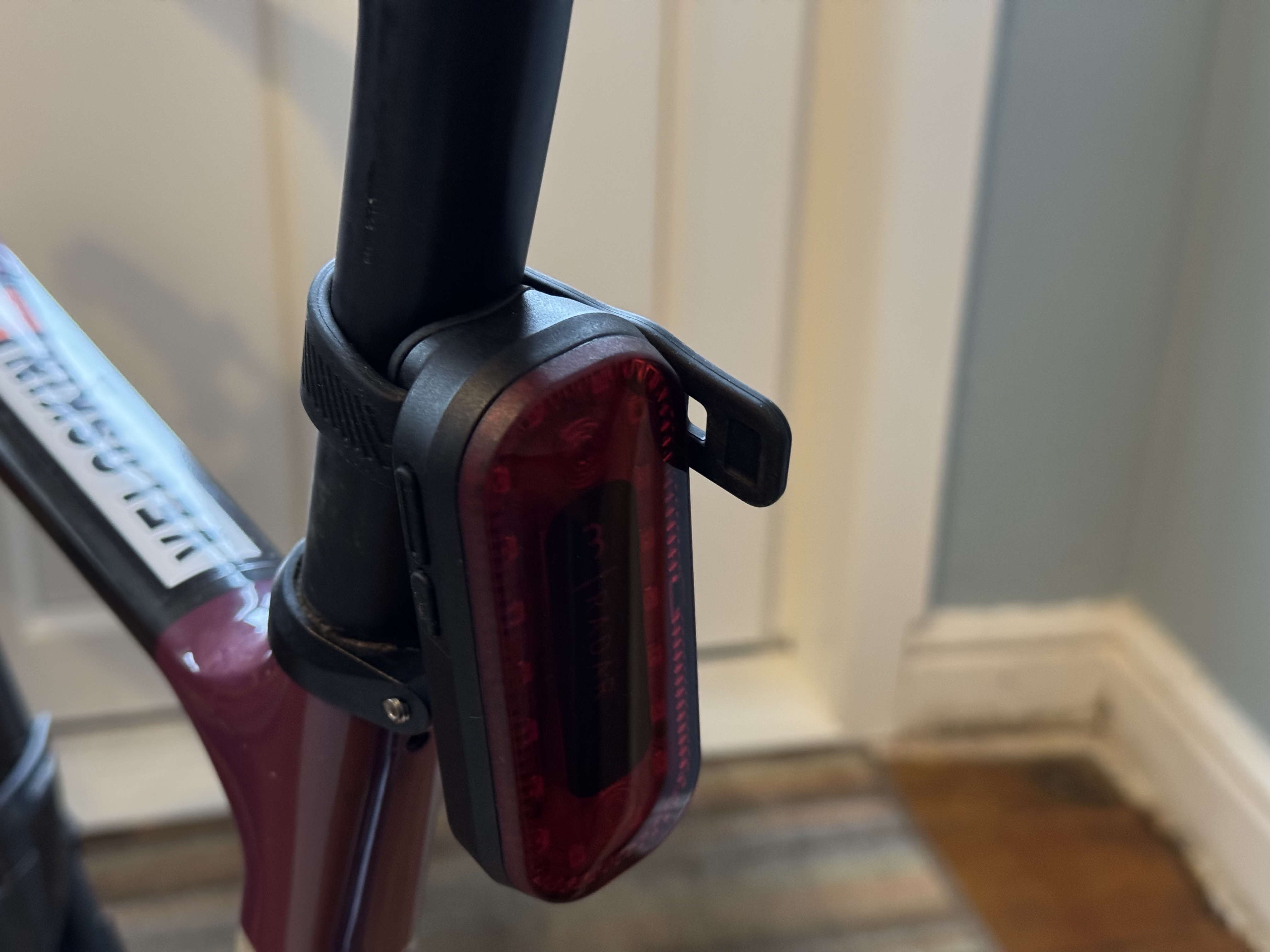
Fitting the light onto seatposts is relatively easy. It uses a ladder attachment similar to the Lezyne Strip Drive Pro 400+, which can fit seatposts of 22-55mm diameter. Two fitments are supplied to fit both round seatposts as well as bladed aero posts. It’s not quite as smooth and easy to transition between these as on the Garmin and Wahoo, but better than Trek. The ladder works well for adjustment rather than relying to rubber O-rings, but is not quite as sleek and discreet as the Wahoo Trackr Radar.
A benefit of this design though is that the battery charge port is hidden underneath this rubber arrangement. Whereas Garmin and Wahoo have a more exposed placement of the charge port, the BBB port is well hidden and out of reach of any mud and spray. The light has an IPX4 waterproof rating, so it is protected against splashing but not submersion.
Performance
Starting off with fitting the BBB Signal Radar light, and it’s a relatively simple affair, albeit a little bit clunky. The ladder mount works well to fit it securely to a seatpost, whatever the size, but it does leave a reasonable amount of excess material that can stick out somewhat. Compared to the Wahoo Trackr Radar, which has an adjustable ladder to clear this up, it just does not look quite as sleek. It does however, hold the light very securely so that it does not twist in position – something that has plagued me previously with the rubber O-ring mounting of the Garmin Varia.
The light unit itself sits cleanly behind the seatpost, similar to the Varia. Again, I prefer the aesthetic of the Wahoo option as it sits cleanly in the mount and gives a more integrated look. The BBB is significantly less chunky than the Trek Carback though.
The control scheme for the light is very easy and intuitive to use. It has a memory system where whichever mode you last used is the mode which it defaults to once you turn it back on. It saves a little time meaning you don’t have to cycle through the modes each time. Two buttons control the whole light, with the on/off button behind held to power the light, and pressed once to change modes. The lower button meanwhile controls the sound.
Image 1 of 3
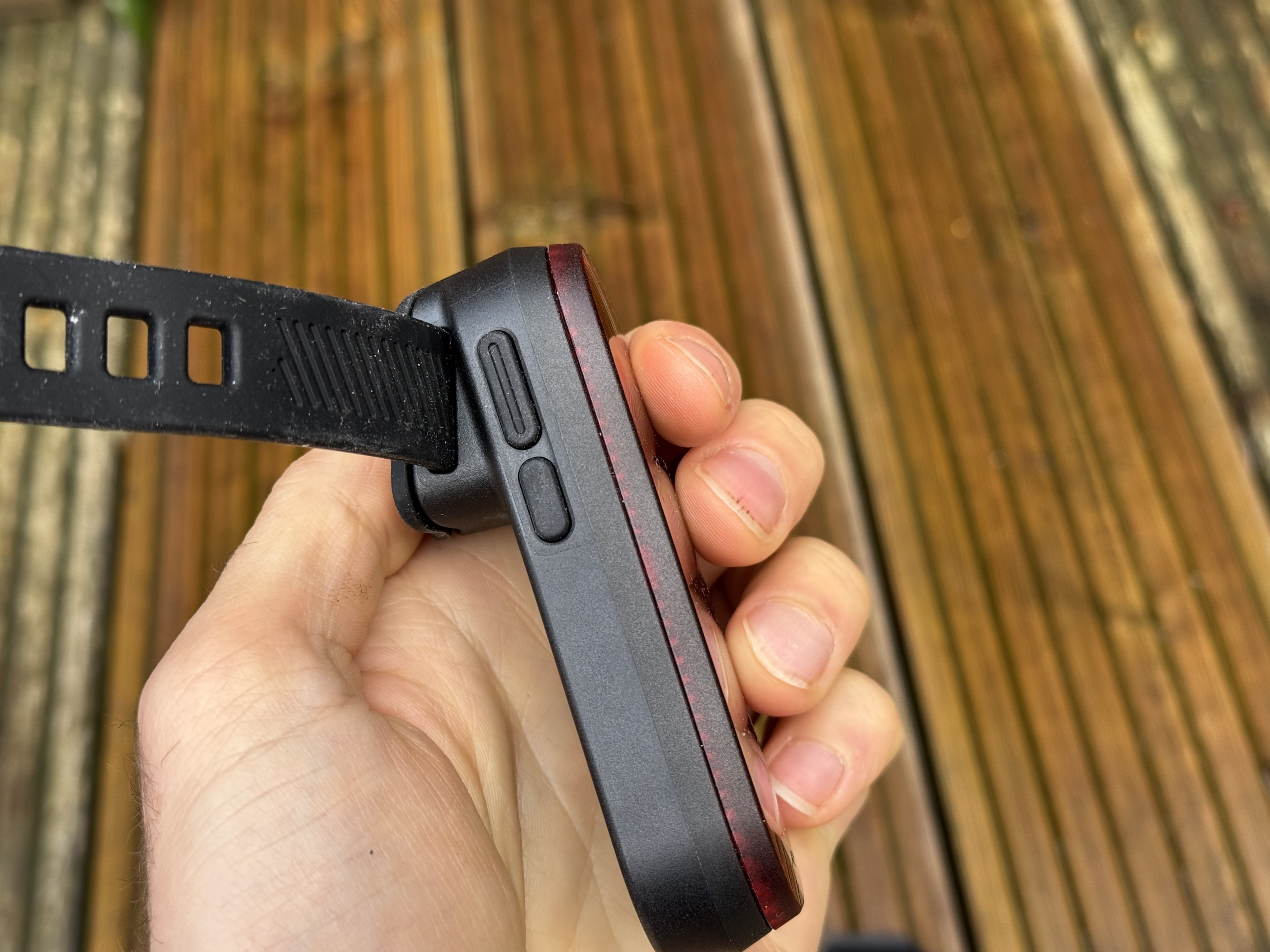
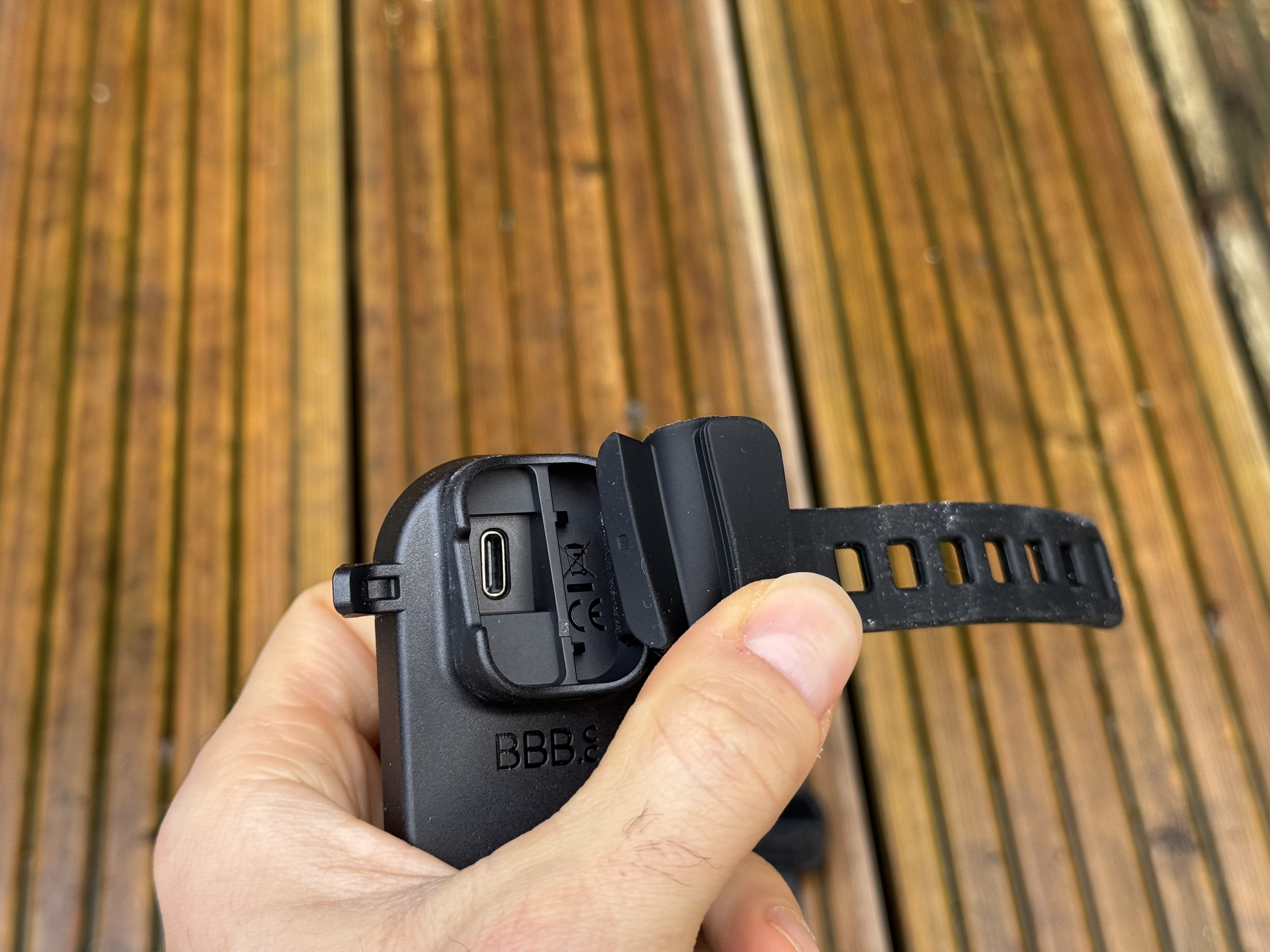
Having an inbuilt speaker means the BBB can be used as a radar unit without any bike computer for alerts. The 85dB chime is very loud so you won’t miss it even when riding at speed. However, it beeps to alert of a car behind, then continues to beep until all cars have passed. When riding in towns I found this a bit much, and have resorted to switching the sound off. I ride with a bike computer, so I get the audible beep to alert me that a car is there, followed by a visual indicator of where the car is. However, the ability to use it without the need for a £150+ bike computer does help boost the accessibility of this light and usability of it for a far wider array of the cycling public, which is always a good thing.
As far as radar performance itself, it has mostly been very good. The detection range appears to track with the 190m claims. It’s behind the Trek offering, but that was unreliable for me with the narrow field of view. The BBB tracks very in line with the Wahoo radar, which is a good benchmark to hit. The only issue however is that sometimes it will stop registering that there is a car behind if that car is matching your speed. This is most prevalent in cities or country roads where a car might spend a bit more time behind you. In most cases however, it worked very well.
Battery though is an area where it has not been the best. Battery life claims are all based on the light only, no radar, which is a bit dodgy given radar only with no light is the only options that excludes one or the other. With the Day Flash mode on, and 14 hours of claimed battery life, the total I got out was 7.5 hours, nearly half of what was claimed. This was from 100% fully charged to completely dead over the course of a week and a half of outdoor riding. A saving grace was that from the time of the low battery warning I still had around 4 hours of use, and from the critical battery warning I still got about 1 hour of light and radar performance before it died.
This is similar to what my fairly aged Garmin Varia can manage at best now, and similar to the Trek Carback. The Wahoo Trackr outperforms this significantly, as long as the brake light feature is not on.

Value
Value wise is of course more than just about cost, but given that many radar options on the market exceed £150, coming in at £119.99 makes the BBB Signal Radar one of the cheaper priced offerings on the market. Wahoo, Garmin, and Trek are all a good chunk more. Even the MagicShine Seemee R300 is £10 more expensive.
The BBB is not the best performing out of this host of radar lights, but in several individual aspects it beats the others. The range is not as good as the Trek, but the FOV is greater as is battery life. The Wahoo has greater battery, but the BBB has more modes and Peloton mode. While the Garmin Varia Radar lacks USB-C, still, and doesn’t feature the array of modes or the standalone use. The new Garmin Varia RearVue however changes this with USB-C and a host of other features, but is £259.99 and still requires another device to alert to.
This standalone use is what really drives the value. Other units require a bike computer, or a phone which needs to be mounted on your bars. Both of these options require an additional outlay, especially for newcomers to cycling who might want the safety features of a radar light but don’t need a bike computer. That makes the total package cost easily half any other offering and improves both the value and accessibility.
Image 1 of 2
Verdict
The BBB Signal Radar is an interesting offering, as it certainly is not the best radar available on the market, but it is one of the cheapest offerings available. This low cost is not accompanied by any lack in performance; the fundamentals of a well-functioning radar and light are present with no compromises to their capacities. Battery life is lower than others, as are peak capabilities and added features, but at this cost that can frankly be forgiven.
The real standout feature for me is the ability for it to be used without an external device thanks to the inbuilt audio alerts. Although not necessary for my specific needs, it opens up the accessibility of this light to be used by people who perhaps don’t want to invest in a bike computer but still want the safety benefits of a rear radar light. That makes it really stand out in my books.
|
Attributes |
Notes |
Rating |
|---|---|---|
|
Design and aesthetics |
The design is good enough, but it is not as sleek as Garmin or Wahoo, but better than Trek. The two buttons work well to control everything, and the charge port is well hidden away. |
8/10 |
|
Light performance |
The light performance is good, with a good array of flash patterns and modes. Not quite as bright as Wahoo or the latest Garmin, but works brilliantly in all conditions. |
8/10 |
|
Radar performance |
The radar is not as good as the latest Garmin, and falls a little short of the Wahoo in terms of maintaining detection of traffic that maintains distance. The FoV appears a little smaller, but the range is strong. |
7/10 |
|
Practical features |
I love the standalone use feature, it makes the radar far more accessible than ones that require a computer. No brake light feature or smart on/off, but mode memory is useful. |
8/10 |
|
Battery and charging |
The battery life is not as good as quoted, especially as quotes are for light only without radar. However it beats the CarBack in this area and isn’t far from the Wahoo when brake light is active. Charges quickly and well though, with useful battery indicator. |
7/10 |
|
Value for money |
It’s the best combination of cheaper price and high quality of performance that I have encountered. Some perform better, but cost a lot more, while others are similar price, but perform far worse. This offers the best value for money balance |
10/10 |
|
Overall |
Row 6 – Cell 1 |
80% |