Recently, POC quietly added the brand-new Cularis Pure to its mountain bike helmet lineup. It’s almost an exact copy of the brand’s standard Cularis helmet, which made waves last year when it launched with the top score in Virginia Tech’s safety ratings. The new Pure version shares the same shell but has some subtle differences, as well as the not-so-subtle interchangeable cover design.
POC refers to these as “interchangeable peak covers,” and they are essentially snap-on plastic shells covering the top of the head, including the visor, or peak, if you will. With these swappable covers, users can choose between wide open vents for maximum airflow or fully covered vents for weather protection. It’s a fairly novel design, making it an adaptable helmet for a wide range of conditions.
POC Cularis Pure Details

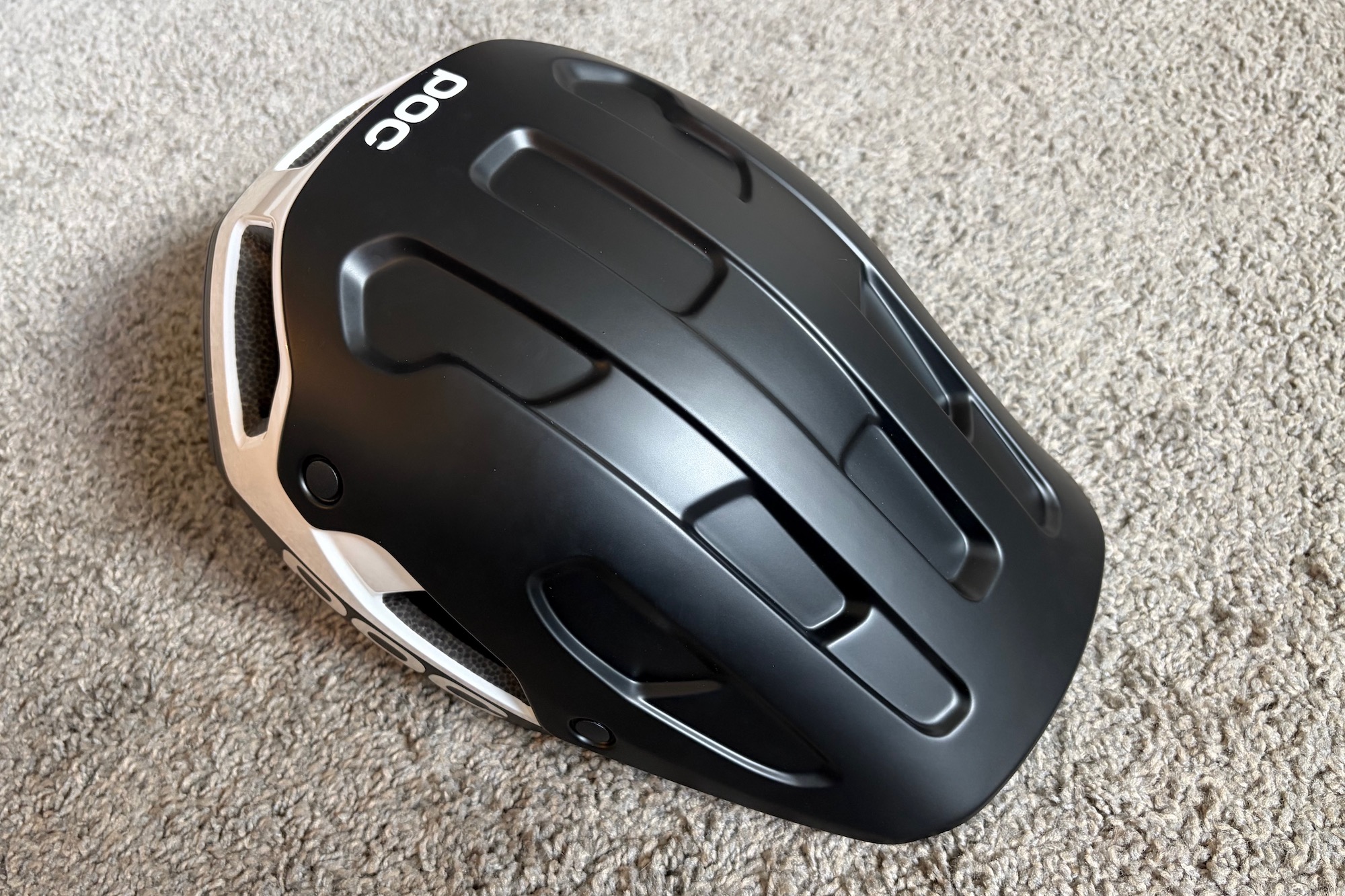
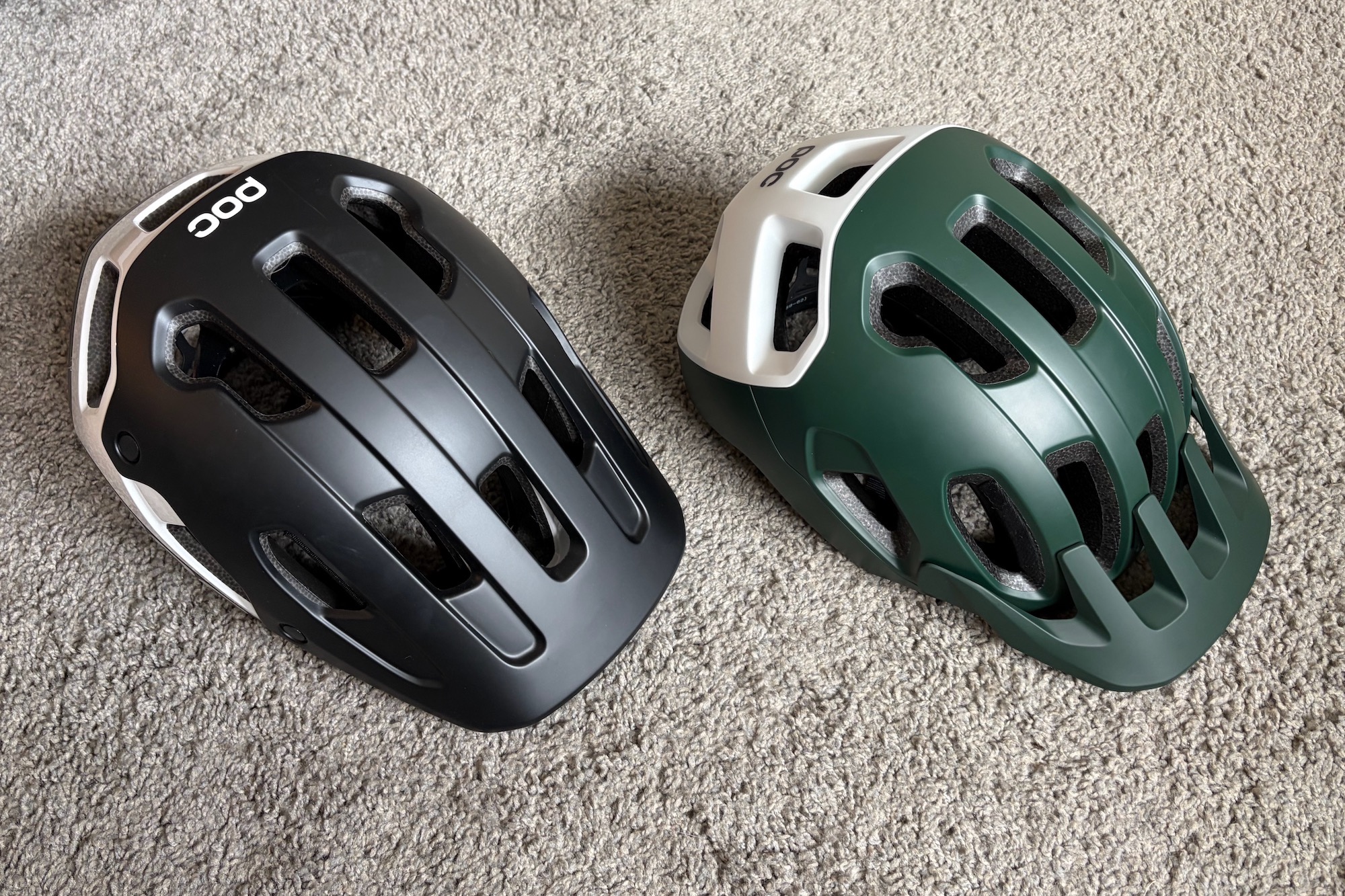
Until you look closely, the Cularis Pure looks incredibly similar to the standard Cularis. In fact, the shell is almost an exact match, with the same silhouette, level of head coverage, and a matching ventilation layout. The primary difference is that the visor is a continuation of the interchangeable cover, which straightens out that line a bit. Instead of fittings for a visor, the Pure has four indentations for the snap attachments that hold the interchangeable covers in place.
Like the standard Cularis, the Pure has a lightweight polycarbonate shell with an in-mold EPS foam liner. It has extended coverage at the back of the head and the temples, and a relatively deep fit. Inside, it uses a more traditional MIPS Evolve Core liner for rotational impact protection, and the padding is attached directly to the liner. This is one of the differences between the Pure and the standard Cularis, which uses MIPS Air Node, and has MIPS integrated into the padding itself.
At the back of the head, the dial for the 360° adjustment system makes it easy to add or remove tension for security and stability. The occipital cradle also has three positions of height adjustment to optimize its comfort and fit. The straps have an adjustable Y-shaped splitter around the ears, which I found to be easier to adjust than most, along with a standard plastic buckle to connect them under the chin.


The Cularis Pure does have a visor, but given that it is attached to the interchangeable covers, it is not adjustable. In my limited experience, it is in what I’d call the ideal position to provide some sun blocking ability while not being in my field of view. With the snap-on attachment of the covers, POC says they are designed to break away in the event of a crash.
Like the Cularis, the Pure has an “eye garage” with grippy material added to a couple of the front vents to hold onto your sunglass arms. This works with the ventilated cover, but those vents are inaccessible when the protective cover is attached.
Interchangeable Covers
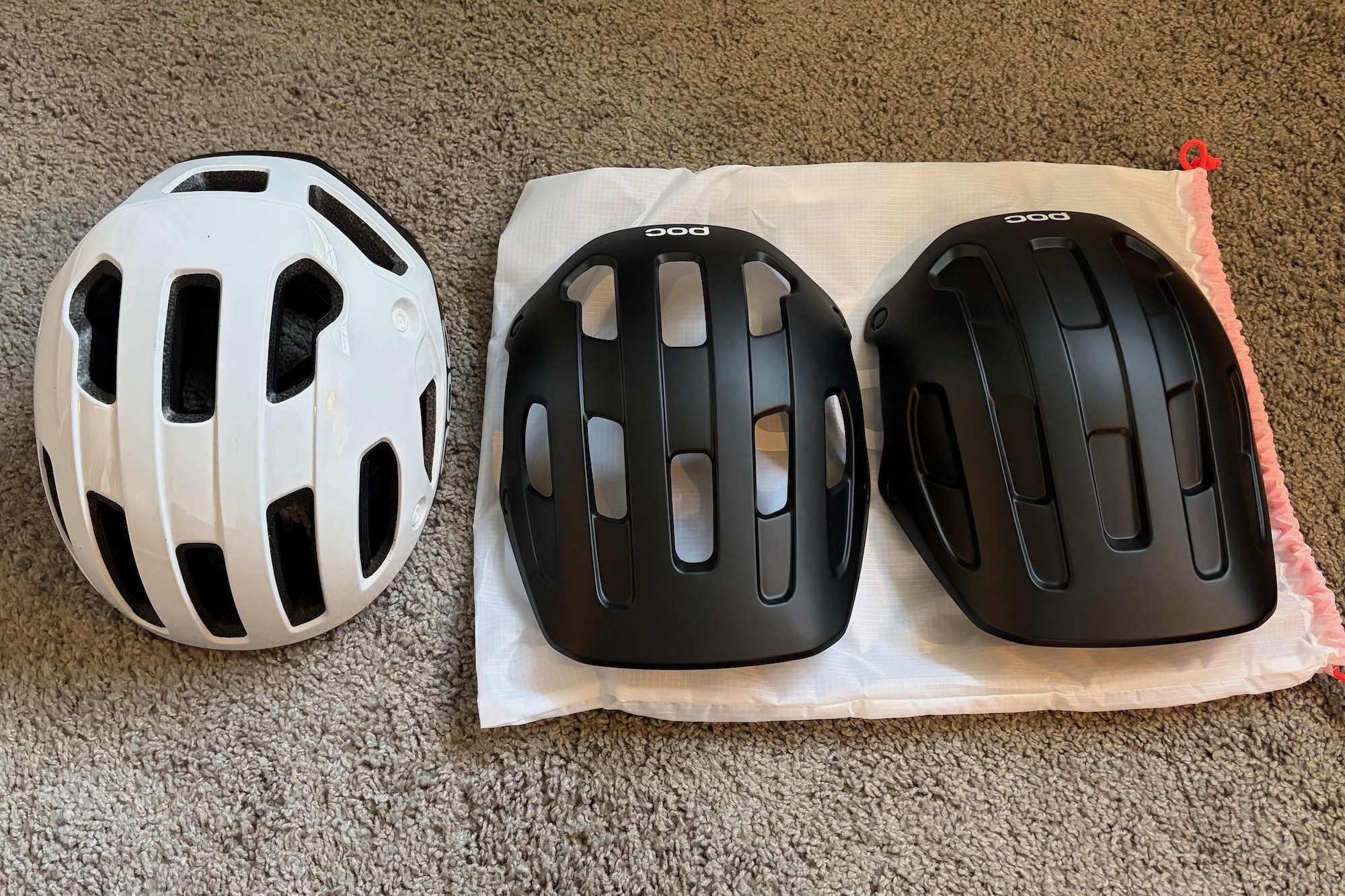
The most unique feature of the Cularis Pure is undoubtedly the interchangeable covers. With this system, riders can choose to leave the vents wide open to enjoy the prodigious airflow the Cularis is known for. Or, they can switch to the protective, closed vent cover for use during cold and/or wet conditions.
For clarity, the protective cover fully blocks the 3 vents on the top of the head, but it only partially blocks the front vents. Air that passes under the visor will still pass through the front vents, into the internal channels, and pass out the rear exhaust vents. From my brief experience, it seems the overall airflow is reduced by about 50%, but that’s just a guess. It doesn’t completely block airflow, but it’s much warmer than the vented cover. And on really wet days, it seems like the cover will block most of the moisture that would otherwise reach your head.

Another possibility with the interchangeable cover design of the Cularis Pure is using it without either of the covers. While most people buying a helmet like this probably won’t do that, I can’t see any reason why someone couldn’t. Without a cover attached, it’s basically a visor-less road or gravel helmet, although the snap indentations look a little odd.
Weight
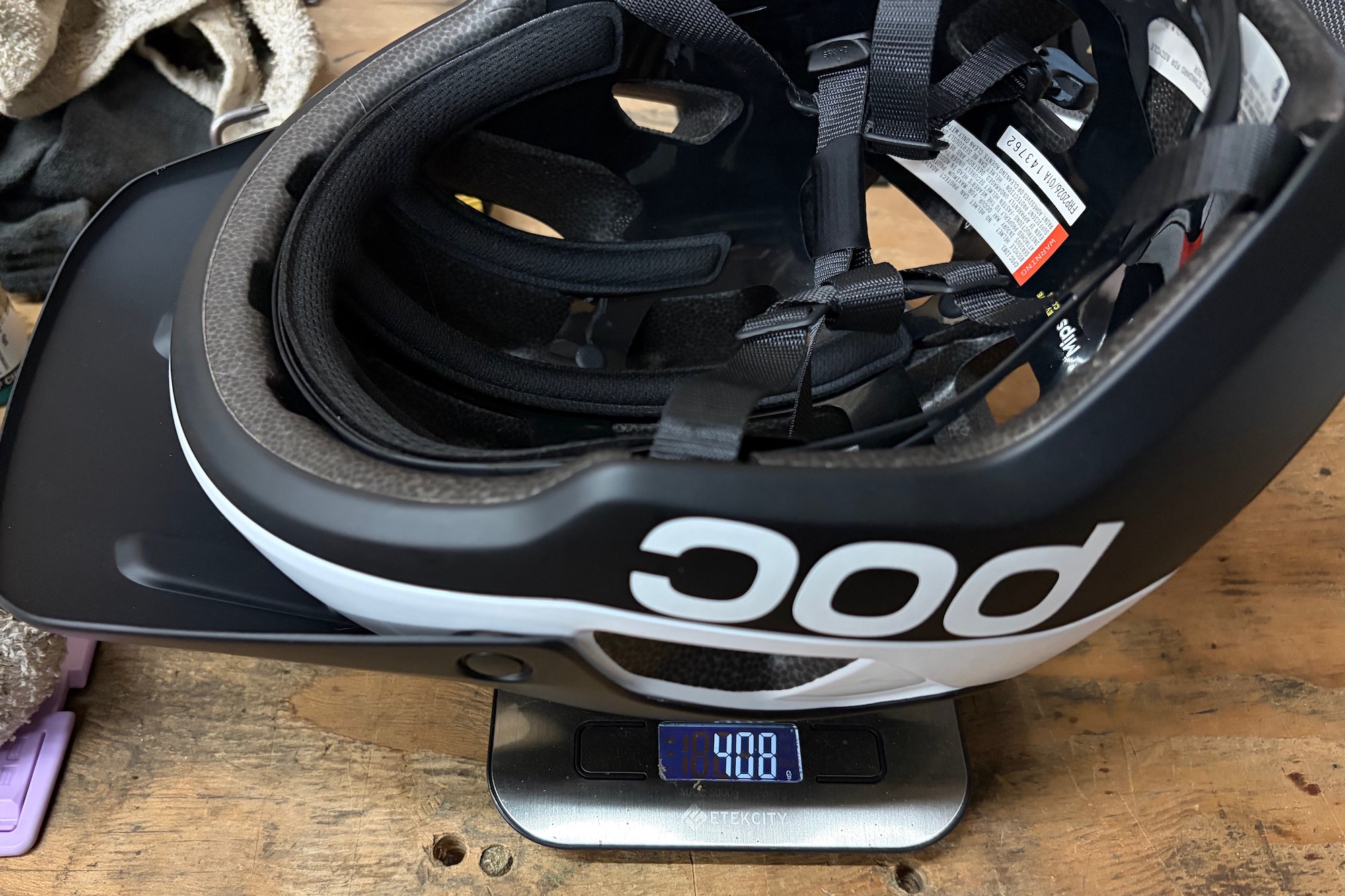
My size large POC Cularis Pure weighs in at 408 grams on my scale, which is just 2 grams less than POC’s claimed weight of 410 grams. POC lists the claimed weight of the small at 370 grams, and the medium at 380 grams.
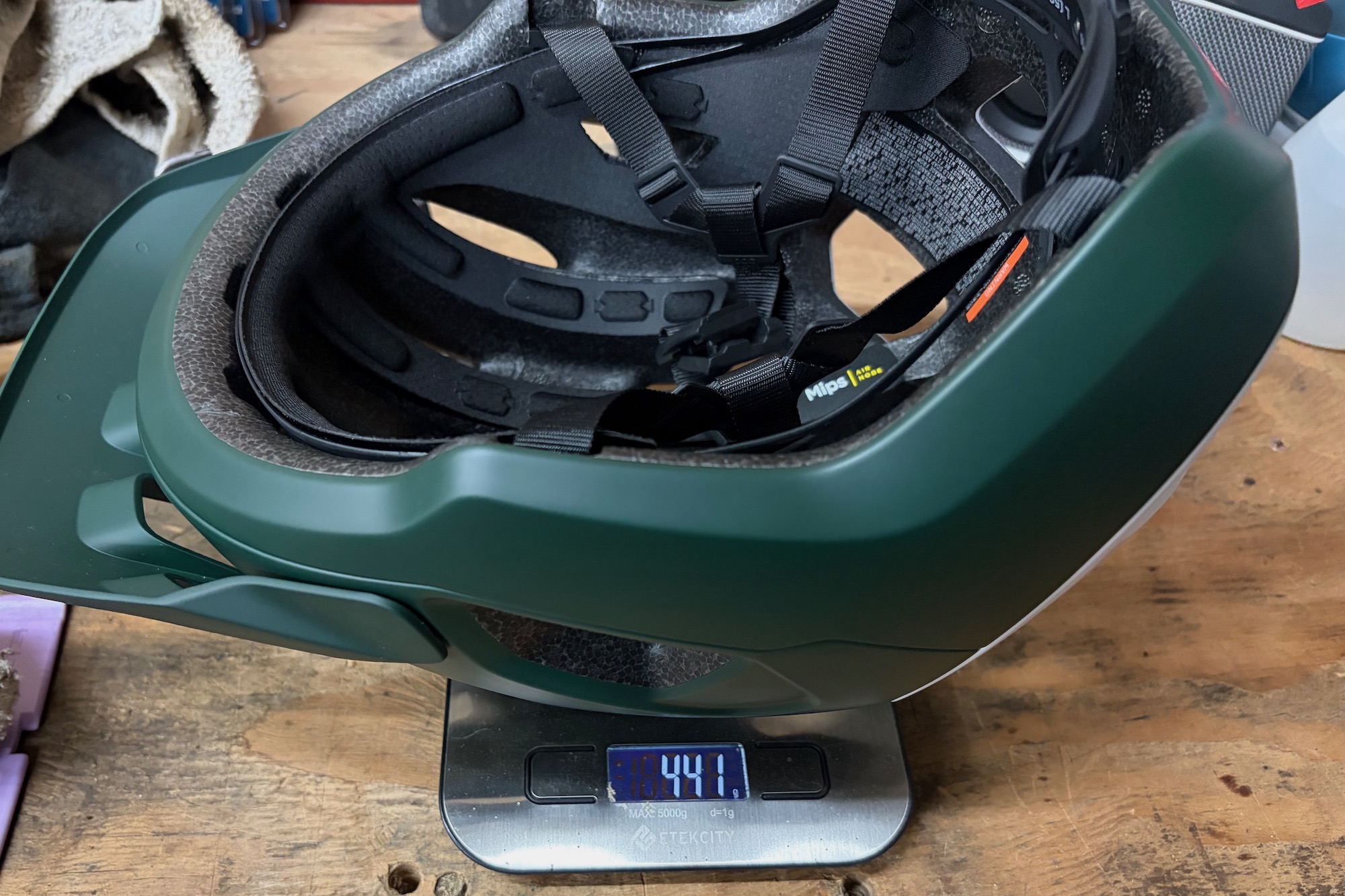
For comparison, my size large Cularis (non-Pure) weighs 441 grams on my scale. It seems that the adjustable visor, Aramid bridges, Recco reflector, and Fidlock buckle — the features not included on the Pure model — add up to be ~30 grams heavier.
Safety Rating
As of today, the Cularis Pure does not appear on the list of helmets tested by Virginia Tech’s helmet lab. So it doesn’t have a score or a star rating to mention as a basis for comparison. That said, the standard Cularis is currently ranked #4 of all the bicycle helmets tested, and #2 of the mountain bike helmets on the list.
While one could expect the Pure version to perform similarly, it would be presumptuous, given that they are not identical helmets. The Pure lacks the Aramid bridge reinforcements and uses a different MIPS system than the standard Cularis, both of which may affect its performance in impact testing.

Colors
The Cularis Pure has POC’s distinctive styling and is currently being offered in six color options. The Uranium Black Matte is solid black and is by far the most subtle. It also comes in Uranium Black Matte/Hydrogen White, Hydrogen White/Uranium Black Matte, Mineral Grey/Hydrogen White Matte, Bronzite Brown/Lazurite Blue, and the eye-catching Rhos Red Matte/Citrine Yellow Matte.
Sizing
The Cularis Pure comes in three sizes: Small (51-54 cm), Medium (55-58 cm), and Large (59-62 cm).

First Impressions
I got my hands on the Cularis Pure last week and have managed to get a couple of rides in it so far. The weather has been very pleasant and unseasonably warm, and I’ve been using the vented cover, which allows plenty of airflow. I pedaled up and down the street with the protective cover, which blocks air from entering directly from the top, but still allows a decent amount of air to flow through below the visor. The covers are quick and easy to swap, with just 4 snaps securing them on the helmet. This design is definitely interesting, and I can see how it could be very useful for riding in cooler temperatures, wet conditions, or both.
Aside from not being able to adjust the visor’s position, it doesn’t seem to affect the helmet’s performance in any other way. If cool temps or inclement weather are typical challenges you face, the flexibility of the Cularis Pure’s interchangeable cover design could help you address that. I have a friend who doesn’t have much hair on the top of his head and complains about getting sunburn on his scalp through his helmet vents. This interchangeable cover design could, unintentionally, be a solution to that issue.

With a 59cm head, I’m almost always on the cusp between medium and large helmets, and I can usually wear either size. Not so with POC helmets. POC’s sizing doesn’t overlap like most other brands, plus its helmets run a bit narrower, so I’m unable to fit comfortably into a medium. That said, the large fits me well, is quite comfortable, and has a relatively deep fit with a reassuring amount of head coverage.
Beyond that, the Cularis Pure has faded into the background on my test rides so far. It’s comfortable, stable, and secure, with good ventilation and a protective feel. I’ll probably complain about the non-adjustable visor at some point, but so far it hasn’t been problematic with the sun higher in the sky. Otherwise, it seems like a novel approach to helmet design that might address the needs of riders seeking an adaptable helmet for varying weather conditions.
POC Cularis Pure: Pricing and Availability
The new Cularis Pure helmet retails for $210, which is $50 less than the standard version. It is available now directly from POC, your local POC dealer, or POC’s online retail partners. Head to the POC website to learn more.
The post First Look: POC’s Cularis Pure Offers Adaptable Ventilation and Weather Protection with Interchangeable Covers appeared first on Bikerumor.