Years ago “revenue sharing” was all the rage with team managers making public calls for the major race organisers to pay them money. Only even if a race owner felt inclined, when you looked at the data the sums available were small.
Today the calls remain but the sums have changed so time to look again with updated numbers. Especially as it’s been floated by no less than the New York Times, as the screengrab above shows.
The premise of the NYT article (paywall) is that the Amaury family that owns Amaury Sport Organisation (ASO) is “thoroughly resistant to change”, mentioning the FIFA World Cup which “is expected to pull in $13 billion, double the sum of 2022’s tournament. It started with more teams and matches; interrupting games with “hydration breaks” that increased the number of television commercials; and enacting “dynamic pricing,” which sent ticket prices soaring” and the suggestion the Tour de France and pro cycling should embrace similar practices
The article also says “The family doesn’t share any of the television rights revenue, reportedly worth more than $170 million a year. That starves the sport of capital that could expand the fan base and leaves cycling in a precarious spot.”

The $170 million comes with a hyperlink to sportspro.com which in turn links to bfmtv.com which uses a €150 million number (roughly $170 million). Only BFM itself says this is an informed estimate, and crucially this is total revenue, as in TV income and hosting fees, the publicity caravan, merchandising and more and cites a number of €150-200m. It’s not the TV rights, but we’re not here to fact check the NYT.
Still let’s take the $170 million. Let’s also assume ASO has no costs, ie no offices, no staff, no suppliers, no tax, and hotels give away rooms in July so that $170 million of revenue is still there, untouched. Now compound that wrong assumption by another where ASO pays out half of this money to teams, a pot of $85 million. Divided between 23 participating teams that’s $3.7 million per team. Nice but it doesn’t get teams out of the “precarious spot”.
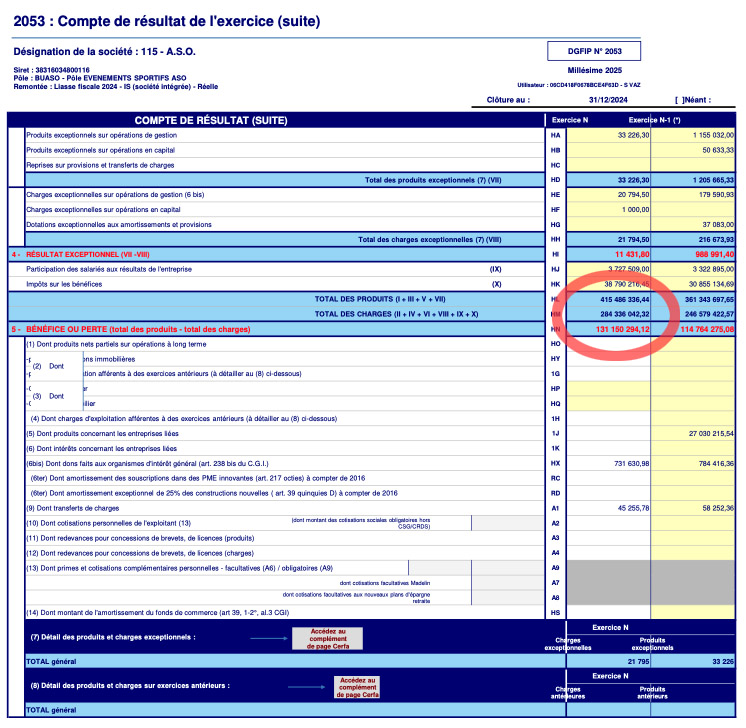
Rather than use fourth-hand estimates, ASO does publish annual accounts. 2024, the latest available, show total revenue of €415 million, costs of €284 million and a profit of €131 million, you can see this highlighted in the screengrab above from the accounts filed with the French government.
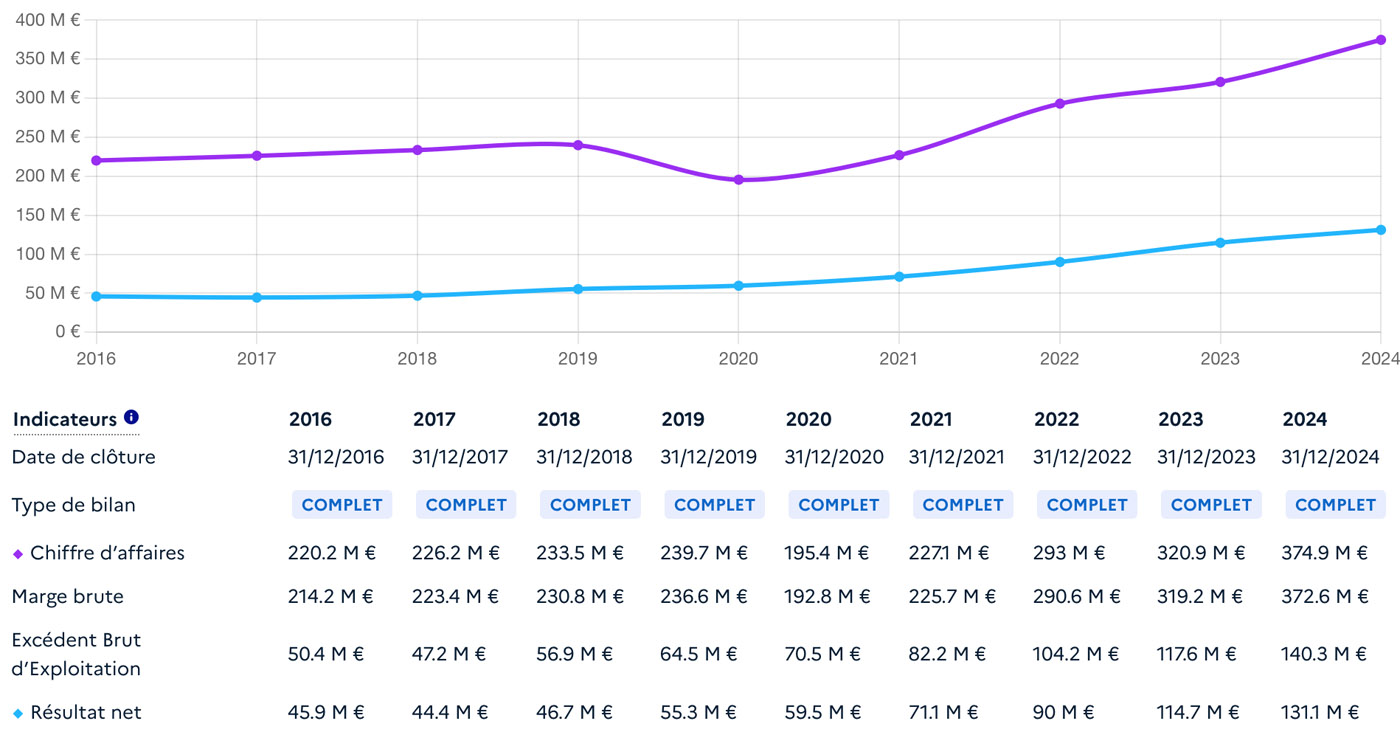
The government page also helpfully lists the numbers over the years and even plots them in a chart. You can see above how revenue and profits have been growing chez ASO. (For any sticklers, one image has gross revenue of €415m, the other uses net revenue of €375m).
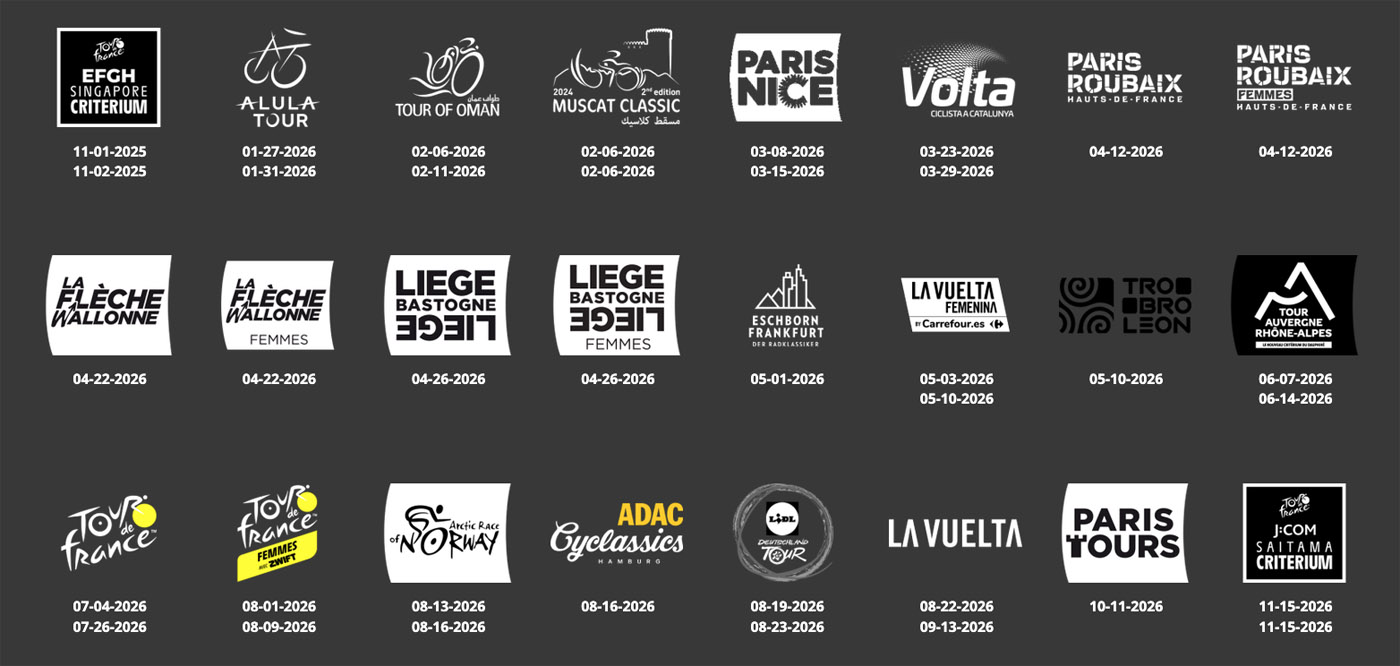
ASO is famous as the Tour de France organiser but promotes other cycling races, you can see the portfolio in the screengrab from the Tour de France website. It also does the Dakar motorsport rally, the Paris marathon, the Etape du Tour ride and more. It was also the organiser for some of the Paris Olympics, handling the cycling, triathlon and open water swimming events, apparently the first time a private company was brought into run part of the games.
Let’s make some more wrong assumptions. Assume the €130 million annual profits all come from the men’s Tour de France. Now imagine half of these profits are paid to 23 teams and it’s €2.8 million per team. Nice again, but even less game-changing and we’re still relying on wild assumptions.
We might as well go full reductio ad absurdum and assume all of ASO’s profits must be paid out to men’s cycling teams: they’d get €5.7 million each.
The average World Tour for 2026 is €33.1 million ($38.7m). So €5.7 million is 17% of the average team budget which could help, but it still doesn’t change the brittle model where teams rely on funding from title sponsors.
If Movistar, Cofidis or EF decided to halt sponsorship today and the structures could not find a replacement in time, €5.7 million would not keep a team afloat it, it doesn’t make the sponsorship model less precarious. Above all, remember to use this amount we’ve used wild assumptions.
If you’re bogged down in numbers by now, let’s step back as the concept sounds bold. Teams owned by nation states, billionaires and multinational corporates want money from company that turns over €415 million? It sounds like reverse redistribution.
The Tour organisers could equally turn around and ask teams for money instead, why not charge a start fee knowing that teams depend on participation, and the money could be re-invested in added safety? Or indeed point out that teams make money because of the Tour de France, if the race did not exist or their teams could not ride then team managers would have smaller budgets to reflect the reduced audience. Audacious? Yes but it’s more rational than assuming all of ASO’s profits come from the Tour, that all of this should be donated to the teams and it would make a meaningful difference.

Conclusion
Revenue sharing is one of those zombie arguments that won’t die. Whether an American newspaper or a social media post, there’s an enduring the sense that ASO should share profits, but often with little follow-up on the actual numbers or distribution because the moment you go from “ok” to “how much?” is when you can see it’s not as obvious as it sounds. Even if ASO decided to donate all its profits to men’s pro cycling teams it wouldn’t alter their brittle sponsorship model.
What’s probably behind the sentiment is the monopoly ASO has on the sport, the way the Tour de France is the dominant event and how this matters for sponsorship but also for control over the sport. It’s less the money, more the position.