About a month ago, Ibis Cycles launched its latest mountain bike, the Ripley SL. Unlike your typical bike launch, however, very few members of the cycling media have had the chance to throw a leg over this lightweight short-travel trail bike before or since it was announced to the public. So, when the opportunity arose last week to visit Ibis’ U.S. carbon factory, Santa Cruz headquarters, and test ride the new Ripley SL, I jumped right on it.
One of the main things that stands out about the new Ripley SL is that the frames are being produced in the U.S. at Ibis’ solar-powered factory in Watsonville (Pajaro), CA, not far from the brand’s Santa Cruz HQ. Before my test ride, I was given a tour of the facility by Ibis’ engineering manager, Colin Hughes, and company founder Scot Nicol. It was a fascinating process to observe, but it deserves much more attention than I’ll give it here. I’ll cover that in a separate piece in the near future.
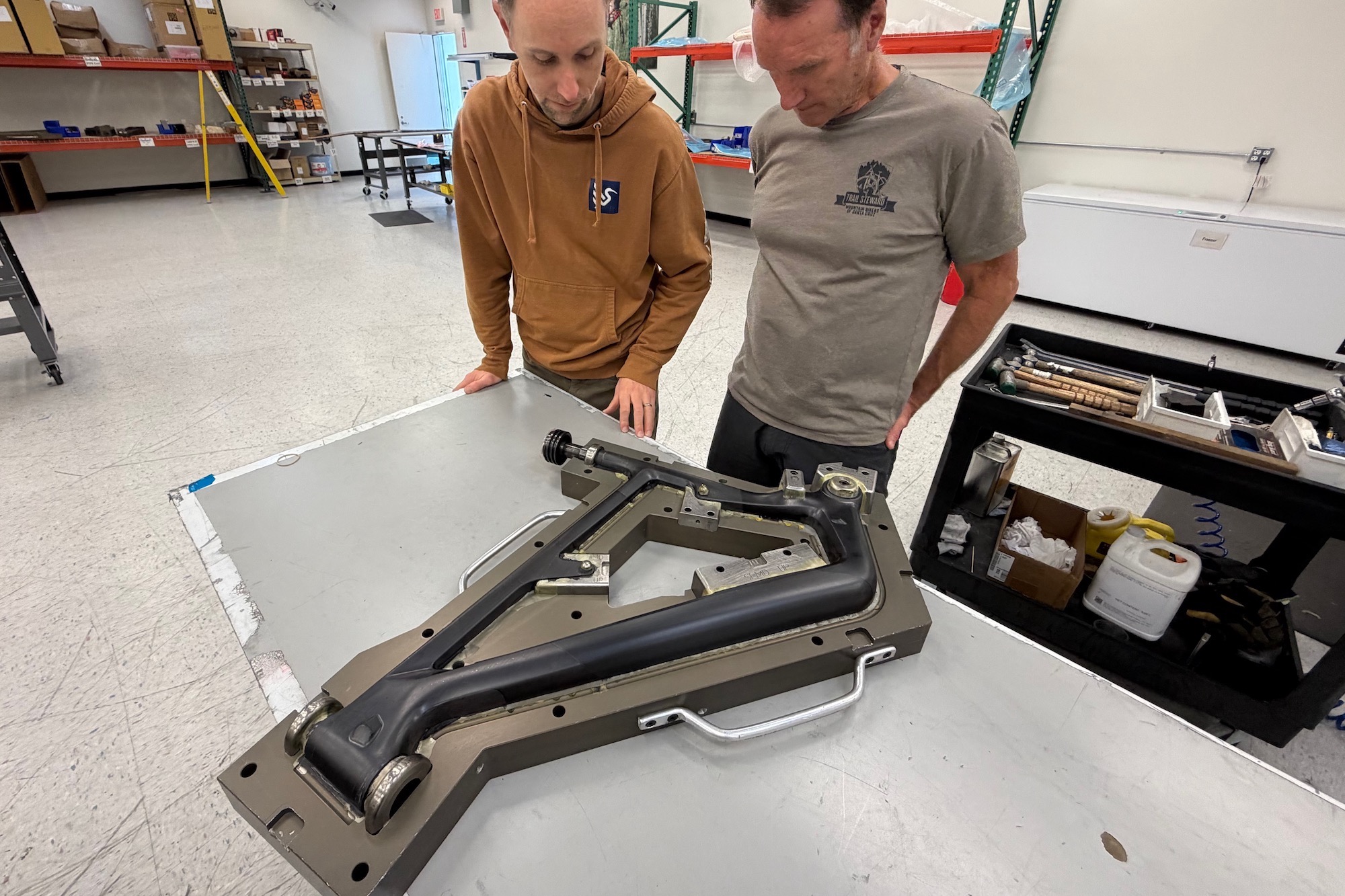
Unlike many other brands, Ibis has adopted a more measured approach to the Ripley SL’s production and rollout. The solar factory is methodically and meticulously producing frames, and complete bikes are being sent out to dealers to fulfill orders. There’s only a small handful of demo and test bikes around, including a few at the Ibis HQ in Santa Cruz, CA. So, after the factory tour, Colin, Scot, and I headed there and got set up on some fresh Ripley SL’s, then went out for a rip on some of the local trails where Colin and the Ibis team tested the bike during its development.
Ibis Ripley SL: First Ride Review
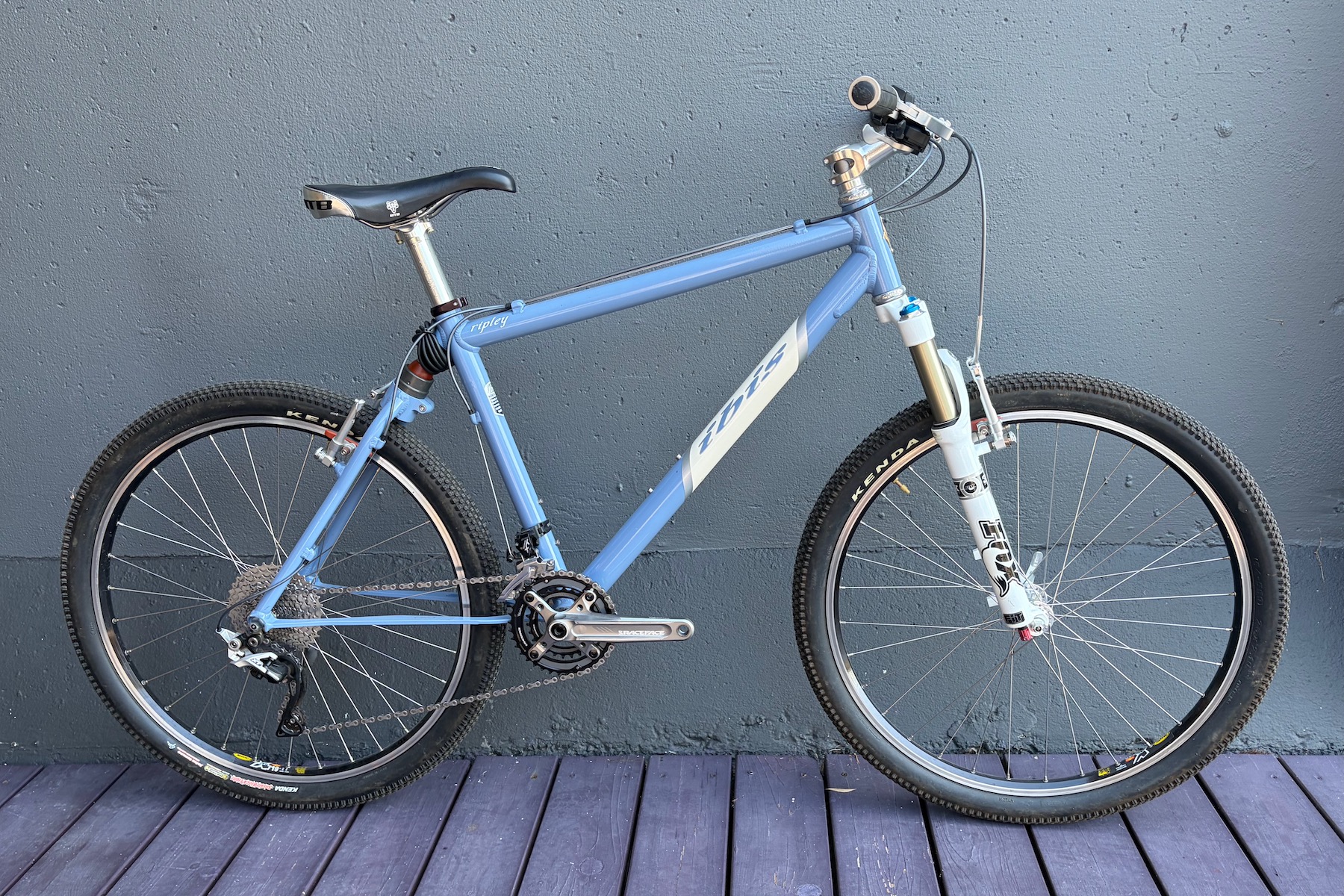
Before diving into my review, here’s a quick rundown of my history with the Ibis Ripley. Over the years, I’ve become quite familiar with most of the Ripley models. Except for the original, I actually forgot this bike even existed. The first Ripley was an aluminum-framed soft tail that got 1.25″ of rear travel with flexible chainstays. I never rode that bike, but I did get to check it out in person just the other day. Boy, how things have changed.
My Ripley experience started way back in 2016 with a bright orange Ripley V2, my first 29er. I bumped the fork travel to 140mm and essentially created the Ripley LS. In 2018, I upgraded to a tennis-ball yellow (vitamin P) Ripley LS V3, once again with 140mm of fork travel. I’ve ridden and continue to ride great bikes of all kinds, but the Ripley V3 may have been my favorite bike of all time. I just got along with it so well.
I never owned the Ripley V4, but I rode a test bike for several weeks, and a friend loaned me his personal tricked-out build to race at the Downieville Classic in 2020. The V4 Ripley was excellent, with a lighter weight and updated geometry that made it shockingly capable for its travel length. I really enjoyed riding it, and I understand why many considered this the best version of the Ripley to date. Unfortunately, I’ve never ridden the Ripley V5, but Zach tested it when it launched in the summer of 2024.
Setup and Fit
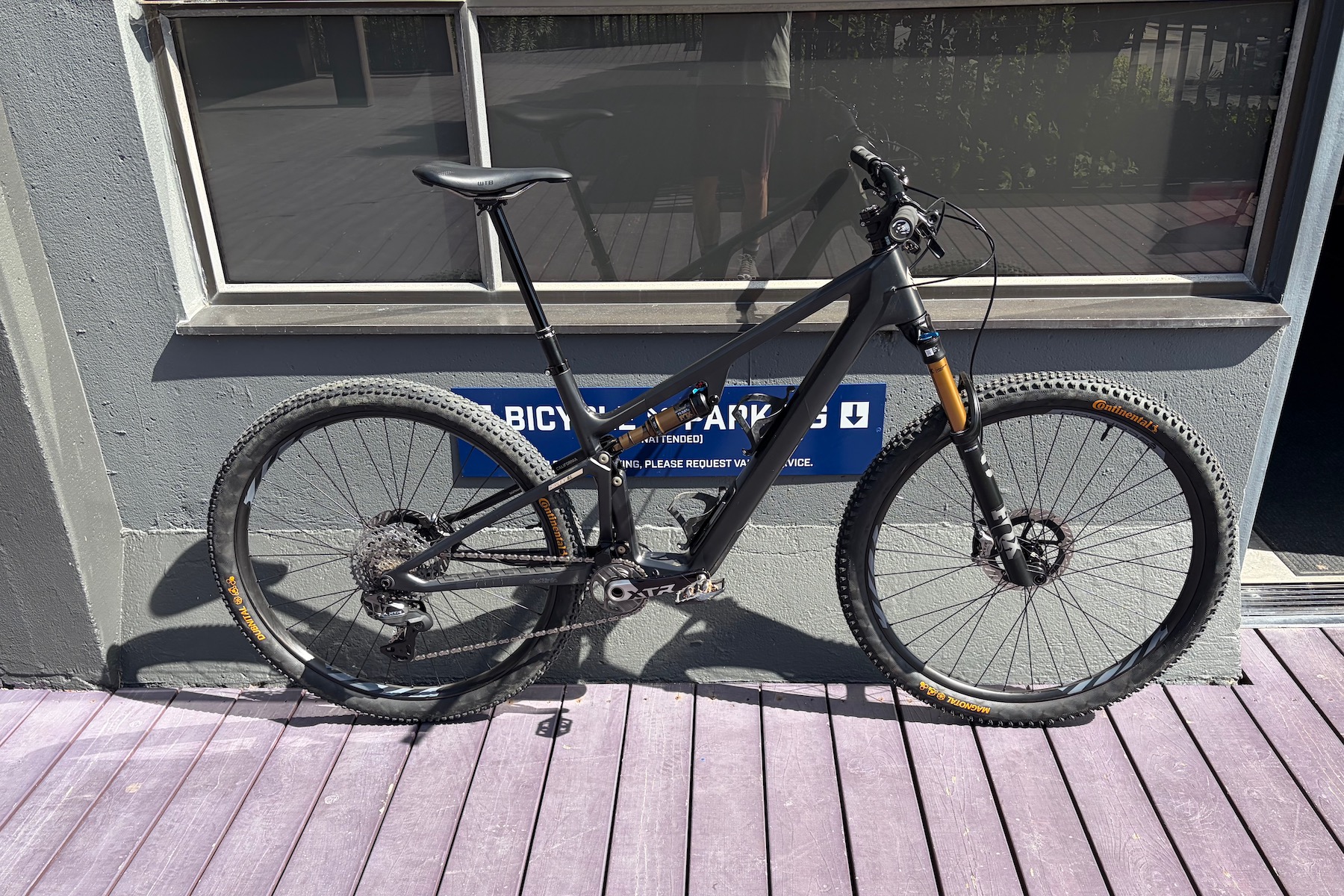
I’ll get this out of the way, but I think this bike looks amazing. I think the lines are great, and the Raw Carbon frame is subdued and stealthy-looking, but the clear coat lets you see the super intricate, precise carbon layup below. Since Colin was integral to the design, testing, and production of the bike, he already had his own Ripley SL in the Tahoe Blue colorway, which was striking in its own way. At the Ibis HQ, Nate, the Demo Center technician and retro bike aficionado, set both Scot and me up on size large Ripley SL’s with the XTR build ($11,449).
At 6’0”, the large frame felt like a perfect fit for my lanky body. While the light weight of the Ripley SL certainly feels very XC, the geometry leans a bit quite a bit more toward comfort than a full-on race bike. For me, that was most noticeable in the large frame’s 484mm and trail-oriented stack height, plus a riser handlebar. Riders seeking a more aggressive body position for racing could still easily achieve it with a flat handlebar and spacer adjustments. But for the majority of folks outside the race course, I think the more relaxed geometry will be welcome and a better fit for everyday riding.
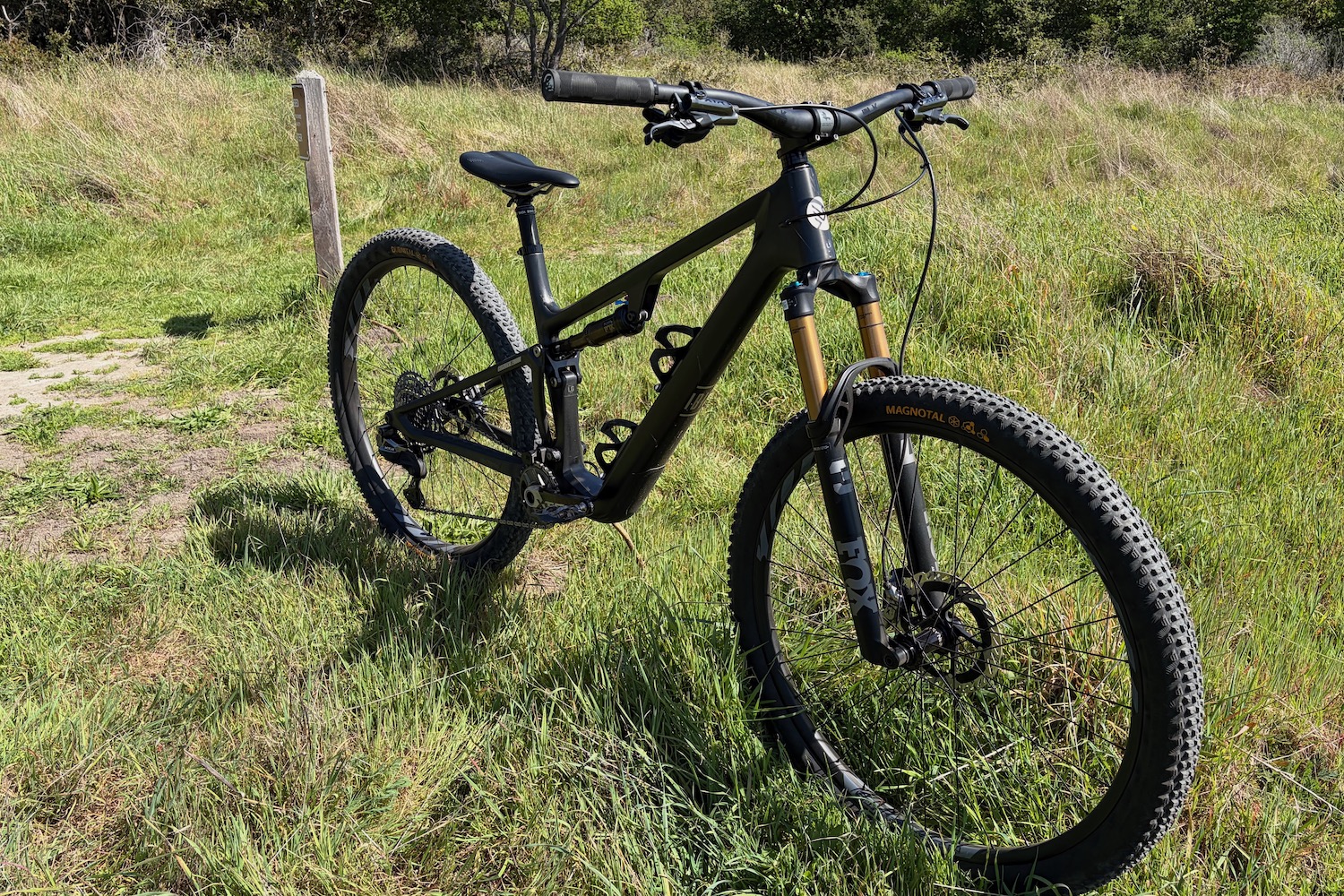
With the Ripley SL, Ibis went with size-specific chainstays and seat tube angles. The chainstays grow by 2mm per size from 432 to 440mm, and the seat tube angle steepens by 0.25 degrees per size as well. While seemingly very subtle, these changes do have a notable impact on the proportionality of the bike, fore-aft balance across the size run, and the rider’s seated pedaling position. I felt comfortable and well-positioned on the bike, right off the bat.
At the Ibis Demo Center, Nate set up the Fox suspension for my weight, then, after a sag check and a few laps around the parking lot, confirmed that I was good to go. Other than my parking lot laps and some quick testing when the bike was built, it otherwise looked brand-spanking-new. We didn’t weigh my Large test bike, but we did toss a medium on the scale, and it came in at 25.22 pounds with the XTR build, including two Arundel bottle cages but without pedals or the STOW in-frame storage bags.
Riding the Ripley SL
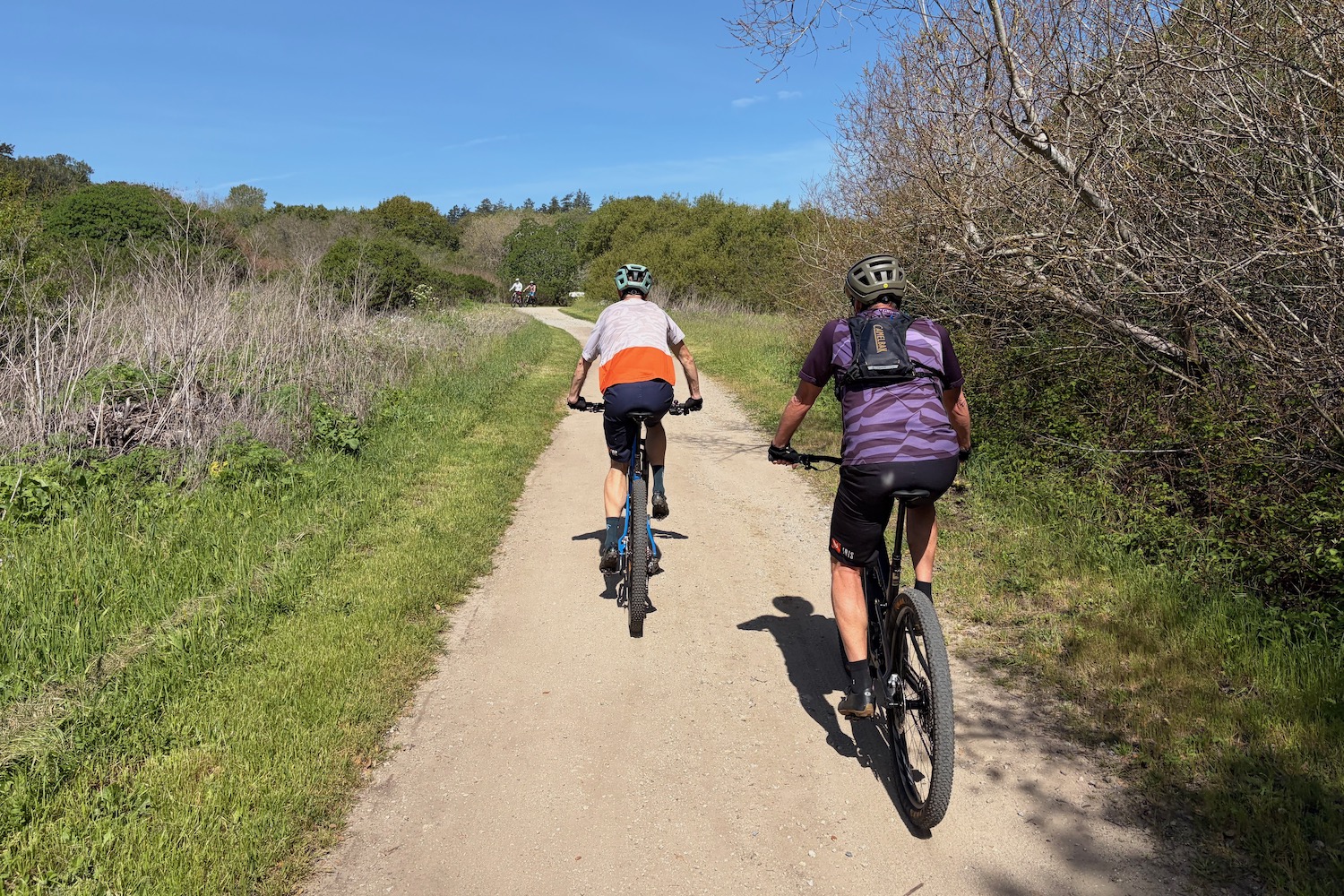
I’ll start out by saying that I have exactly one ride on the new Ripley SL, which was 18.65 miles long with 2,072 vertical feet of elevation gain. This is by no means a comprehensive review, just my first impressions based on that one ride. While it was a short introduction, the ride included just about every surface type, from paved bike paths to gravel roads and smooth singletrack, and ran the gamut of terrain from mellow to moderately aggressive.
As mentioned above, these were some of the trails Colin and crew rode extensively during the bike’s development. So, now, in addition to seeing the Ripley SL frames go from sheets of raw carbon to a finished product, I was riding one of the recently made frames with one of the main design/production engineers — and the brand’s founder — on trails where the bike was tested. It was a pretty unique experience, to say the least.
Climbing
Right off the bat, the Ripley SL felt almost eager to move, like a kid with pent-up energy to burn. Just cruising along the bike path en route to the trails, it was effortless to pick up speed and carry momentum. I find something very satisfying about the immediacy and directness of bikes like this, where low weight, fast-rolling tires, and supportive suspension combine for a super-efficient feel. When compared to my everyday ride, a 30-pound-ish trail bike, it honestly felt like cheating. I’ve said the same about some of the XC race bikes that I’ve tried in the past couple of years as well. It’s a similar feeling to riding an eMTB at a lower output setting, but at the same time, almost the polar opposite of actually doing that.
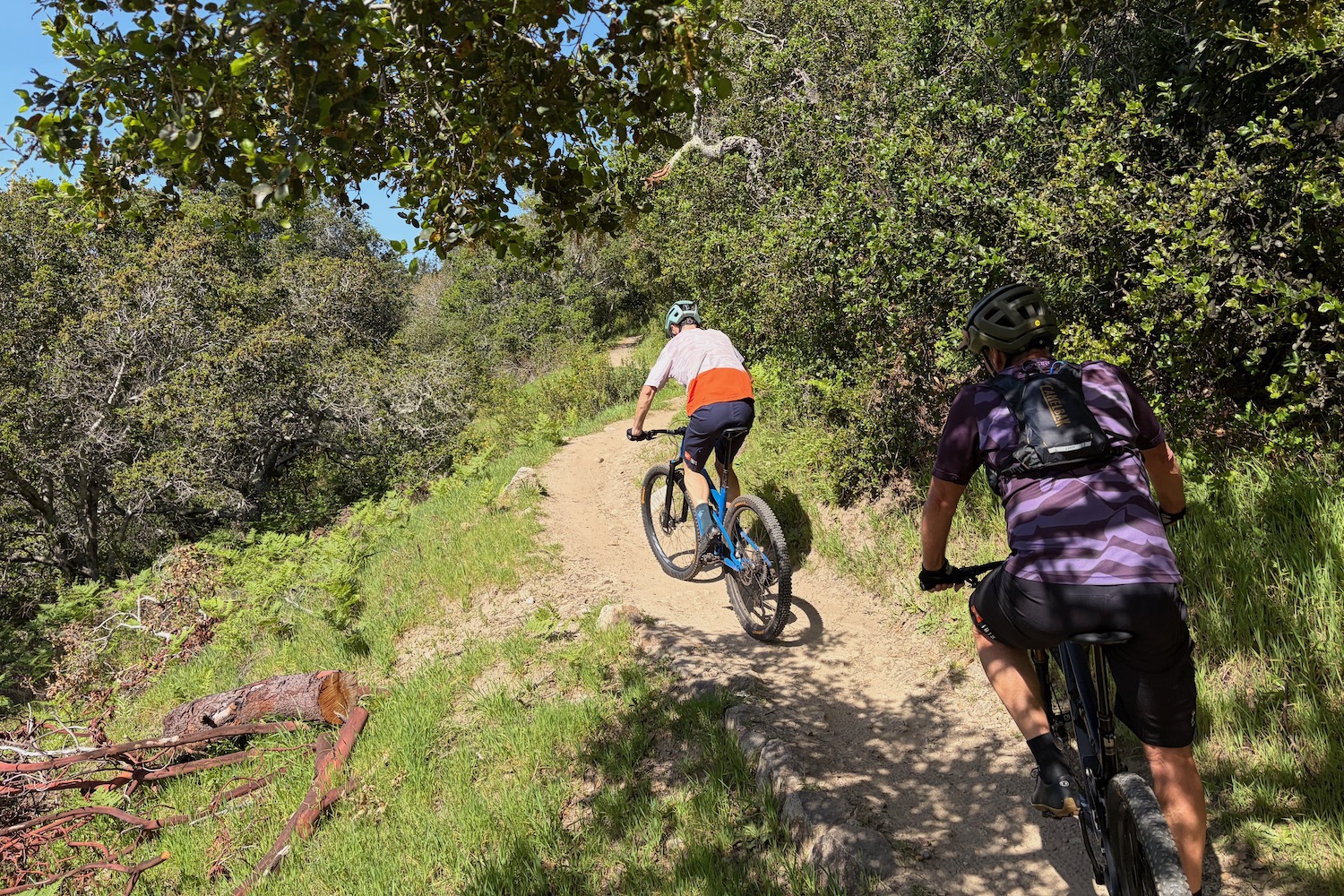
Moving to the dirt, we began our ascent up a gravel road and then onto a nicely pitched singletrack climb. As we made our way up the hill, the pedaling platform felt very supportive, with no sensation of pedal bob whatsoever when putting down power while seated or out of the saddle. It felt as though virtually every bit of my pedaling effort was contributing to my forward momentum. But, as I looked closely at Scot and Colin’s bikes while climbing behind them, I could see the slightest bit of movement in the suspension linkage.
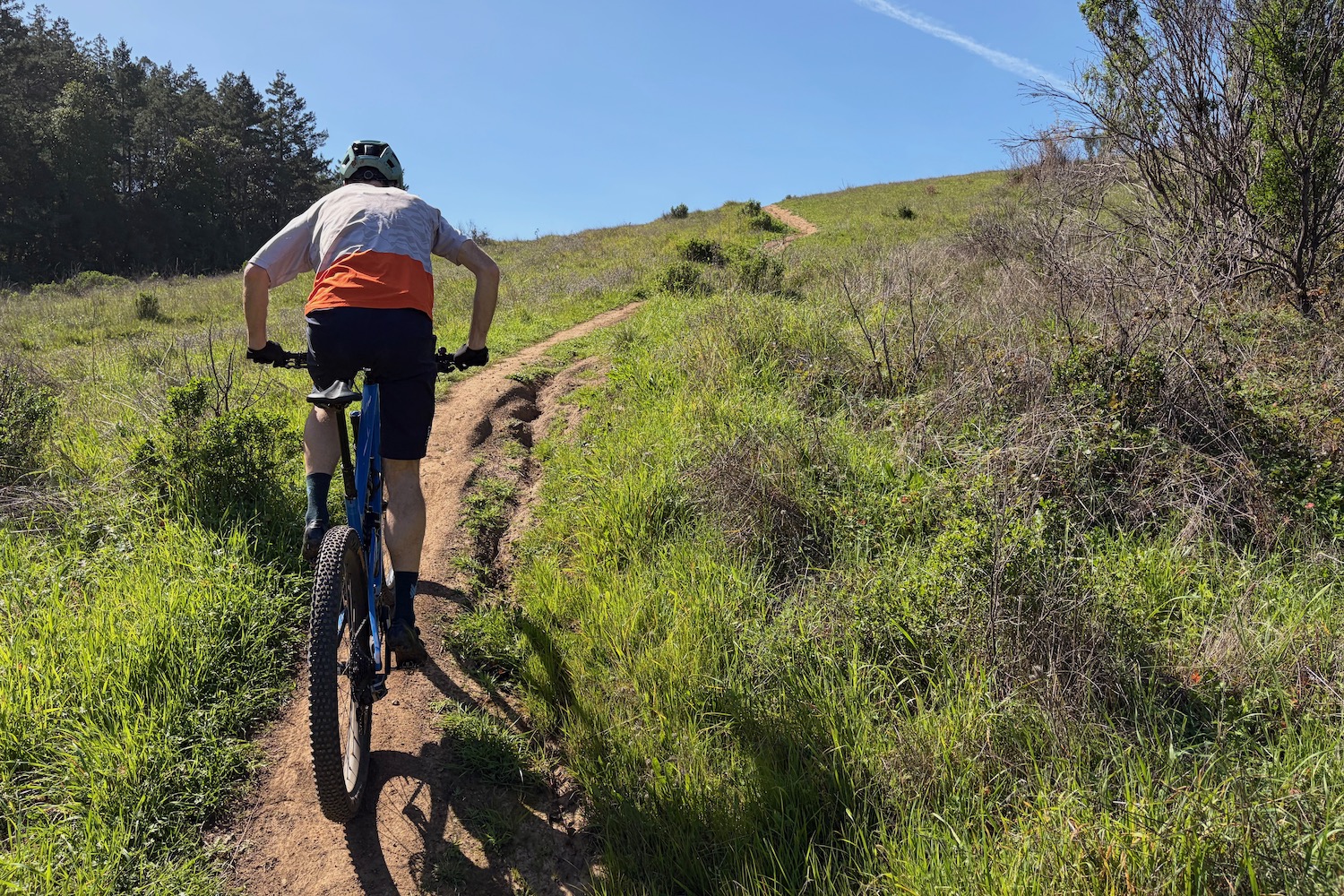
So, while I certainly couldn’t feel it, that subtle suspension movement explains why I had excellent traction, even with a fairly low-profile Continental Dubnital tire in the rear. To test this further, Colin took us to a short, steep, rutted climb where I watched him maintain out-of-the-saddle traction up some pretty firm but slippery soil, and I was able to easily do the same. Colin then explained that the ability to fine-tune the anti-squat to provide adequate support and traction is one of the benefits of DW-link, and why it’s ubiquitous across the Ibis range.
Handling-wise, I found the Ripley SL to be very quick, nimble, and easy to get along with. It responded instantly to my steering inputs and wrapped its way around corners with the agility I expected for its weight and geometry. As mentioned above, I felt comfortable immediately on the large frame, and I think a big part of that was due to the size-specific chainstays and seat tube angle, as well as the more trail-oriented elements of the geometry and cockpit setup.
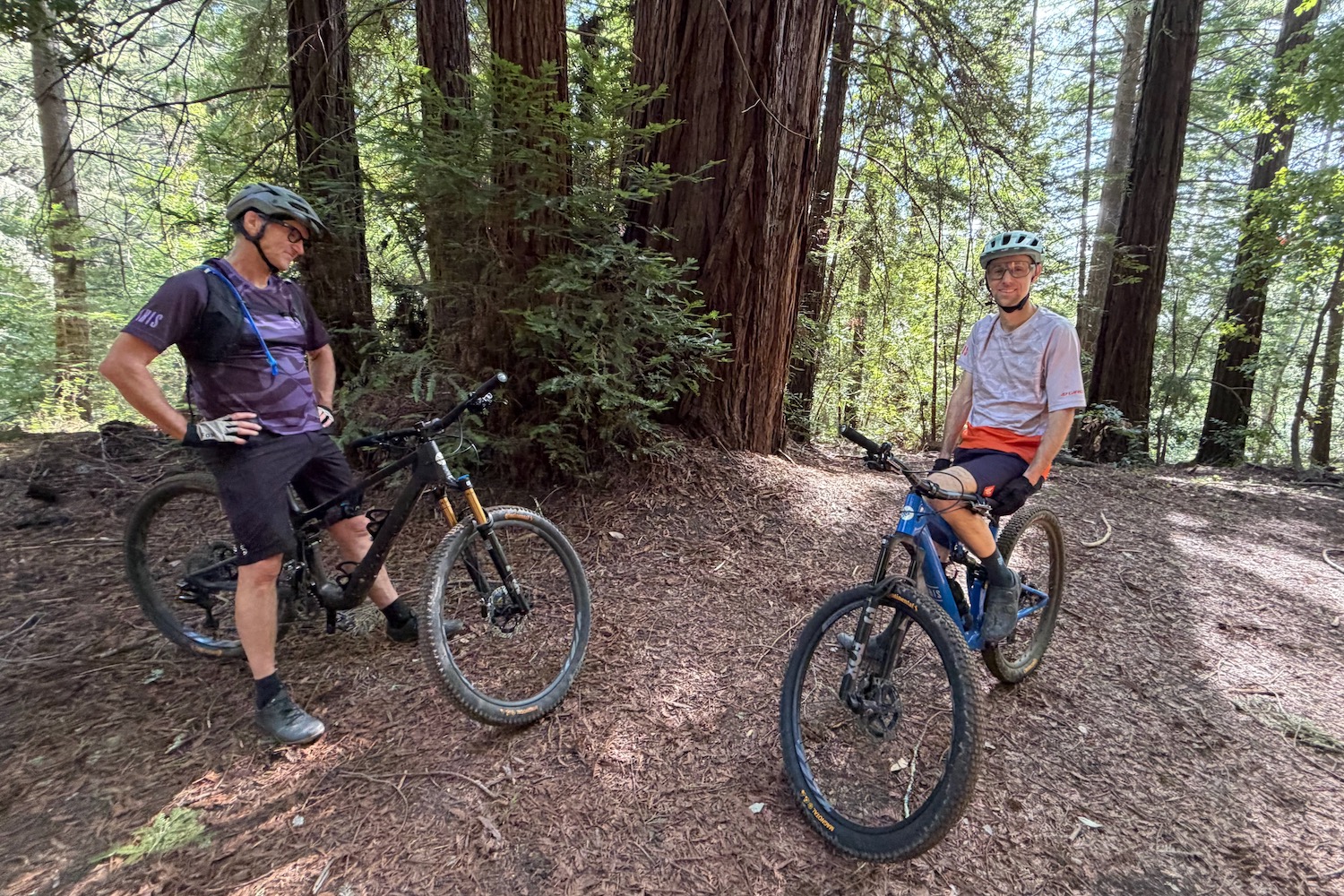
While the 25-ish-pound complete bike weights are down near full-blown XC race rigs, the bike setup — at least in the stock configuration I was riding — leans more toward everyday riding. The higher stack and riser bar simply provide a more relaxed front end compared to cross-country race bikes, which, again, I think is a great thing for most riders. And, if you’re like me and really enjoy the climbs, a light bike like the Ripley SL definitely makes it more fun to push the pace.
As we got to the top of our main climb, we dipped onto a mostly flat but rolling, twisty section of singletrack where Colin picked up the pace and I tried to follow. The Ripley SL was clearly in its element and just ate it up. It darted around corners and sprang forward with my short sprint efforts, dodging poison oak while trying to stick the local’s wheel. Turns out, the majority of people I’ve met who design bikes are pretty darn good at riding them, too.
Descending

I’ll start by saying the usual trope about short travel bikes applies here. Big surprise, the Ripley SL is limited by its travel length. I say the same thing about every 120mm-ish travel bike I ride. But I think that misses the point of short travel bikes. It’s not about what they can’t do, it’s about what they can do with the travel they’ve got. Thanks to its modern geometry, well-designed DW-Link suspension, and the added cushion of a 130mm fork, I’m happy to report that the Ripley SL felt shockingly capable for a 117mm bike.
The test loop that Colin led us on included linking up a bunch of somewhat “cutty” trails that I’d argue fall a bit outside of the typical short travel bike wheelhouse. They weren’t anything too crazy, but approaching the upper limit of where most people would probably be taking a 117mm bike. I’d ridden parts of these trails before, but several sections were completely new to me. Still, I felt confident riding the Ripley SL down some steeper sections, loose, skiddy corners, and over a bunch of chunky rock rolls and roots.
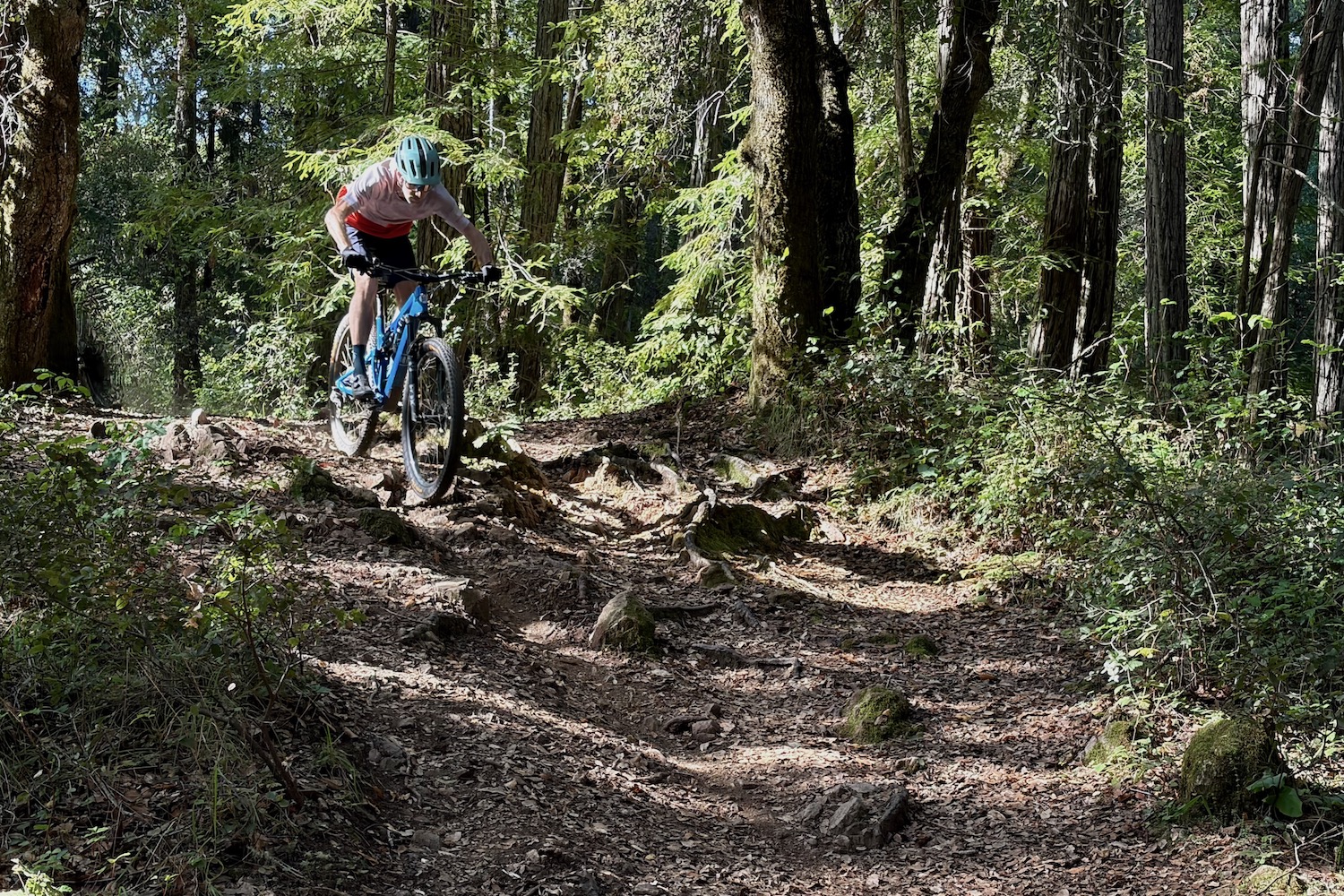
Again, I found the geometry and bike setup that’s biased more toward trail-riding and comfort to be beneficial here. While most bikes with similar travel numbers and weight tend to be biased more toward XC, the Ripley SL was designed and intended to offer a bit more terrain versatility. That was immediately apparent to me by how comfortable I felt on the first ride while trying to keep Colin in my sights on these moderately aggressive trails. The only limitation I noticed was the Dubnital XC tire’s limited braking traction on the dustier, steep bits of trail.
After that, we rode a lower-angle but faster and straighter descent with no shortage of ruts, high-frequency impacts, and a few small drops. The DW-link suspension was doing some work and felt surprisingly forgiving while handling the small and mid-sized chop and chatter. On a few bigger impacts, I was reminded of the bike’s limited travel length, but also impressed by its composure and bottom-out resistance. Overall, I’d say the Ripley SL felt more stable than a full-on XC bike, while maintaining the agility and handling response of a bike in its travel and weight category. It felt poppy and engaging, the kind of bike that rewards the active rider who works the terrain rather than just plowing right through it.
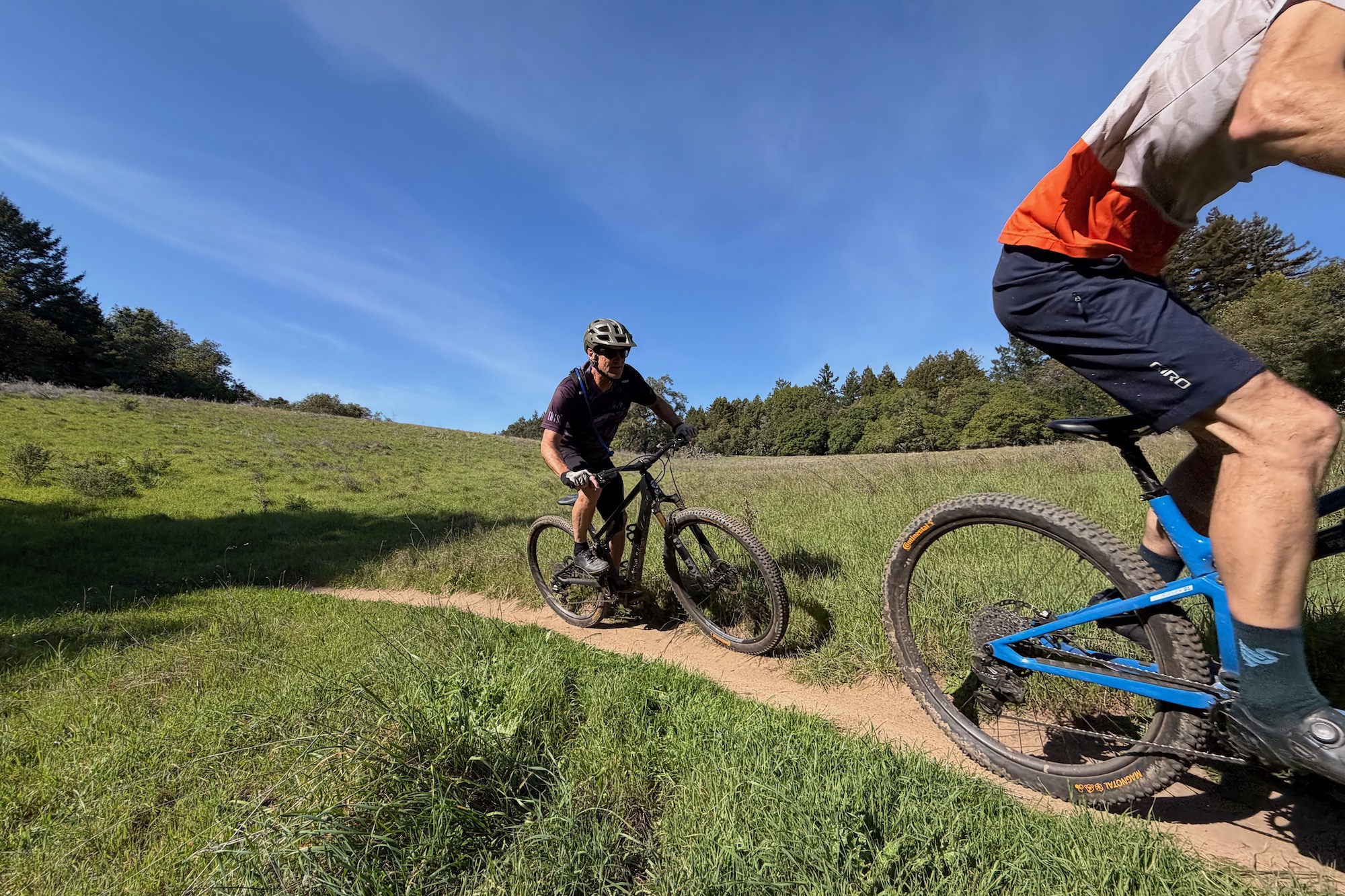
Back onto smoother and twistier trails, I felt comfortable letting the Ripley SL run and leaning it over in some relatively flat and slippery corners. Again, jamming on the pedals out of corners was rewarded with that satisfying feeling of immediate pickup and acceleration. I’m sure the top-of-the-line XTR build has plenty to do with that as well, with fast-engaging Industry Nine Hydra2 hubs, lightweight carbon Ibis S28 hoops, and precise XTR Di2 shifting. This build is about as dialed as it gets, which you’d expect for the price.
Ibis Ripley SL First Ride: My Takeaway
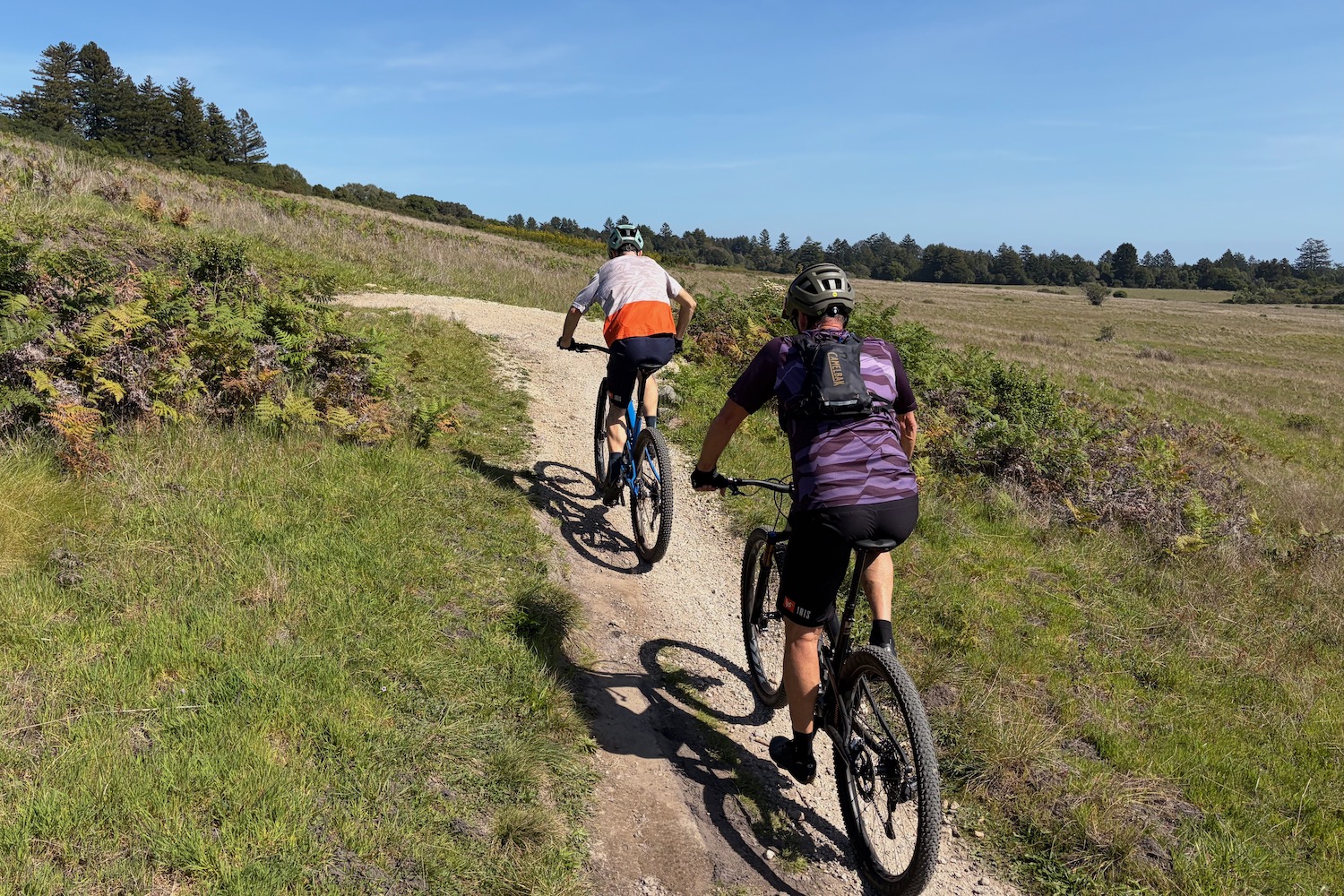
The Ripley SL is Ibis’ latest version of its long-standing short-travel full-suspension model, and it marks a strong move back toward the lightweight end of the trail bike spectrum. Unlike so many recent entries to the capable, short-travel trail bike market, the Ripley SL is significantly lighter than most, bringing it closer in line with cross-country-focused competitors. With this new bike, Ibis managed to combine XC weight with trail-oriented geometry, fit, and features like in-frame storage, room for two bottles, and 4-piston brakes.
I think Ibis kinda nailed what I’d consider the happy medium between the two genres, making the Ripley SL a versatile option for the rider seeking a bike that’s trailworthy for everyday riding and can double as your XC race rig. If you’re tired of riding around on a bike that weighs more than you want and/or constantly over-biking with more travel than you need, then the Ripley SL is a bike you might want to seriously consider. It’s light, it’s capable, and best of all, it’s a heck of a lot of fun to ride.
The post Ibis Ripley SL First Ride: XC Weight With Trail Bike Capability, Fit, and Features appeared first on Bikerumor.