A week ago, we reported on the redesigned Fox 40 downhill fork. Now, the Fox 38 gets the same internal updates, including the Glidecore air spring and new Grip X2 damper, along with increased bushing overlap and generatively designed lowers. Together, Fox claims these updates make the 38 stiffer while reducing friction, making it more supple and responsive, and consistent in appearance with the rest of the fork lineup.
In February, I attended a Fox media event in Finale Ligure, Italy, where all of the latest Fox and Race Face products were introduced. I also had the chance to test the new Fox 38 fork for a couple of days on some of Finale’s world-famous mountain bike trails to get a feel for how it performs. I’ll start with the details of the new fork, and finish with my first ride impressions.

Fox 38 Details
Since 2020, the 38 has been Fox’s gravity-oriented single-crown fork intended for use on longer-travel enduro, all-mountain, and aggressive trail bikes. According to Fox, the 38 is its top-selling aftermarket Factory fork, and already a popular choice for riders making an upgrade. Now, its getting a complete overhaul with the goal of improving its performance and staying ahead of the competition. According to Fox, it provides “composure in the chaos. When the track gets wild at race speed, the 38 doesn’t flinch.”
Ever since Fox introduced the inverted Podium, the brand has seemingly been working to get all of its right-side-up forks to mimic aspects of its performance. The Podium is incredibly supple, and the recent updates to the 40 and, now, the 38 are intended to bring both models closer to the Podium’s sensitivity, with less friction, easier travel initiation, and reduced breakaway force.
Redesigned Lowers
While the majority of the updates to the 38 are internal, the new version features the now ubiquitous “generatively designed” lowers with cutouts in the arch. Aesthetically, it’s not a wild departure from its predecessor, but it does give it a design language consistent with the rest of Fox’s fork lineup. This design, along with increased bushing overlap inside, is said to increase fore-aft stiffness by 8.8%. At the same time, Fox states that torsional stiffness has been intentionally reduced by 6.8%, which helps to calm the handling somewhat.
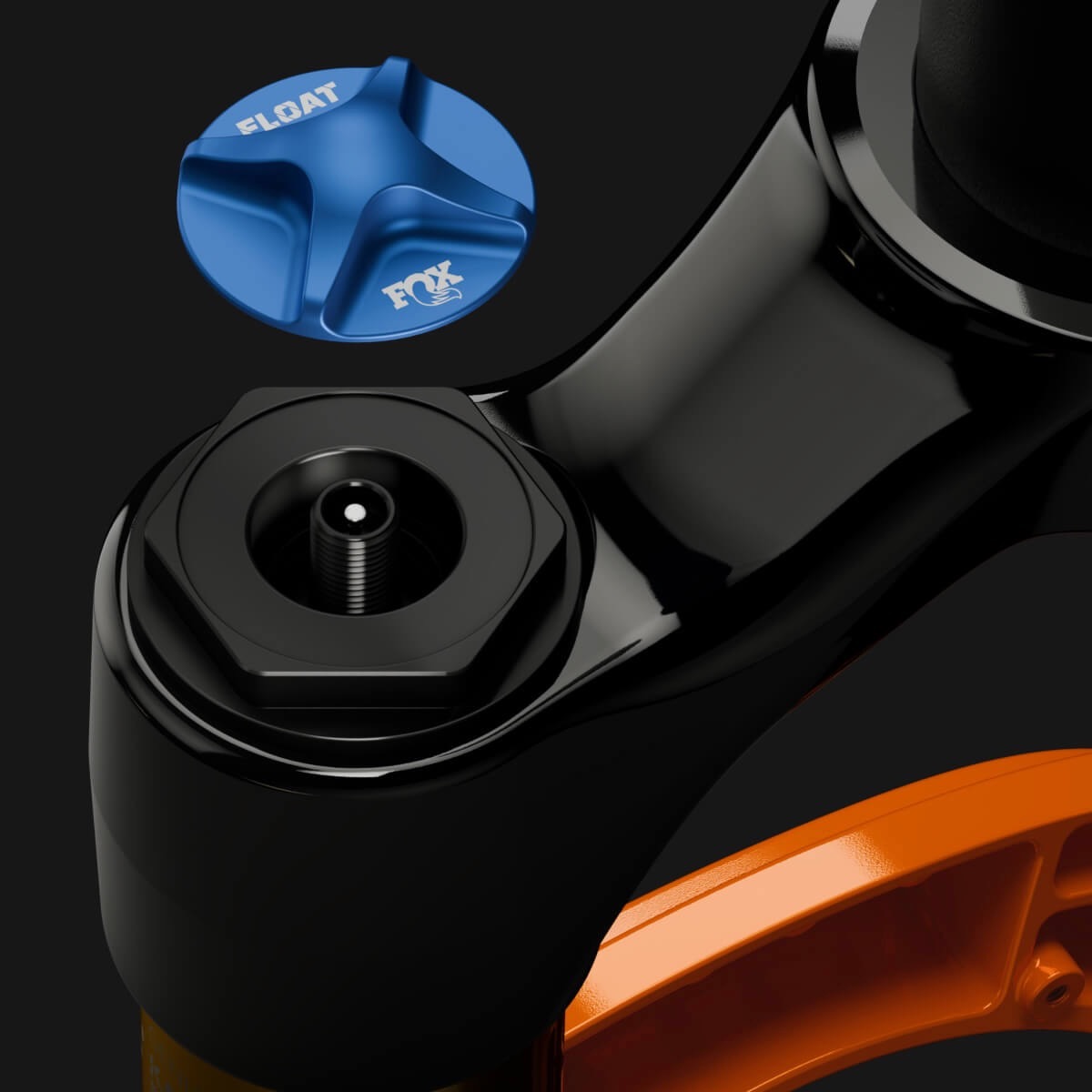
While not as visibly obvious, the lower leg bleed valves have also been updated, and the bypass channels relocated to the inside of the fork legs. Along with those changes, the 38 now uses the same mudguard as the 36 and 36 SL forks, using the GD3 mount. This updated mount design no longer relies on the potentially fragile bleeders for attachment.

Internal Updates
You know the saying, “it’s what’s inside that counts,” and that’s where the majority of updates have been made to the Fox 38. We’ve seen most of these already on other Fox models, but I’ll touch on them again here for a quick refresher.

Glidecore
Originally debuting on the latest 36 and 36 SL, Fox’s Glidecore air spring design has carried over to the 40 and 38. With both vertical and horizontal compliance built into the air spring with bushings, Glidecore aims to reduce friction by negating the effects of chassis flex.
On the air spring side, Fox has also added a new MCU bottom-out bumper to reduce harshness should you reach the end of travel. To maintain a consistent air spring curve, the 38’s air spring top cap has a special design and taller height to increase air volume.
Increased Bushing Overlap
Fox states that, with its redesigned lowers, they were able to increase bushing overlap by 20mm. This is one of the primary factors contributing to the fork’s increased fore-aft stiffness, which, in turn, reduces friction and increases sensitivity. So, not only is the fork slightly stiffer than it already was, but that should make it a little more supple as well.
New Grip X2 Damper

One of the biggest internal updates is the redesigned Grip X2 damper. Fox says it has an entirely new mid-valve piston and valve stack (aka the main piston assembly). The porting on the piston itself has been reshaped, and the valves updated with a cut design. Combined, these changes are intended to increase oil flow at the mid valve. With oil able to flow more freely through the piston, Fox claims this increases its sensitivity, suppleness, and responsiveness.
The new Grip X2 still offers the four-way adjustability that riders already know and love. With independent external dials for low- and high-speed compression and rebound, it’s still quick and easy to fine-tune the Fox 38’s damping settings to your preferences. Unfortunately, the new Grip X2 damper is not backward compatible with earlier forks; it only fits in the latest versions.

Fox 38 Specs
The Fox 38 has, you guessed it, 38mm stanchions, which contribute to its stiff, sturdy feel. It comes in 160, 170, and 180mm travel lengths, which align with its intended use. It comes in 29” and 27.5” versions, and in the Factory and Performance Elite Series, with the primary difference being Kashima vs. Black stanchions. Aftermarket 38’s have 44mm offset, and 37mm offset is available for OE only.
- Wheel sizes: 29” and 27.5”
- Travel options: 160, 170, and 180mm
- Tire clearance: 2.6” max
- Fork offset: 44mm (37mm OE option)
- Axle: 15 x 110mm floating axle
- Brake mount: 29”: PM200, 27.5”: PM180 (ABS mount available)
- Max rotor: 230mm
- Starting weight: 2,200g


Fox 38: Pricing and Availability
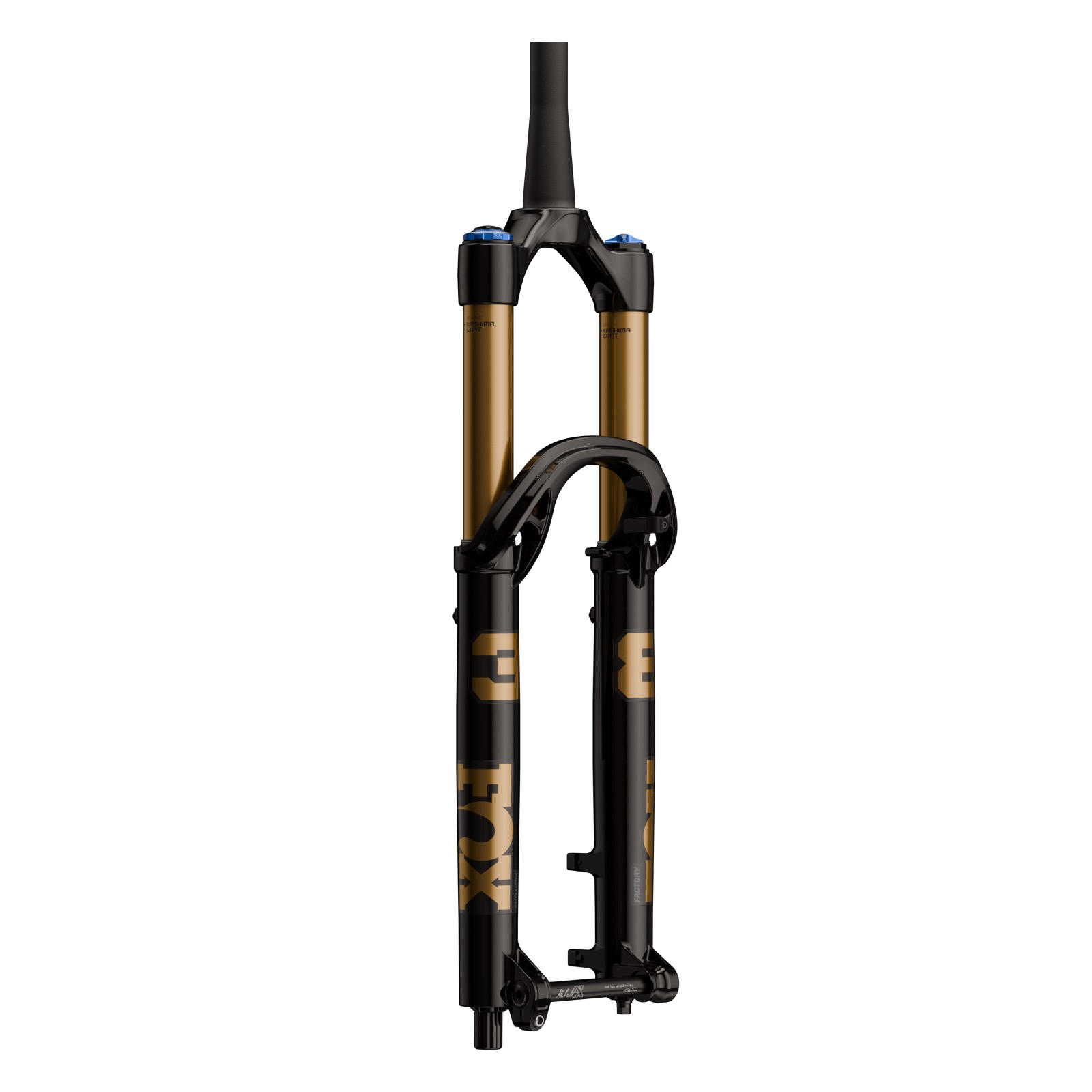
The latest Fox 38 is available now. The Factory Series features Kashima Gold stanchions and lowers in Shiny Orange or Shiny Black, and it retails for $1,369 USD / $1,669 CAD / €1,499 / £1,439. The Performance Elite Series comes with black anodized stanchions and Matte Black lowers, and it sells for $1,259 USD / $1,539 CAD.
Check it out at ridefox.com
Fox 38: First Impressions
You know what’s really good? Modern mountain bike suspension. It’s honestly kind of outrageous how well it all works, enabling us to ride at unreasonable speeds on terrain and in places where bikes shouldn’t reasonably even be able to go. And that’s true of the previous Fox 38, a fork that I got quite familiar with while logging a lot of miles on the Yeti LTe eMTB last year. That fork was and still is spectacular and left me wanting for literally nothing.
Then, while testing the Pivot Shuttle LT in January, I rode the Fox Podium inverted fork for the first time. I’ve ridden a lot of brand-new suspension forks in the past few years, but the Podium really blew me away with its suppleness. I’ve never ridden a fork that initiates travel so freely, and in that regard, I think it’s on another level. But that super-sensitive, supple ride feel comes with a weight penalty and a significantly higher price tag, which I think makes it pretty hard to justify compared to the Fox 38.

So, when the folks at Fox were explaining all of the updates to the Fox 38 that are intended to bring sensitivity and suppleness more in line with the Podium, I was intrigued, to say the least. Could they actually make the 38 even better than the existing version, which is already incredible? I was keen to find out.
First Rides
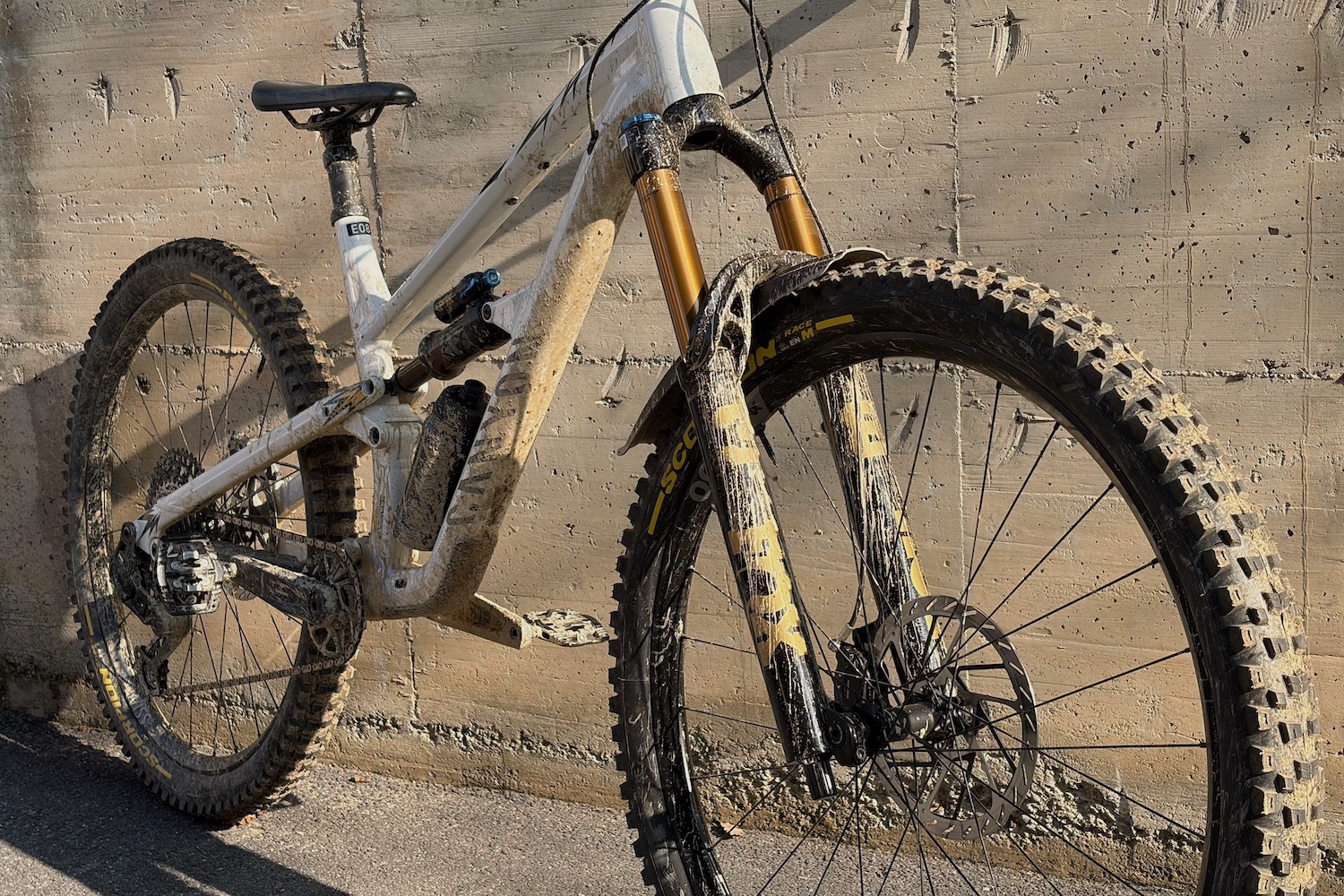
The Fox crew arranged for test bikes for all of us media folks and set them up with the Fox 38 (or 40 if that was the preference). My test bike was an alloy-framed Canyon Spectral Fabio Wibmer series bike. It was completely unfamiliar to me, but it fit well enough and had good angles for tackling the rough and rocky test tracks in Finale. Best of all, I didn’t need to fly internationally with a bike for just a couple of days of riding.

Given that this was a gravity-oriented media camp focused on the new Fox 38 and 40 forks, we did shuttle laps and sessioned a few of the same rugged tracks. This gave us all the opportunity to get a feel for the fork in the rough, enduro-style terrain for which it was intended. It also allowed for repeated laps on the same tracks to feel out the effects of tuning adjustments.
On this trip, I rode with the new Fox 38 for two days in a row, and that’s all of the time that I’ve logged on it thus far. While a short introduction, the trails in Finale really served as a great testing ground with plenty of high speeds, drops, turns, and prolonged rough, rocky sections to get a feel for how the fork performed across the riding spectrum.

So, what’s it like? Well, it’s a brand-new Fox 38 set up by Fox’s professional technicians, so, of course, it felt amazing. Is it better than the outgoing model? Without riding them back-to-back, I’d have a hard time really drawing any definite conclusions, but I’d say the updates have made it feel marginally more supple and sensitive. I wouldn’t put it on the same level as the Podium in that regard, but perhaps a little bit closer to that fork’s class-leading suppleness. I felt composed and responsive through high-frequency chop and chatter, and it recovered well after bigger hits and drops that used up all or most of the travel.
Like its predecessor, I was impressed by its ability to maintain support and ride height, while still giving up full travel during harder impacts. It wasn’t that long ago that I felt like I had to sacrifice support for full travel or vice versa, but that doesn’t seem to be an issue anymore. Beyond that, the fork chassis felt plenty stiff, and steering felt responsive. Compression and rebound damping adjustments are still easy to operate, and with a reasonable number/usable range of clicks, so you don’t get too deep in the weeds when tuning.
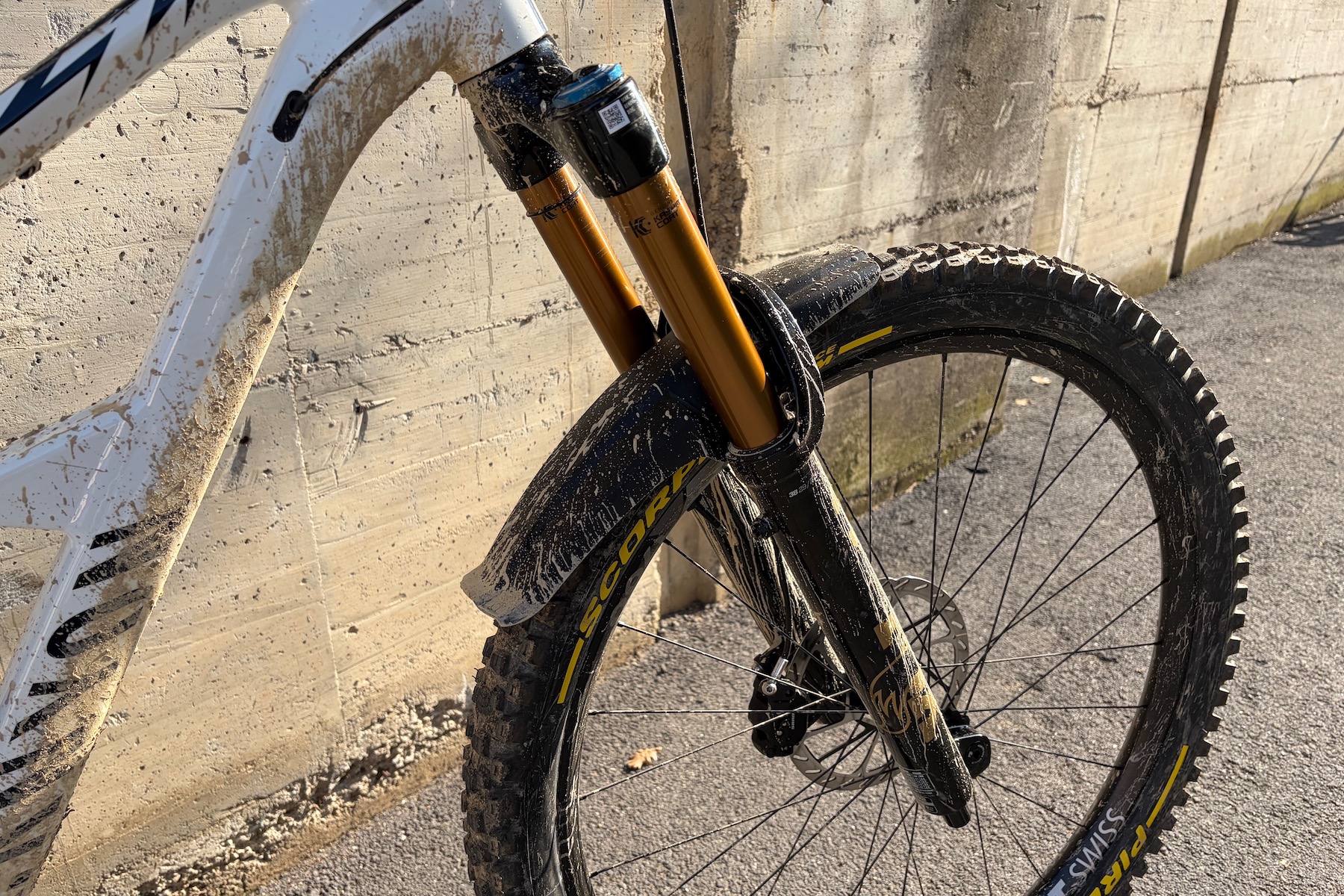
As someone who has broken a bleeder valve while installing a fender, I really appreciate that the new mud guards and mount design do not attach to the bleeders. And with some wet trail conditions in Finale, I really enjoyed the larger mud guard that came installed on the fork.
Beyond that, I’m looking forward to mounting this fork on a longer travel frame as soon as I can get my hands on one. While a couple of days of testing still leaves plenty to be discovered, my initial impression is that it’s an incremental improvement to an already excellent fork.
The post First Look and First Rides: Latest Fox 38 Fork Gets New Look, Updated Grip X2 Damper, and More appeared first on Bikerumor.