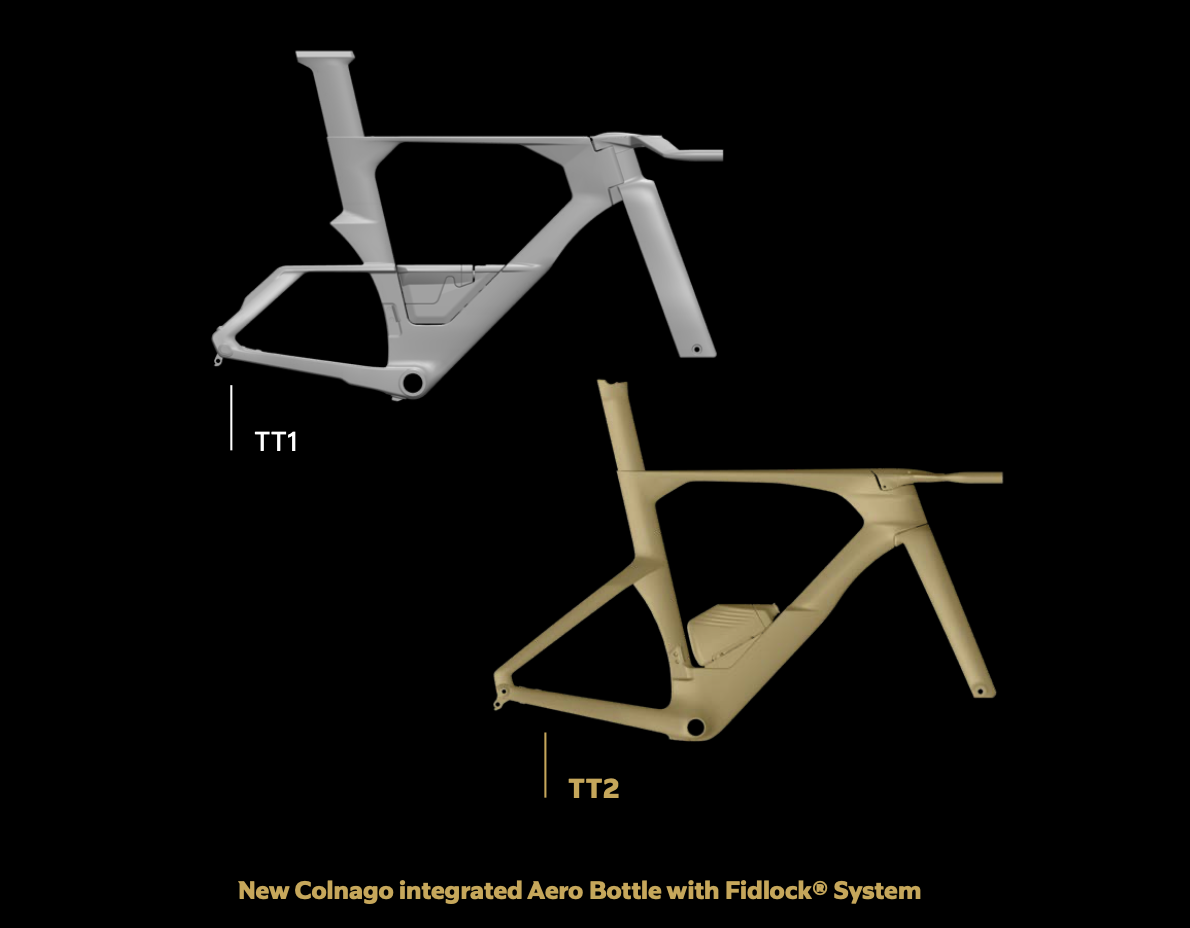
Tadej Pogačar has a new TT machine for the Tour de France. The new Colnago TT2 is lighter, easier to fit, more stable in the wind, and better suited to the growing trend of technical time trials.
Developed with UAE Team Emirates-XRG and UAE Team ADQ, the TT2 replaces the TT1 as Colnago’s latest WorldTour TT platform. It made an earlier prototype appearance at the Tour de Romandie, but the final race version is set to debut at the 2026 Tour de Suisse individual time trial on June 20, where Tadej Pogačar and UAE Team Emirates-XRG are expected to use it.
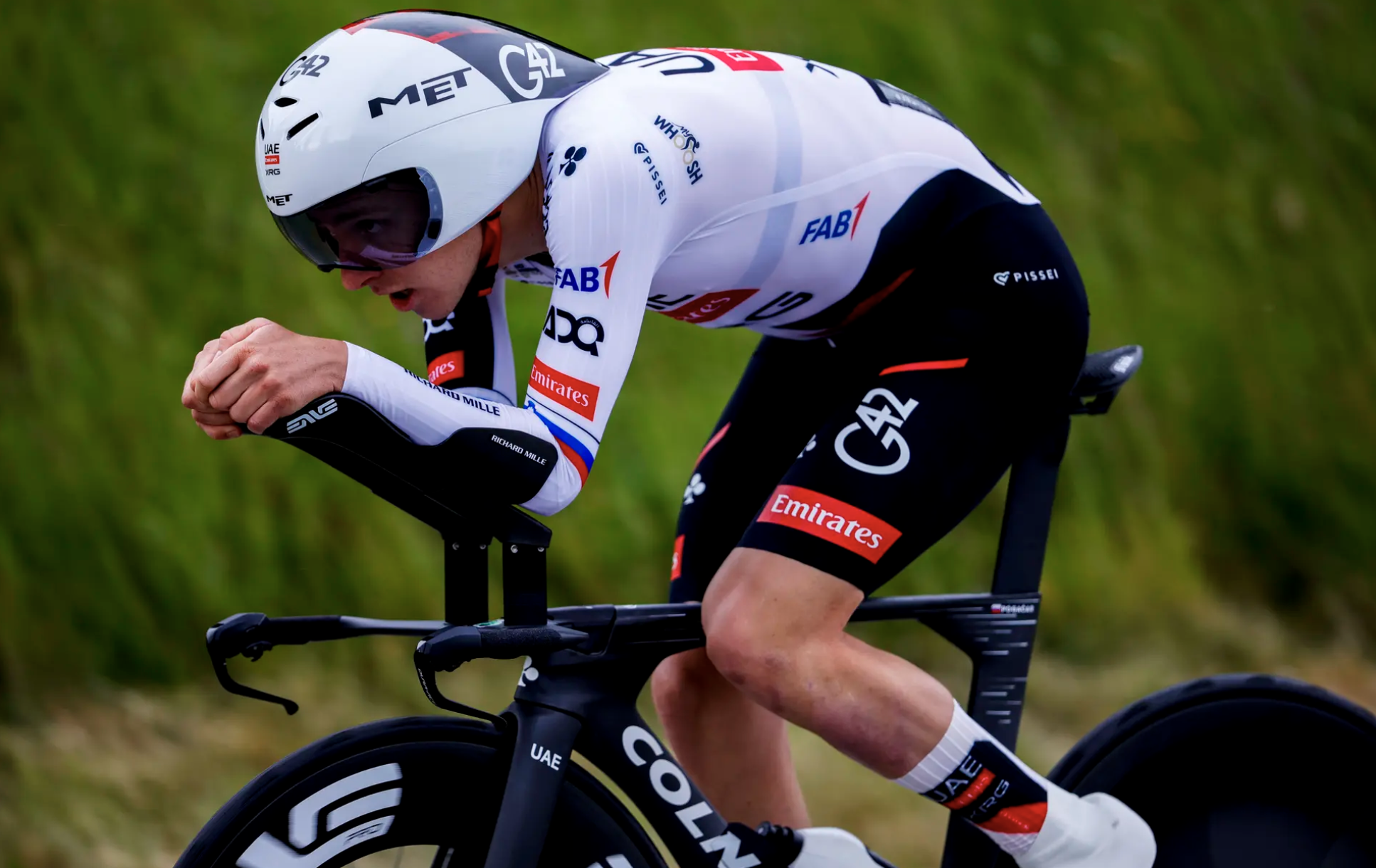
The TT2 made a prototype appearance at the Tour de Romandie earlier this season, but the final race-spec platform will debut at the 2026 Tour de Suisse individual time trial on June 20. Colnago expects Tadej Pogačar and the full UAE Team Emirates-XRG squad to ride it there.
Pre-Tour Weight Cut
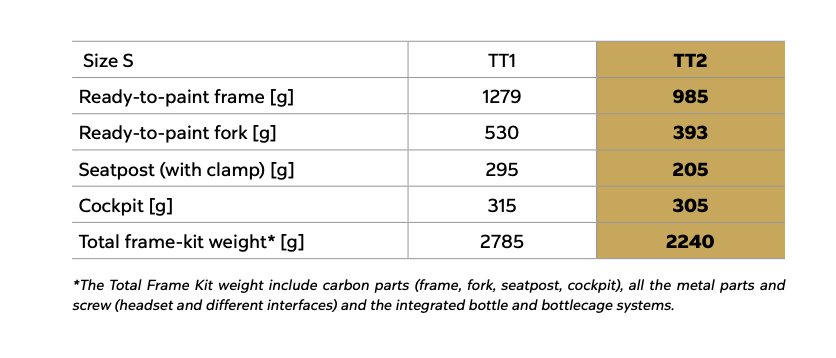
The headline is weight. Colnago says the TT2 frame kit is about 550g lighter than the previous TT1. That’s frame, fork, seatpost, cockpit, metal hardware, interfaces, headset parts, and the integrated bottle/cage system all counted together.
- TT1 frame kit: 2,785g
- TT2 frame kit: 2,240g
Where did Colnago drop the weight? The biggest cuts come from the frame and fork. The ready-to-paint frame drops from 1,279g to 985g, the fork from 530g to 393g, and the seatpost from 295g to 205g. The cockpit only drops slightly, from 315g to 305g, but the bigger wins are clearly in the structural pieces.
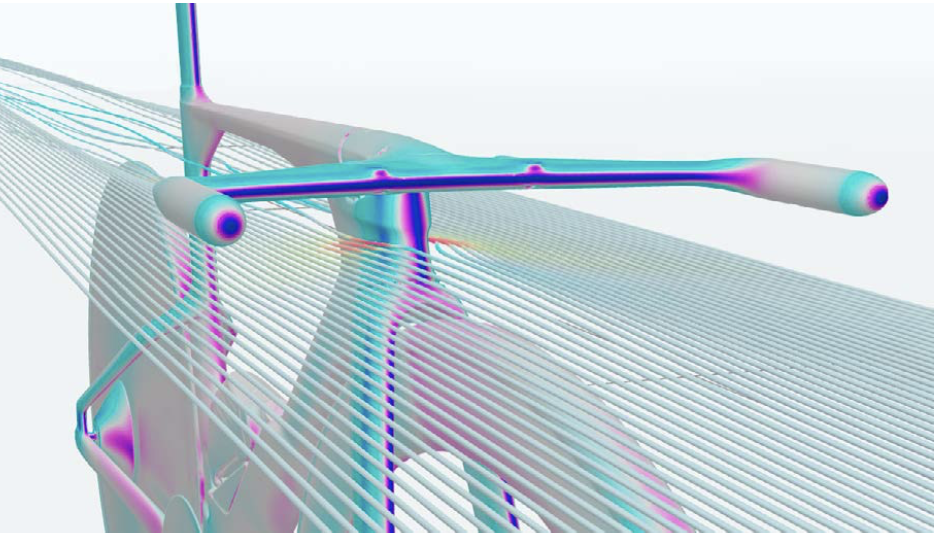
Aero Still Matters & TT2 Is Quicker (by 2-Watts)
Dropping weight on a TT bike is only useful if you don’t give away the whole point of the bike: going fast through the air.
Colnago says the TT1 was already one of the aero benchmarks in the WorldTour, so the TT2 project had to keep that platform’s strengths while making it lighter and more usable. The white paper says the development focused on three core pillars: aerodynamics, frame weight, and geometry for better fit and handling.
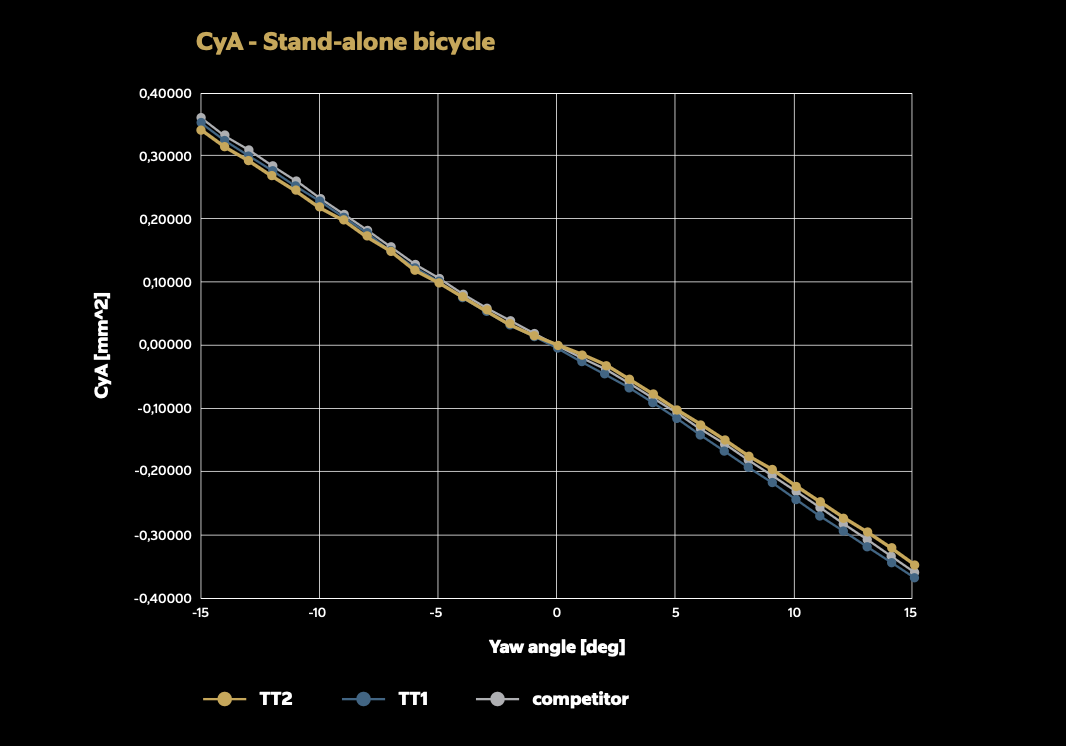
The aero numbers are interesting because Colnago tested the TT2 in two ways: as a stand-alone bike and as a complete racing setup with a mannequin. That’s important. Stand-alone bike testing can be cleaner and more repeatable, but riders are the real problem when it comes to aero. Sorry, everyone. Humans are messy shapes.
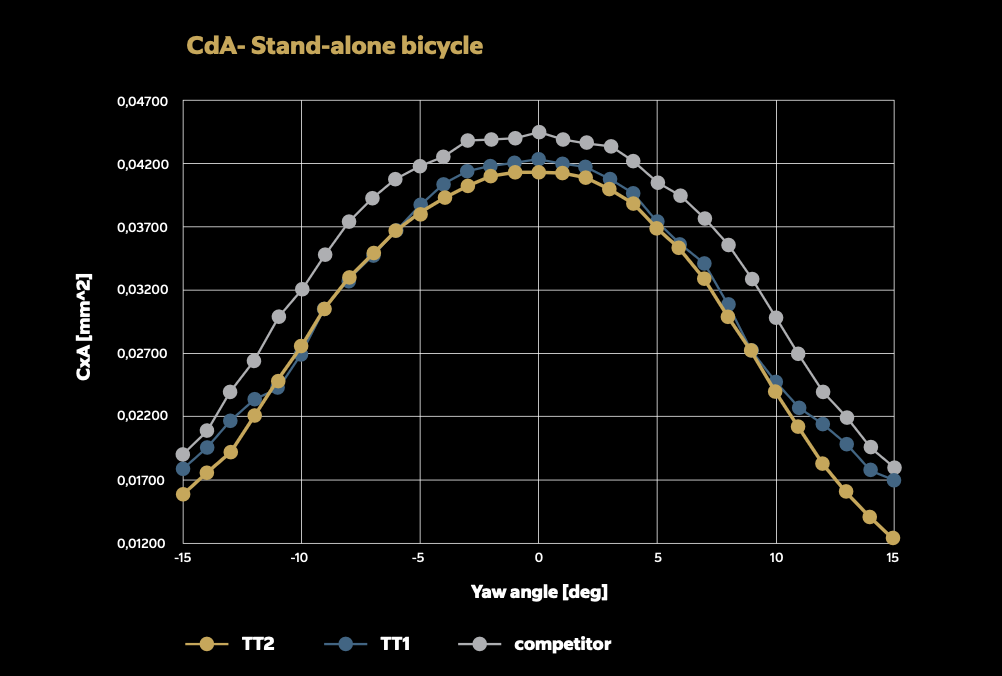
In stand-alone bike testing, with the bike plus Colnago bottle system at 54km/h across yaw angles from 0 to 15 degrees, Colnago lists the TT2 at 66.7 watts WAD (Weighted Average Drag), compared to 68.5 watts for the TT1 and 74.9 watts for a reference competitor.
At 0 degrees yaw, the TT2 comes in at 83.7 watts, compared to 85.7 watts for TT1 and 90.0 watts for the competitor.
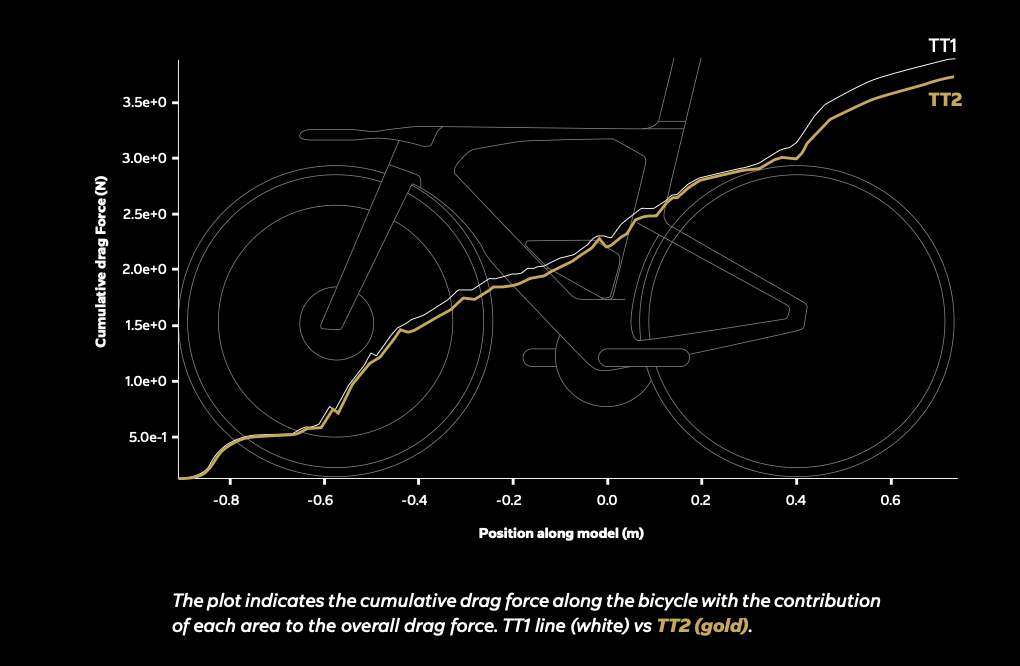
With the mannequin onboard at 55km/h, the numbers get bigger, naturally. The TT2 lands at 344.4 watts WAD, compared to 346.0 watts for TT1 and 350.3 watts for the competitor. At 0 degrees yaw, Colnago lists the TT2 at 375.1 watts, TT1 at 376.4 watts, and the competitor at 379.7 watts.
In other words, the TT2 is not dramatically faster than the TT1, but it is measurably faster while being much lighter. That’s the win.
The Front End Is Where Colnago Went Hunting
A lot of the aero work went into the front of the bike because that’s where clean air hits first. The rider makes a mess of everything afterward, but the front end gets the first shot at managing airflow.
The TT2 uses a 360mm center-to-center integrated cockpit, a redesigned fork, and an extremely narrow head tube. Colnago says the head tube gets down to just 32mm wide at its minimum.
The fork is also a major departure from the TT1. Colnago ditched the previous bayonet-style setup and moved to a more conventional headset arrangement. Usually, “more conventional” is code for “probably easier to maintain, maybe less weird, maybe not as aero.” But Colnago says the TT2 keeps the frontal exposure in check despite the architecture change.
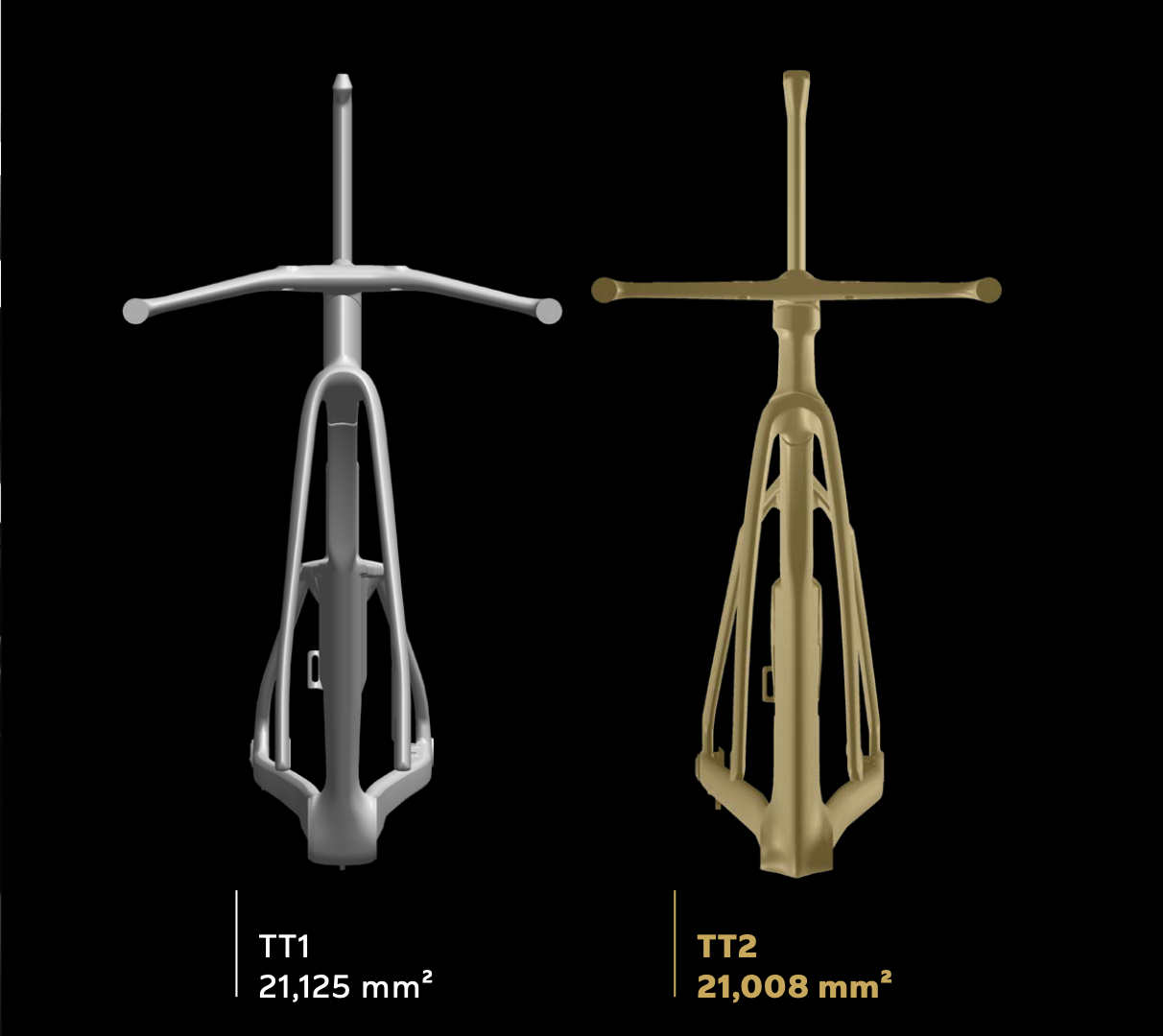
The Colnago white paper for the TT2 lists the front-end frontal area at 21,008 mm² for the TT2 versus 21,125 mm² for the TT1, measured on comparable-sized small setups and including the head tube, fork, integrated cockpit, and cockpit cover.
So, despite more tire clearance and the move to a conventional headset/fork structure, the TT2 front end is actually slightly smaller in frontal area. That is the kind of nerd math we like.

Goodbye Bayonet Fork, Hello Serviceability
The TT2’s new fork uses a 25mm steering tube housed inside that very narrow head tube. The brake hoses run from the upper section of the steering tube through a structural expander into the frame, which lets Colnago keep clearances tight and the front end compact.
And that last bit matters. TT bikes are famously annoying to service; I hated working on them as a mechanic. So, if Colnago can maintain the speed and make the bike easier to manage for teams, mechanics, and very committed amateurs, that would be a real improvement.
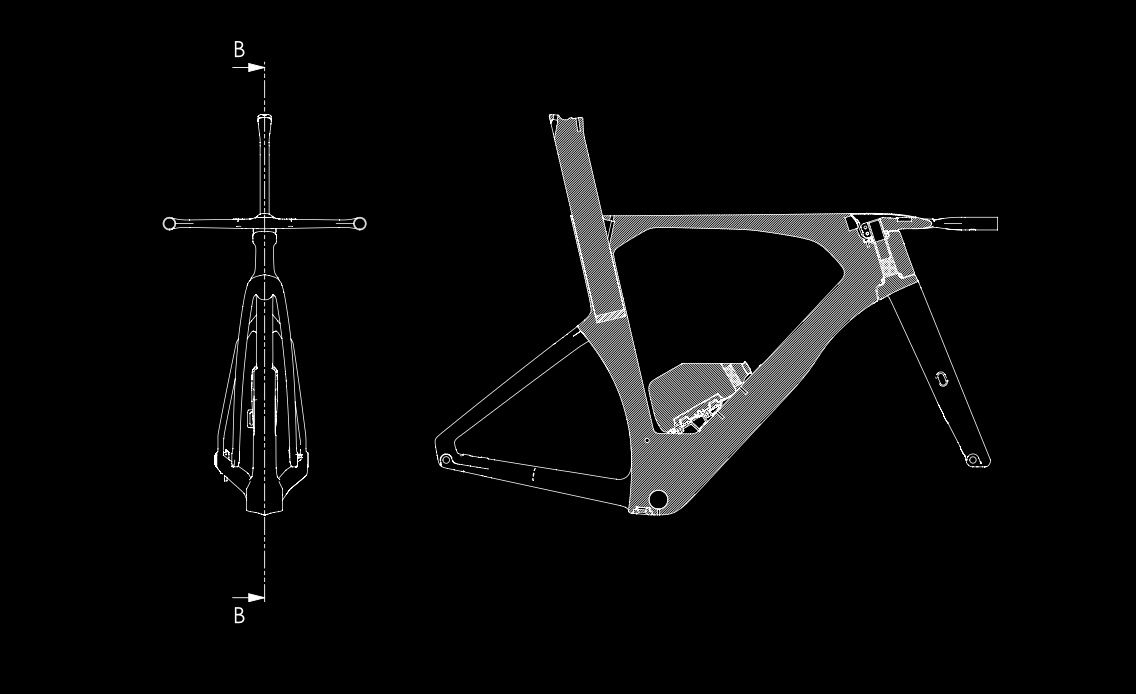
The TT2 also keeps some practical details: BSA 68mm bottom bracket, UDH rear hanger compatibility, clearance for up to 30-622 tires, and room for a 70T max chainring.
More Stable in Crosswinds
TT bikes can be fast in a tunnel and still feel sketchy once the wind starts pushing from the side. If a bike needs constant steering corrections, the rider loses focus, burns energy, and starts coming out of position. Aero only works if you can hold it.
Colnago says the TT2’s tube profiles were shortened and refined to create more predictable flow separation across yaw angles. That should reduce abrupt changes in side force and make the bike easier to handle in gusty conditions.
That is not as headline-friendly as “two watts faster,” but it might matter more in real racing. A bike that feels calmer lets the rider stay narrow, keep pressure on the pedals, and avoid doing the tiny panic-wiggle every time a gust hits the front wheel.
The Aero Bottle Is Basically a Legal Fairing
The new Colnago Aero Bottle System might be the most “modern TT bike” part of the whole bike.
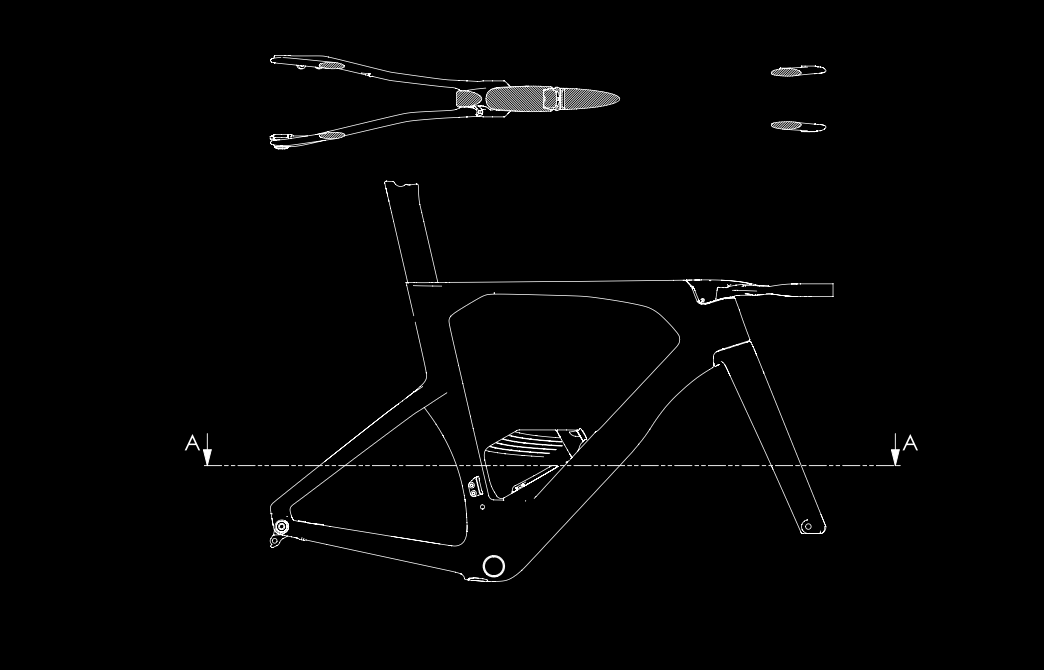
The bottle system was developed from the beginning as part of the frame’s aerodynamic system. It sits in the messy airflow between the rider’s legs, where keeping surfaces smooth and continuous can help reduce drag.
The bottle/cage shape is designed as a single integrated body, using the thinnest and longest profile allowed by the new UCI rules. The surface is also shaped to help keep airflow attached and delay separation near the trailing edge.
It uses Fidlock TWIST magnetic fastening, which should make it easier to remove and replace while staying in position. That matters because trying to grab a bottle on a TT bike can feel like defusing a bomb while wearing ski gloves.
The funny part? UAE won’t race the Colnago bottle system in 2026 because of sponsorship agreements. They’ll use an Élite aero bottle with a Colnago custom cage instead.
Very pro cycling. Build the thing. Prove the thing. Then don’t use the thing because the bottle sponsor has entered the chat.
Still, every consumer TT2 frameset includes the Colnago Aero Bottle System.
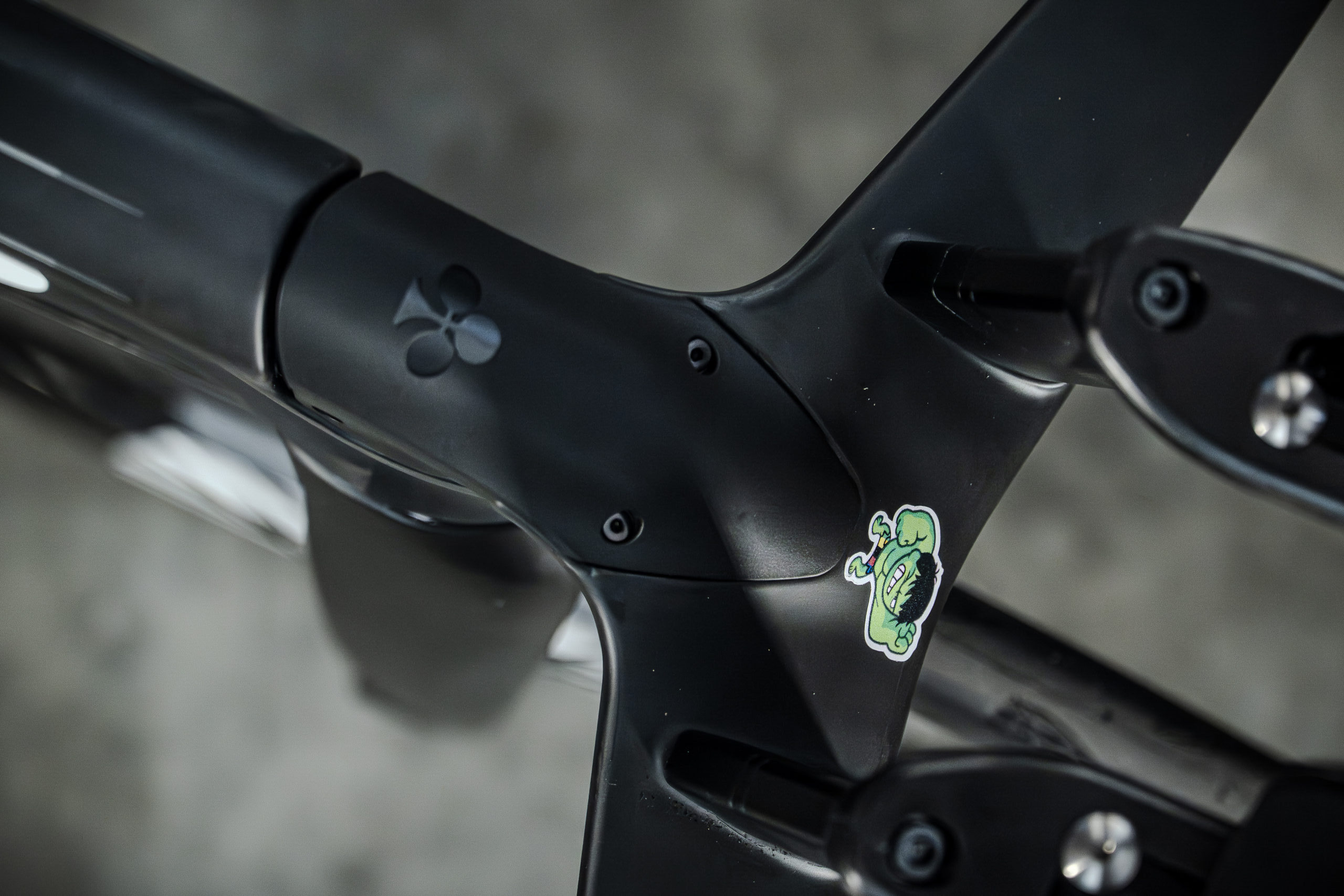
Geometry: More Fit Range, Less Spacer Tower
The TT2 comes in four sizes: XS, S, M, and L, and the geometry has been revised to make the bike easier to fit for a wider range of riders.
The addition of an XS size is important, especially with the UAE Team ADQ involved. TT bikes can be especially brutal for smaller riders, where getting low, narrow, and powerful can require too many compromises.

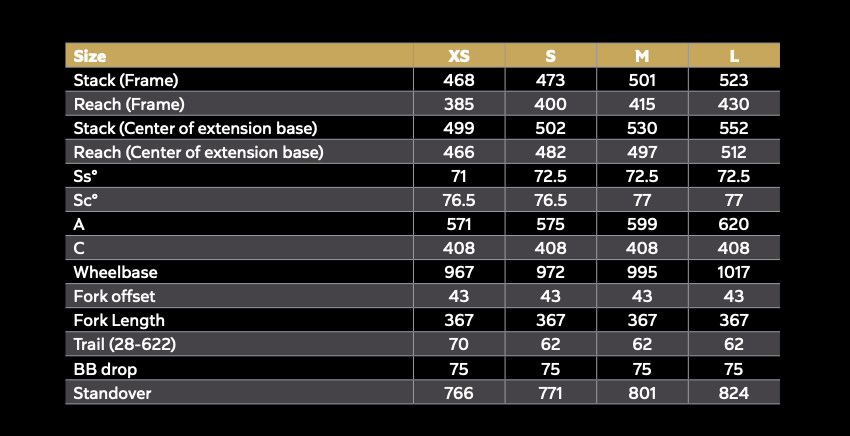
Frame stack runs from 468mm on XS to 523mm on L, while frame reach runs from 385mm to 430mm. The center-of-extension-base stack goes from 499mm to 552mm, and the reach there runs from 466mm to 512mm.
Colnago also reshaped the stack-to-reach relationship on the larger bikes to reduce the need for extreme spacer stacks. That’s a win for fit, aero, and general dignity. No one wants a superbike with a front end that looks like it has special kit to make it work.
The TT2 also gets steep seat tube angles: 76.5 degrees on XS and S, 77 degrees on M and L, paired with a 75mm bottom bracket drop across sizes. Colnago says the combination supports modern forward TT positions while maintaining stability and power transfer.
The seatpost offers two offset options: 0mm and 22.5mm. It’s also smaller than before but uses internal ribbing to preserve stiffness and positional stability.
Pricing and Availability
The Colnago TT2 frameset is priced in line with the current TT1.
Pricing: EU: €7,040, UK: £6,499, US: $7,500
The frame kit includes the frame, fork, seatpost, basebars, Colnago Aero Bottle System with Fidlock, and a bottle cage, plus small parts such as bearings.
Availability starts through the global Colnago dealer network in late September 2026.
The post Pogačars’ New TT Weapon – Colnago TT2 Drops 1.22lbs, Adds Aero Savings appeared first on Bikerumor.