Rainy, muddy trail rides can be a lot of fun, but it’s crucial to have weather-resistant gear that will keep you comfortable throughout a ride. I got to test Outdoor Research’s Freewheel MTB Stretch Rain Jacket, and spent my last fall, winter, and spring riding in it. While the jacket’s water resistance initially impressed me, I quickly noticed its ventilation and breathability were not good.
While Outdoor Research gave this jacket a nice cut, stretchy fabrics, and ample storage, I could not get past my major issue with it. After many MTB rides in various temperatures, I consistently found it difficult to avoid overheating and getting very sweaty inside this jacket. The shell did keep almost every drop of rain out, but I still came home damp on the inside after every ride.
Freewheel MTB Stretch Rain Jacket – Construction Features:
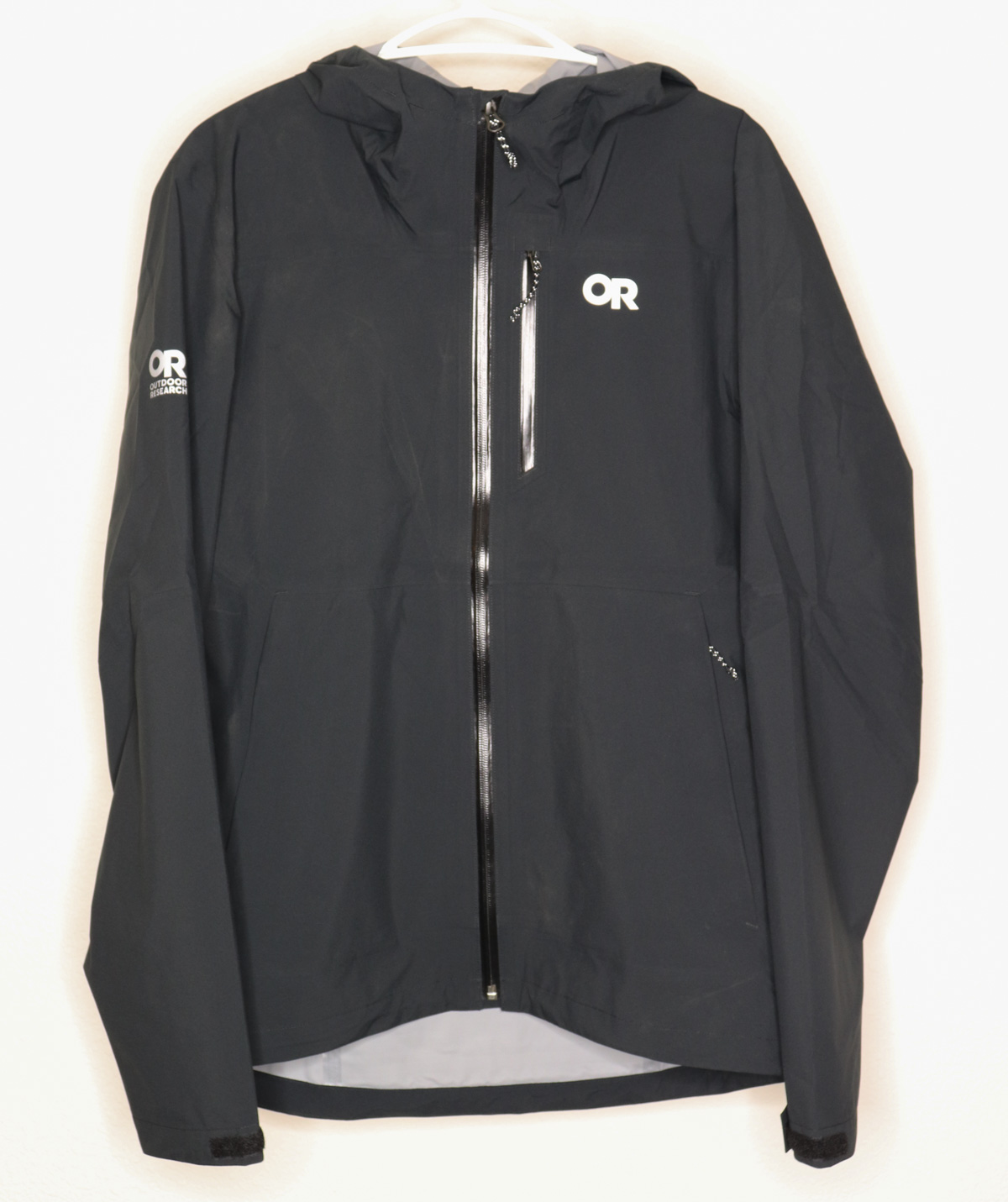
The Freewheel MTB Stretch Rain Jacket features a 2.5-layer shell with taped seams and no insulation. While it is described as waterproof in text, I did notice Outdoor Research’s website rates this jacket at 3/5 in terms of waterproofing.
Ventia technology aims to make the jacket waterproof and wind-resistant, yet still highly breathable. The fabric also offers mechanical stretch, and interestingly, UPF 50+ sun protection. The jacket’s shell is made with Bluesign-approved 100% recycled polyester.
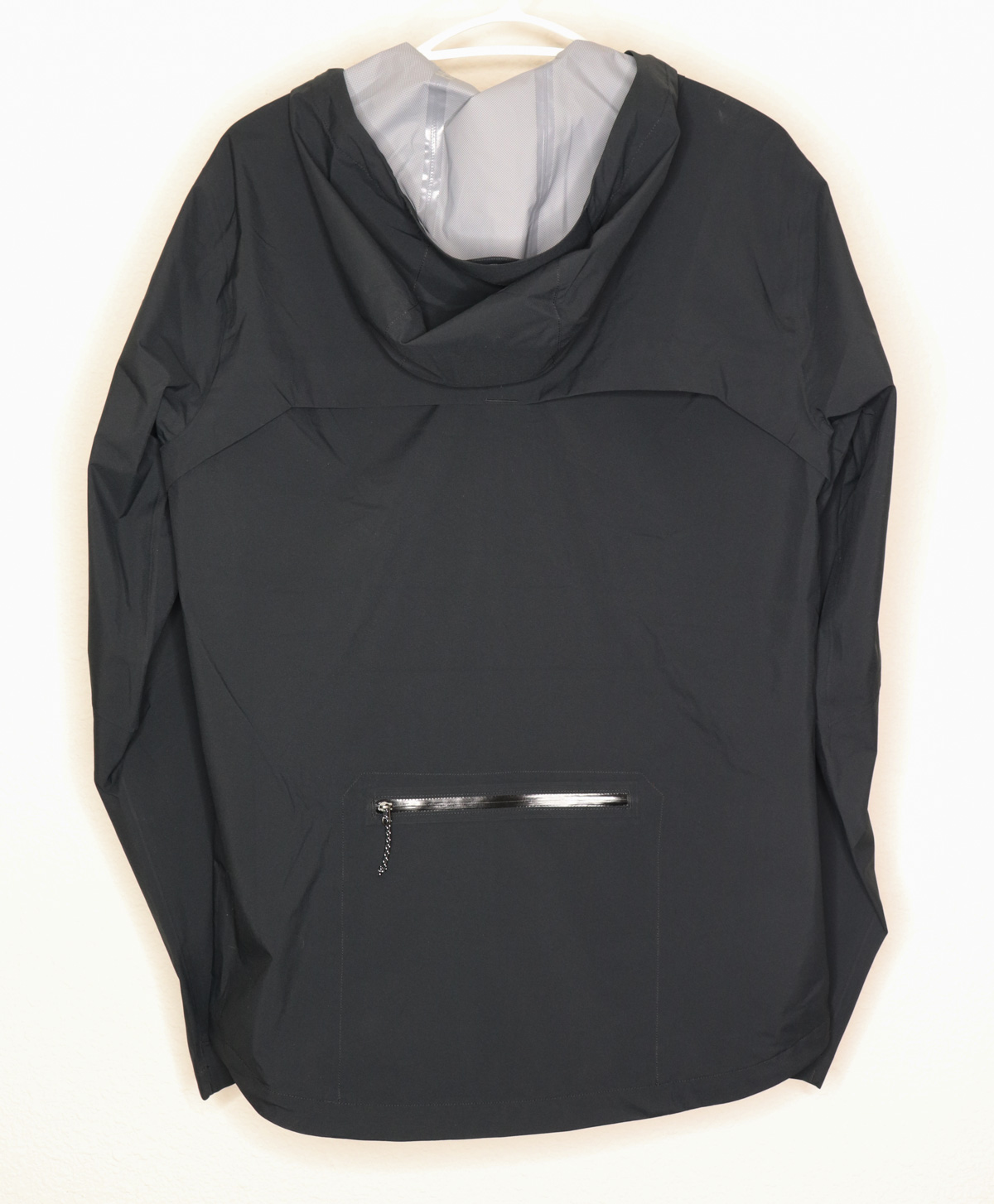
The Freewheel MTB Stretch Rain Jacket is constructed with YKK Aquaguard zippers on the front and the back pocket. The hand pockets don’t get the waterproof zippers, but they’re protected by a flap. It also offers Velcro cuff closures and a drawcord hem to snug up the waist. For ventilation, the jacket gets an upper back vent, but has no pit zips or side vents. This jacket has a very large hood, which easily fits over a helmet. The helmet includes hidden cord adjusters so you can tighten it up on your head.
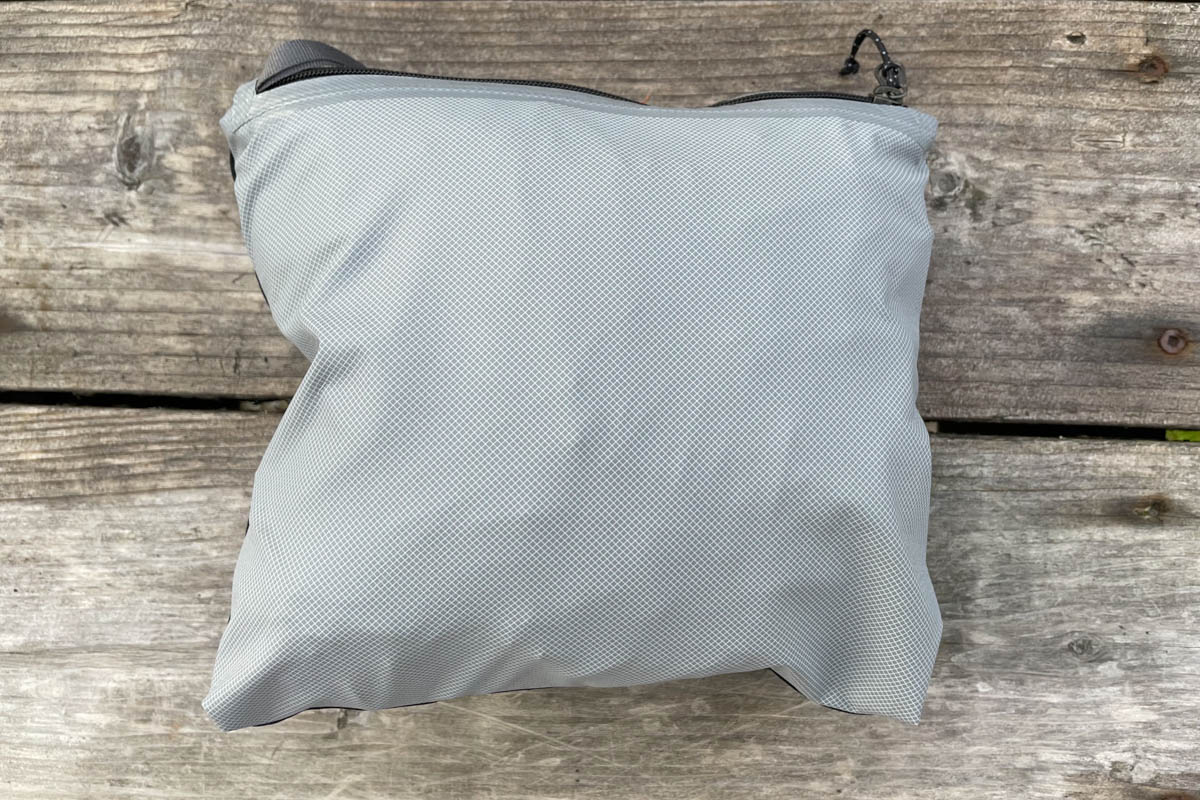
Storage options are aplenty: There’s one chest pocket, two hand pockets, and a lower back pocket, which doubles as a stuff sack for the jacket. Packed up, it measures roughly 6.5×7.5×4”, and it’s not a challenge to stuff it in the pocket. Finishing details include reflective logos on the chest and right arm, and reflective string pulls on all zippers.
Ride Impressions – Fit:
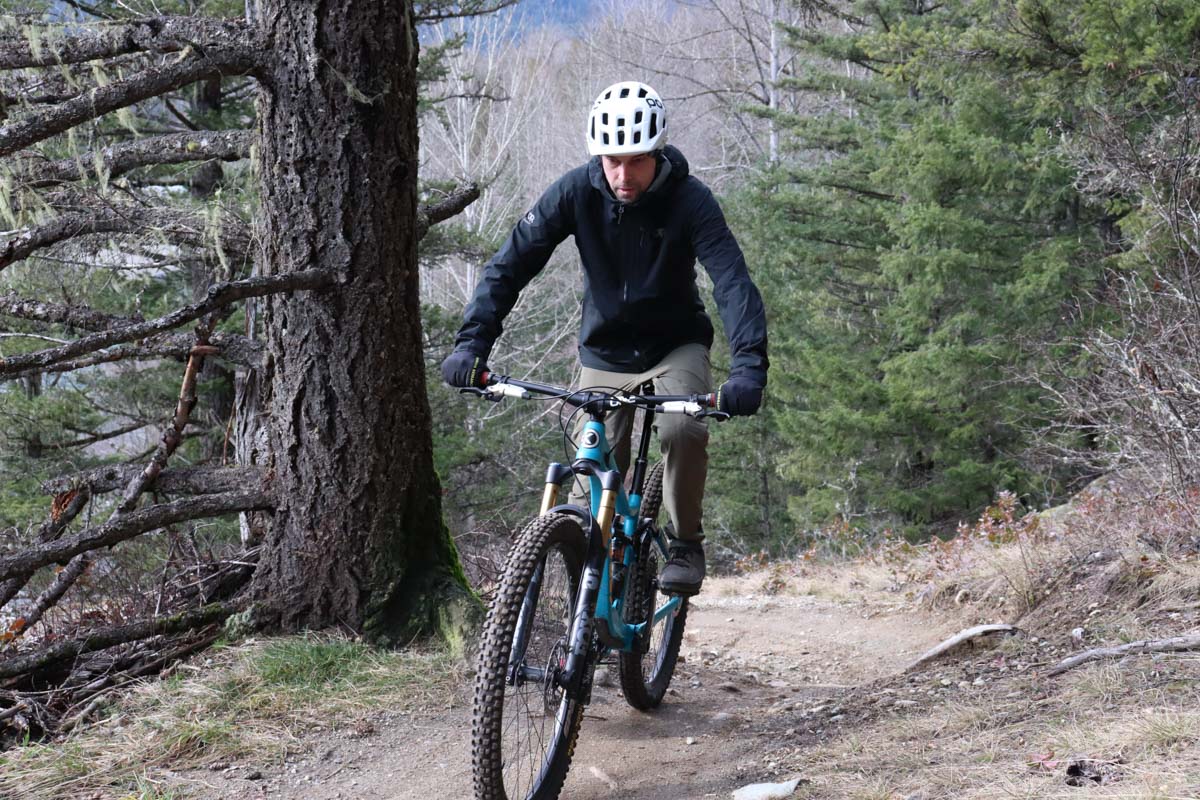
I am 5’10” with a slim build. I’m testing a size medium jacket, which fits me very well. The front of the body reaches just below my waist, and the dropped tail covers my butt. The sleeves are long enough to fully cover my arms in riding position, and there is no restriction of movement in the shoulders.
The cut of the body is nice, as it leaves enough room for layers underneath but is not bulky or baggy anywhere. The shell never limited my motion at all; Its tailoring is good enough to ensure this, but the fabric is very stretchy too.
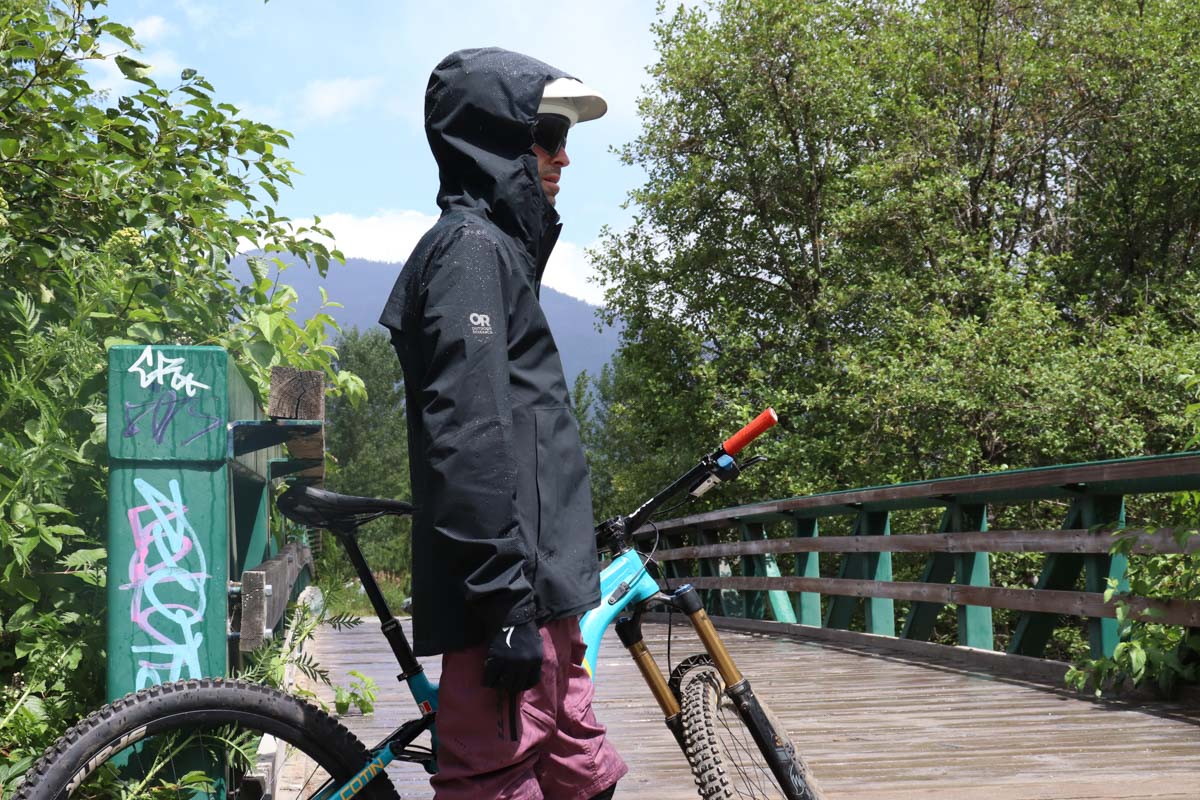
This jacket offers pretty good coverage. After one splattery ride, I only found tiny mud spots on my jersey’s rear hem, but everything else under the jacket stayed clean. On another very wet ride, I got a bit of mud splatter inside the jacket’s lower hem, but I did not have the waist drawstring cinched in at all. In the front, the jacket kept the top few inches of my pants dry.
The collar is tall enough to keep wind out of your neck/chest area, but not tall enough to hide your nose behind. It would be easier to hold the collar on your chin during cold rides if it were an inch taller – It can be done, but the collar slips down if you look upwards.
Hood:
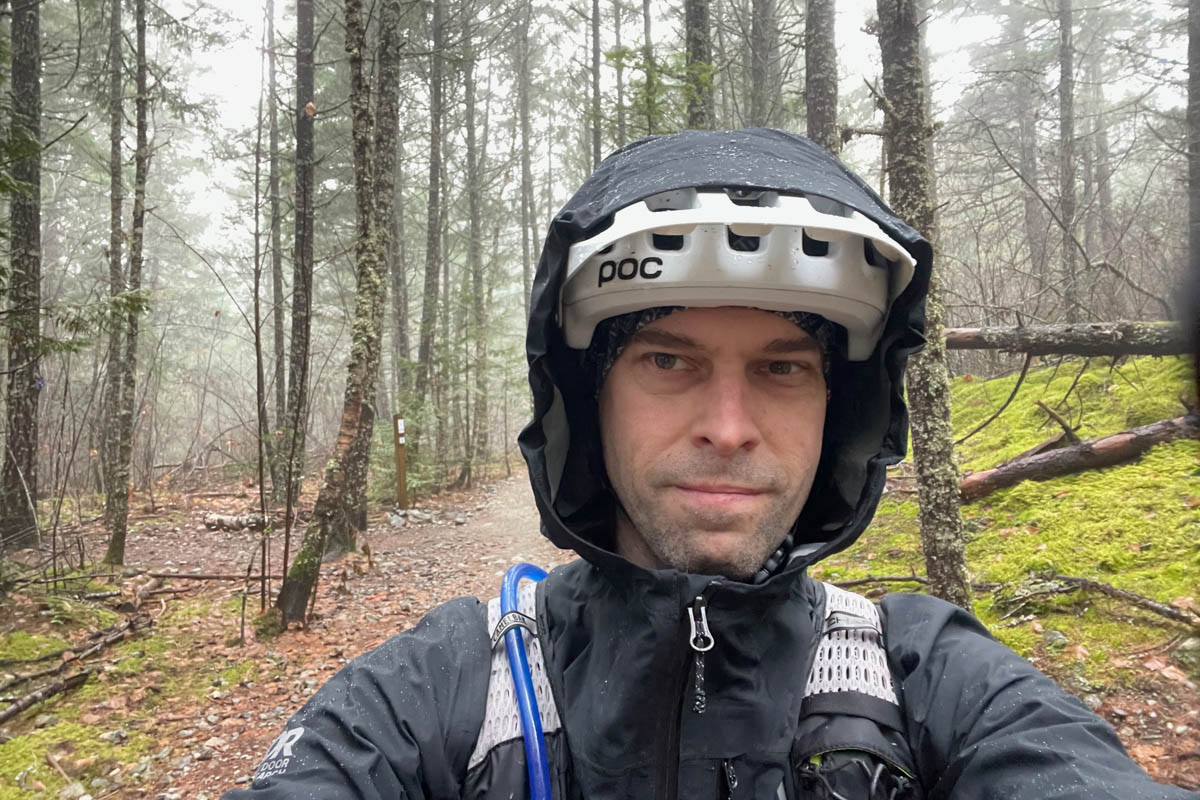
The Freewheel MTB Stretch Rain Jacket’s very large hood accommodated all my open-faced helmets. This hood is awesome as long as you have a helmet on! Right away I noticed the hood allows excellent visibility. It doesn’t impede my peripheral vision at all, and turns nicely with my head.
The hood covered my helmet right up to the visor, and kept my head and face totally dry in the rain. It did not come off the helmet during my ride to the trailhead and my climb. I have the adjuster cords slightly cinched in, and I was easily able to remove and put the hood back up over my helmet with one hand while riding.
The only issue I had with the hood while riding is that if you’re not wearing it, it’s so big it flops around a lot and can get annoying. I’d often notice the hood hanging off to one side of my shoulders, instead of sitting centered on my back.
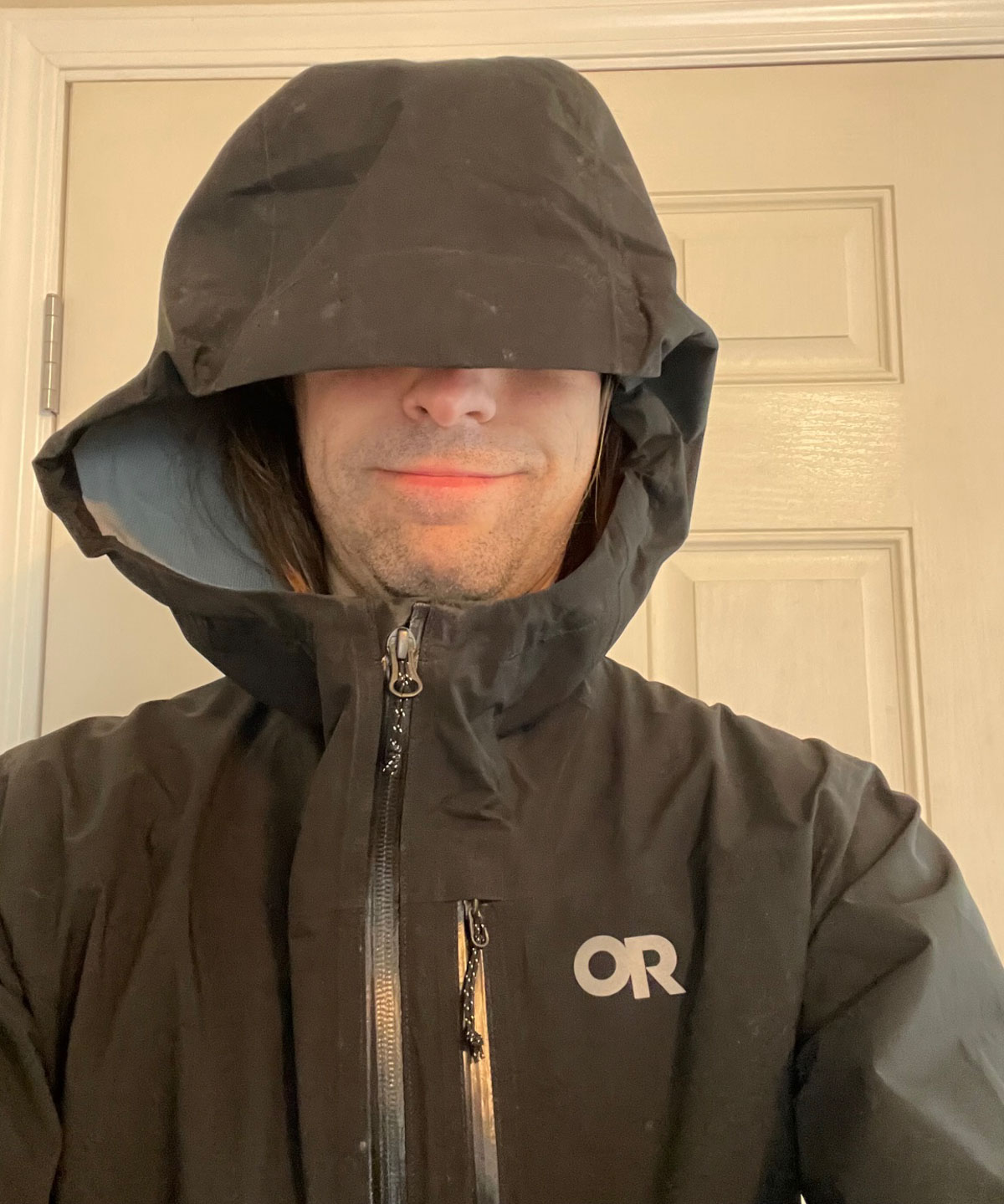
Unfortunately, the hood is not ideal for off-bike use. When not wearing a helmet, this hood is excessively large, and it droops right over my face. Cinching in the adjuster cords didn’t help much – They will cinch down the hood a bit, but I couldn’t effectively make the hood significantly smaller than it is. Also, the hood will quickly slip down over your face if you try to shift it higher up on your head.
That’s pretty typical of rain jacket hoods – they either fit over your helmet, or fit over your head. Some jackets have built-in cinch cords to try and make the hoods fit both, but they often only kind of work, and add complexity, weight, and cost to the jacket.
Weather Resistance:
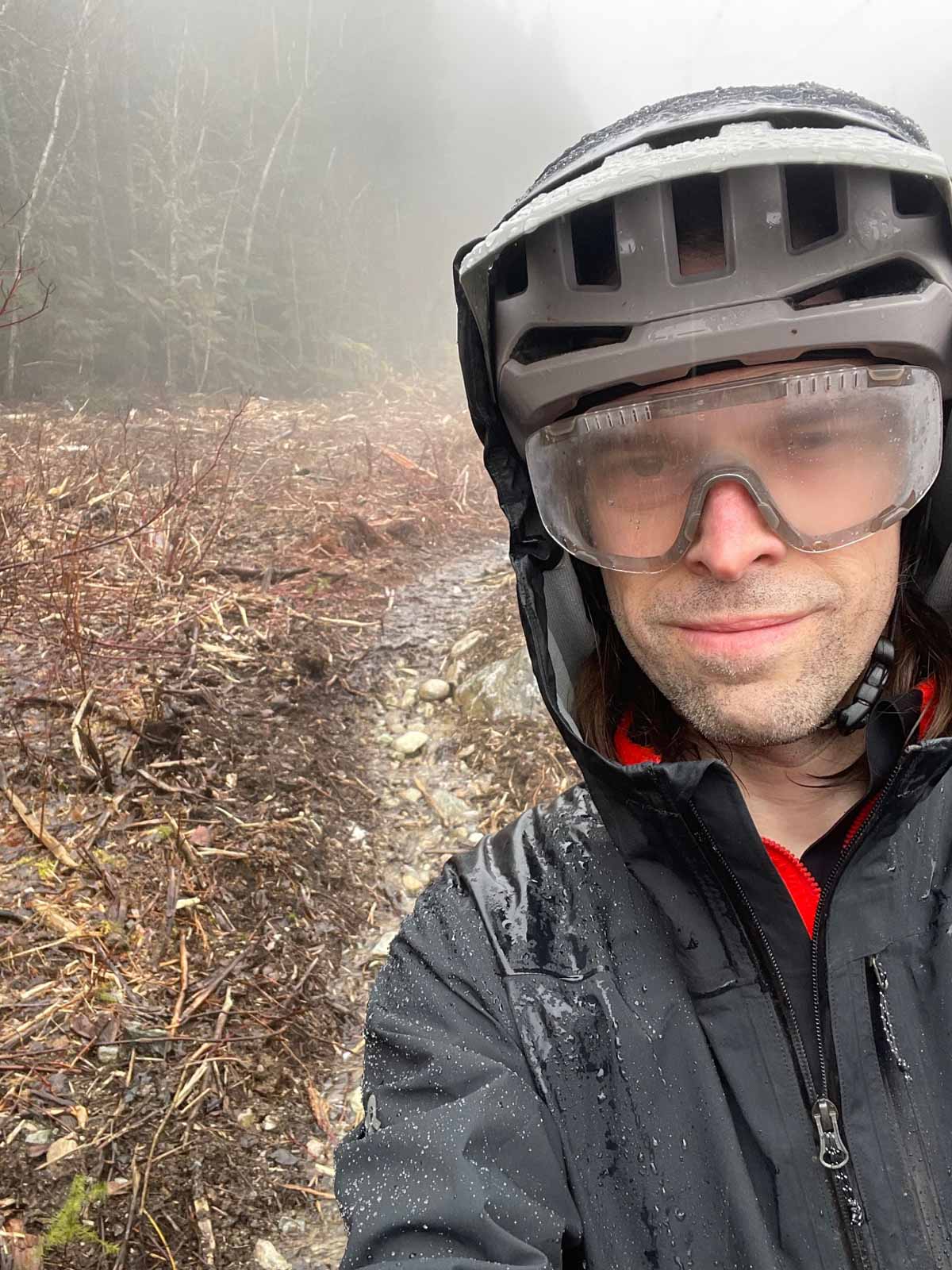
I did get several chances to ride the Freewheel MTB Stretch Rain Jacket in very wet conditions. On an early test ride, two hours of light rain and mist didn’t challenge the waterproofing at all. I also noticed on my winter rides that the shell offers great resistance against chilly winds.
In late winter, I rode for just over two hours in steady rain. It was a properly wet ride where my gloves, socks, pants, chamois, and kneepads were all soaked afterwards. On this ride, the jacket held the rain out entirely. It didn’t look saturated anywhere, and rain was still beaded up on the jacket after the ride. This result held true for most of my testing, and I was ready to conclude that the jacket’s waterproofing was excellent…
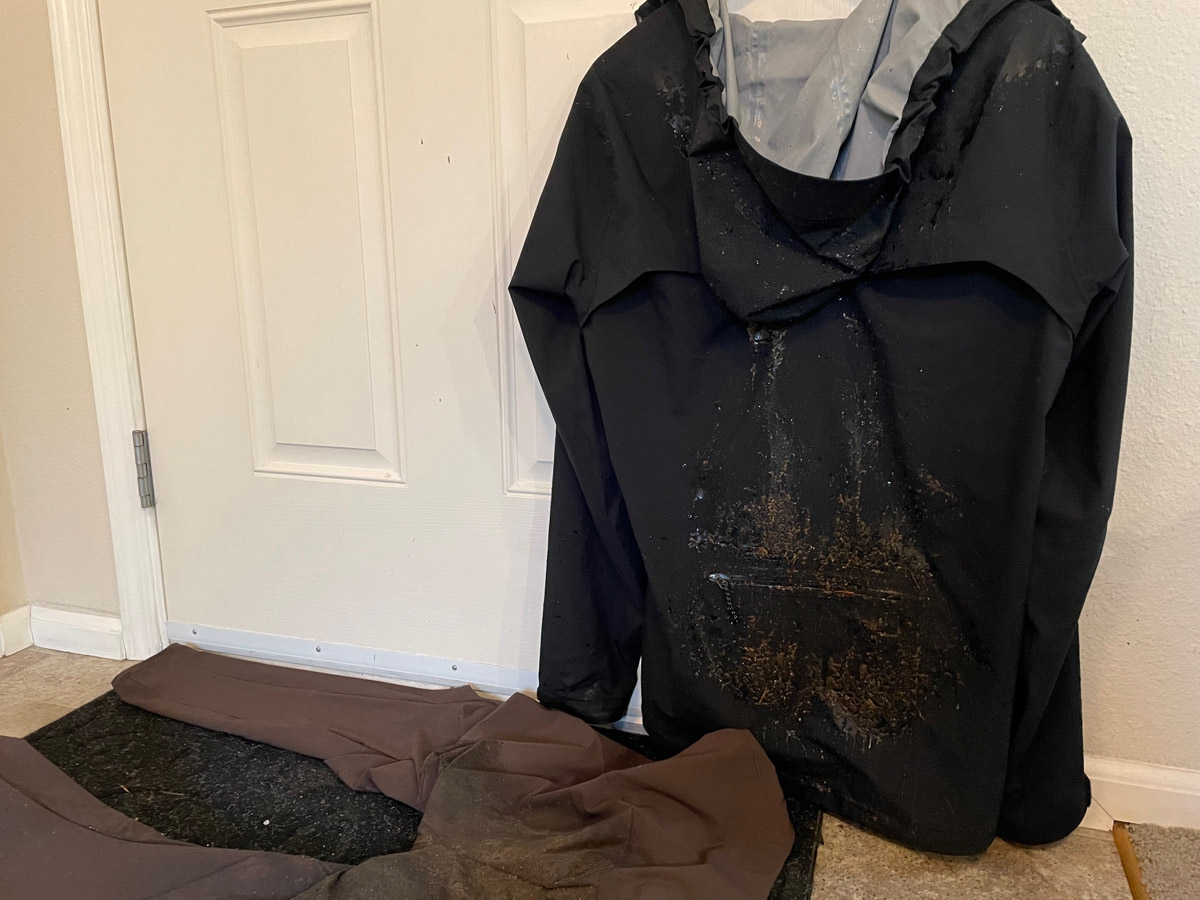
However, following one of my final test rides (a 45-minute lap in steady rain), the jacket did feel wet inside the shoulders and upper back. I’m sure this was partly sweat (see notes on breathability below), but it appeared the shoulders and back were starting to soak through. The same areas on my jersey were wet, but other parts of it remained pretty dry. This was the only time I suspect water actually soaked through the most rain-exposed parts of the shell, but it concerns me about the jacket’s long-term waterproofing capabilities.
On multiple rides, I did notice items in my pockets stayed perfectly dry. An hour into one rainy ride, a pack of M&M’s I had in the front pocket wasn’t even damp. On another wet lap, a piece of paper I put in the rear pocket only came out feeling slightly damp, but not wet, despite plenty of spray from my tire.
Ventilation/Breathability:
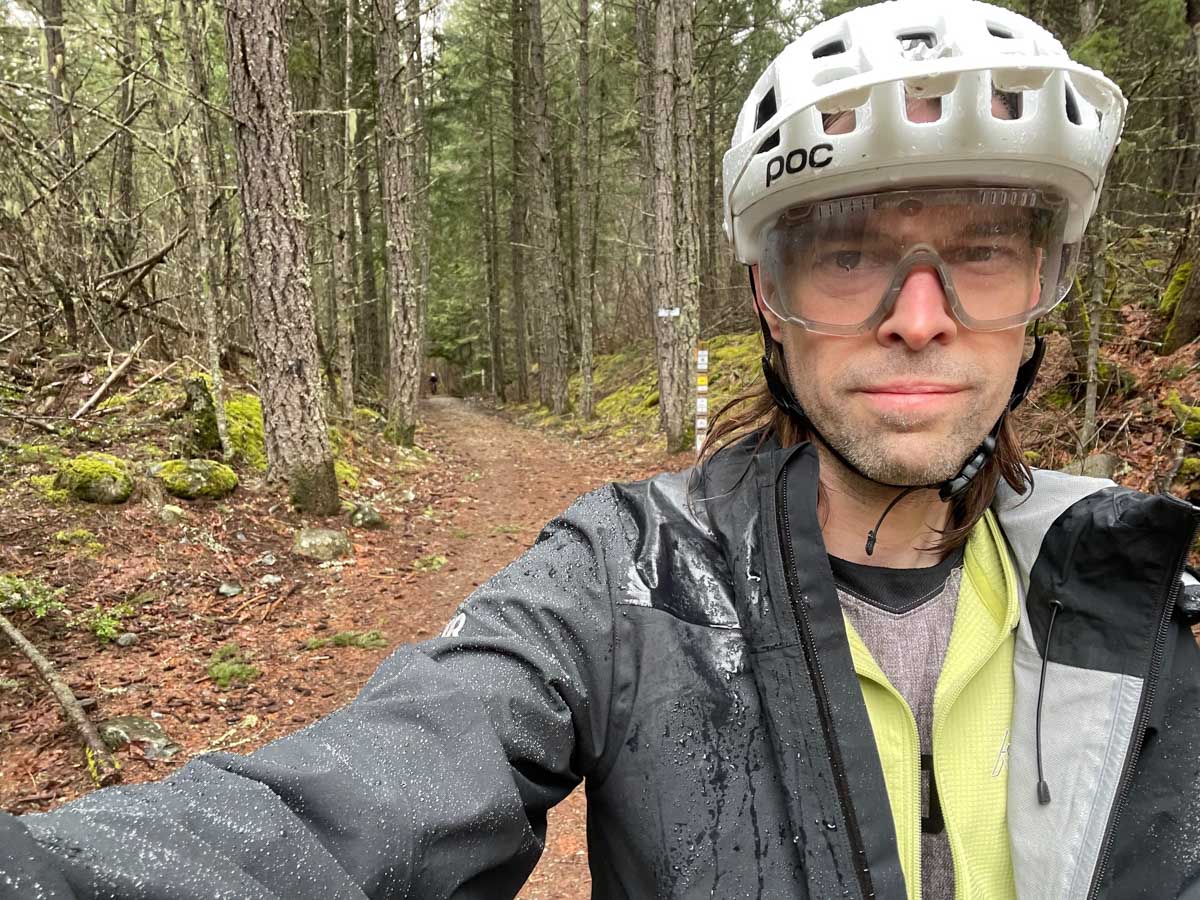
Now for the bad news. Despite many attempts in different temperatures with different layers underneath, I had no success keeping myself from sweating profusely inside this jacket.
The best I did was a ride in light rain at 5° C. With a long-sleeved jersey and light midlayer underneath, I got sweaty inside, but with the front zipper mostly down on the climb (and up for the descent), I remained comfortable through the ride.
On another ride at 6-8° C, wearing a short-sleeved jersey and my 7mesh Spruce Hoody (an excellent regulator), I was very sweaty after 20 minutes of climbing. I was able to open the zipper 2/3rds down for part of the climb, which dumped heat and allowed some airflow across my chest and armpits, but it was raining enough that I couldn’t leave it open for most of the ride. After about 45 minutes of more climbing/traversing, my hoody and jersey were damp almost everywhere. I may have overdressed for this ride, but the pattern of quickly getting sweaty continued.
At just 4-5° C, with a thin jersey and my Spruce hoody (the lightest layers I was willing to start my ride with), I was sweating in the jacket as soon as I warmed up. I managed to keep it to a comfortable level during my hour-long climb by opening the front zipper 2/3 down.
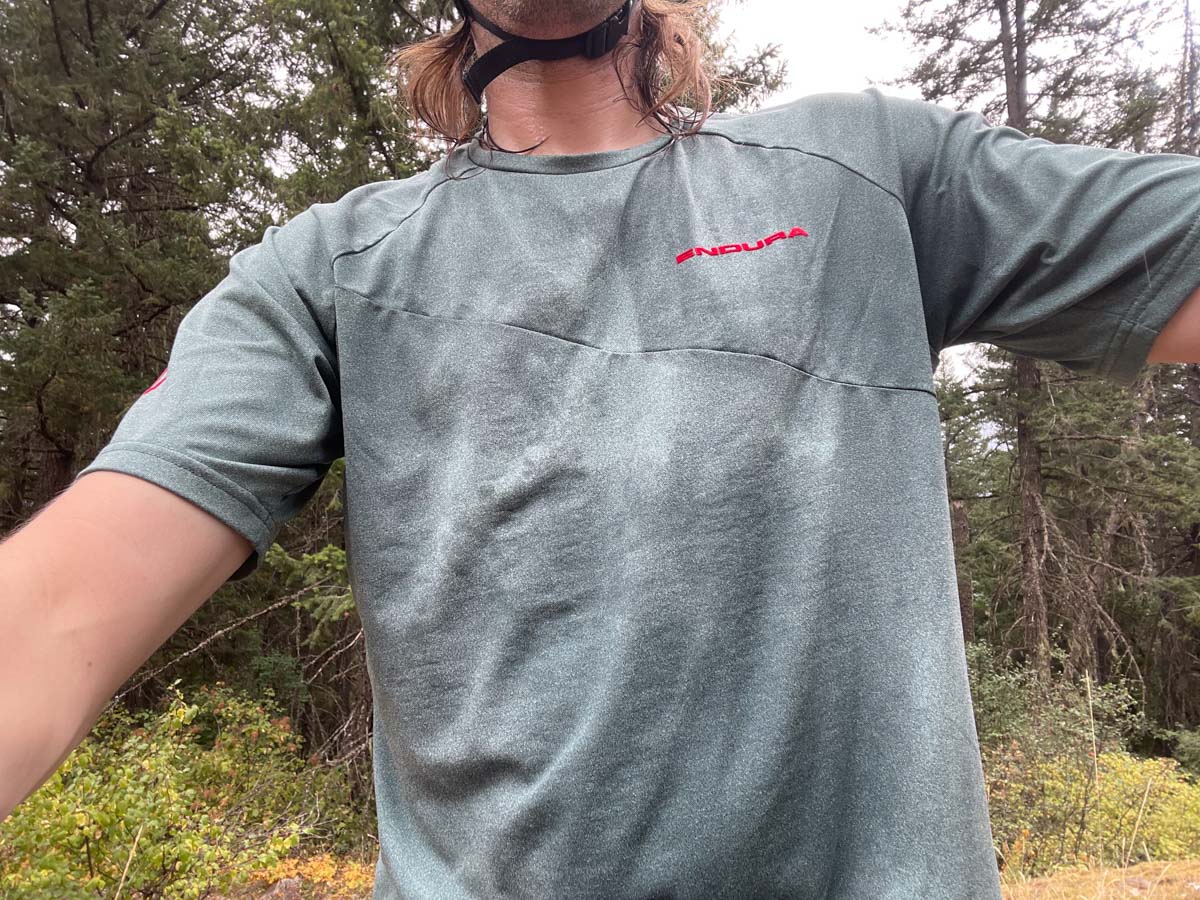
On this ride, I noticed the back vents do let air in, but they don’t keep your whole back cool. I found an hourglass pattern of sweat on my back afterwards. My shoulders, middle of back, and lower back all remained quite sweaty, but I could see dry spots behind my armpits. Other chilly rides confirmed I could feel air flowing through the back vent, but it still didn’t keep my shoulders, upper back, or armpits cool, even without a backpack on. I do ride with a pack often, and wearing one further limits what the back vent can do for you.
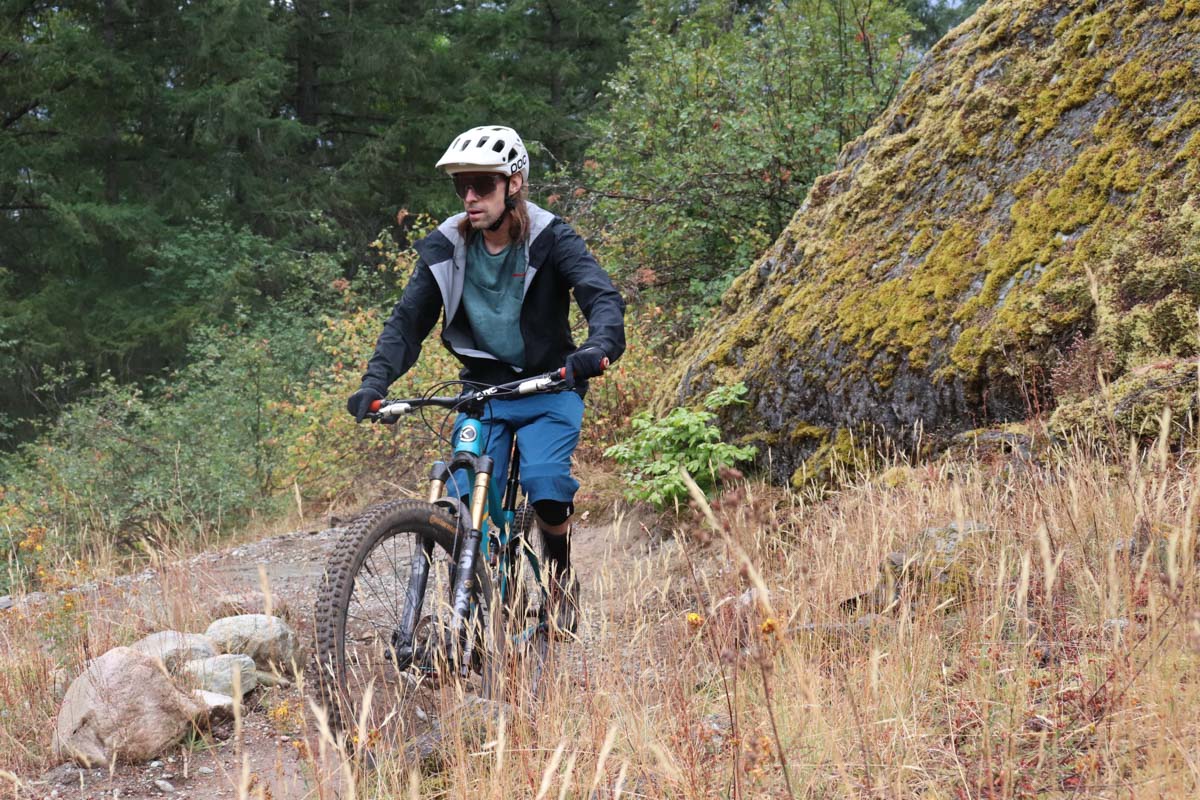
As Spring progressed, I got a few rides in warmer temperatures with the Freewheel MTB Stretch Rain Jacket. One shorter ride was at 11° C in steady rain, with just a thin short-sleeved jersey underneath. As usual, I got sweaty on the climb, then got home to find the inside of the jacket was damp everywhere.
One warmer ride I went for was around 14° C, in light rain. This time I wore bib shorts (my non-bibs were in the laundry bin), a long-sleeve jersey and my Camelbak Chase vest. I should have worn non-bibs, but I chose the long sleeve jersey to prevent any clammy feeling of the jacket’s sleeves against my skin. After this 1.5-hour ride, I came home HOPELESSLY sweaty. I was sweating by the time I reached the trailhead, so I opened the front zipper for the entire climb. I left the zipper mostly open on my descent too, but to no avail. My entire back, shoulders, and armpit areas of my jersey were completely soaked when I got home.
Unfortunately, I did not find the Ventia shell breathes well at all. It’s very difficult to produce a fabric that’s actually waterproof and truly breathable, so I think the ideal way to keep a rain shell from overheating is adding large vents. I really liked the Patagonia Dirt Roamer Storm Jacket I tested in 2024, because guess what it has – massive side vents that run from the waist hem right up to your armpits!
I would strongly suggest Outdoor Research add some sizeable vents to this jacket, as I would not recommend it for MTB riding as it is. Climbing mountains heats you up fast, and this jacket cannot breathe or dump heat effectively enough to keep you dry inside.
The Freewheel MTB Stretch Rain Jacket is available in Black or Black/Spice (orange). Men’s sizes range from S-XXL. Women’s models are also available, in Black or Black/Galactic (blue) colors and XS-XL sizes. MSRP is $239 USD.