This article is by consummate mobility advocate Ryan Hashagen. Learn more about his work with Better Block PDX here.
A stretch of road on South Sheridan Street now has a safer route for people walking and biking. The recently completed project, known as Better Sheridan, grew out of a proposal from students, parents and administrators at the International School of Portland (ISP). The goal was straightforward: create a safer way for students, staff and other pedestrians to travel through a part of the South Waterfront neighborhood where sidewalks had abruptly ended.
The implementation of the first phase of the project was celebrated last week with a back to school community bike bus that brought together hundreds of International School students, families, faculty, staff, neighbors and community partners.
The project was made possible thanks to a two-year collaboration among International School children, parents, and administration; Portland State University Urban Planning and Civil Engineering Capstone students, neighborhood organizations, and the Portland Bureau of Transportation. The collaboration was coordinated by Better Block PSU, a partnership between PSU’s Transportation Research and Education Center (TREC) and Better Block PDX, a non-profit that promotes grassroots community placemaking and traffic safety projects.
“This morning, hundreds of students, families, faculty, staff, neighbors, and community partners came together to celebrate Phase I of Better Sheridan with one HUGE Bike Bus,” said Bodo Heiliger of the International School of Portland, during last week’s event.. “Bikes, scooters, balance bikes, trikes, and lots of cheering. A pretty perfect Portland morning.”
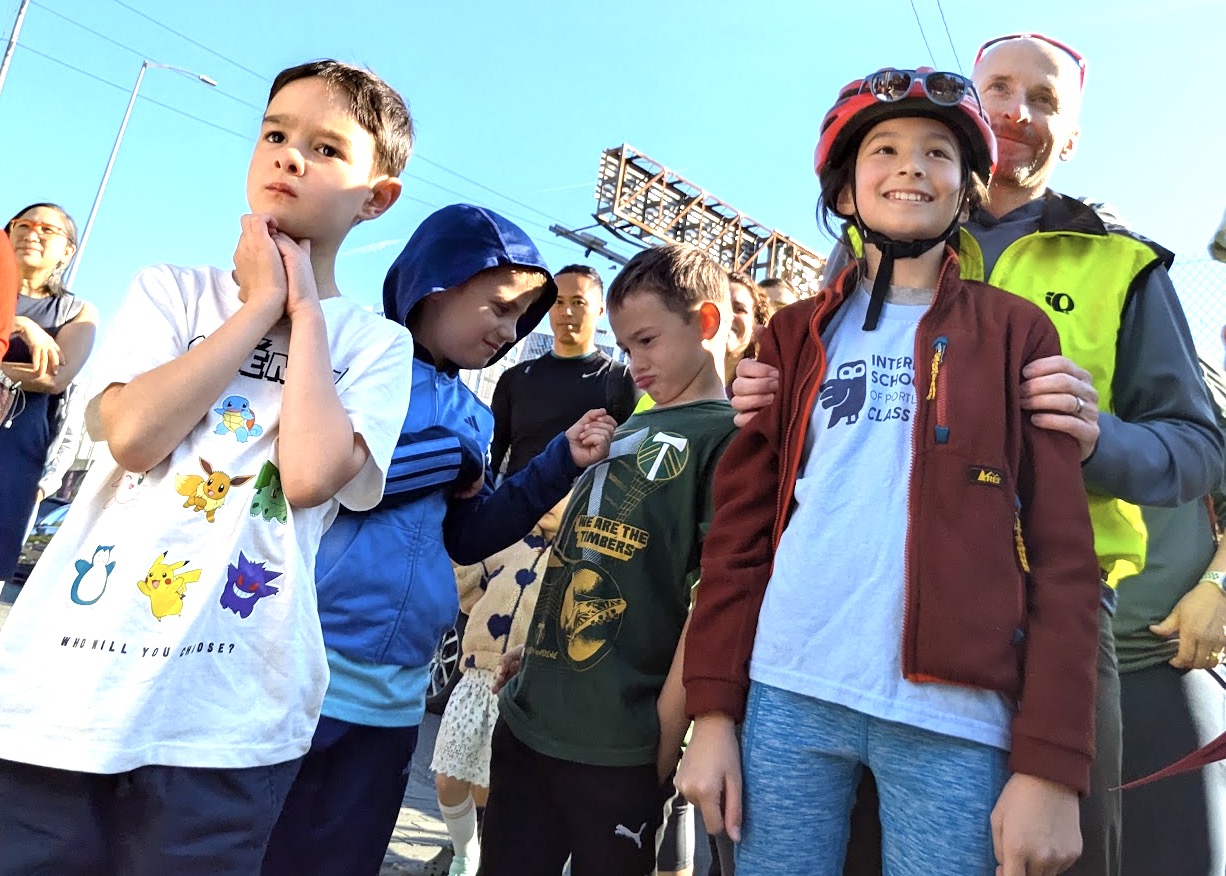
The celebration marked the culmination of a project that began through the Transportation Research and Education Center’s (TREC) Better Block PSU program at Portland State University. Urban planning students studied the corridor as part of a bike and pedestrian planning course, while civil engineering capstone students later developed a traffic-control plan for the project. PBOT then worked with the students and the community to turn the concept into a quick-build project.
The result is an advisory sidewalk and bike lane along South Sheridan Street that creates a connection between South Moody Street (where streetcar, light rail and the Tilikum Crossing come together) and South Water Street near the International School and other offices.
For students and employees walking through the area, the improvement addresses a longstanding gap in the neighborhood’s transportation network. The project also gave International School students an opportunity to participate in shaping their communities.
“At ISP, we want our students to see themselves as active participants in their communities, working to make the world a better, safer, and more peaceful place,” Heiliger added.
South Sheridan is an unusual piece of Portland’s street system. The road runs beneath what was once Harbor Drive, the waterfront freeway that was removed in the 1970s. A remnant of the former highway remains, including an off-ramp that directs vehicle traffic into the surrounding neighborhood.
Today, the area is surrounded by major transportation infrastructure, including I-5 and the Fremont Bridge. It is also home to the ISP and is used daily by hundreds of students, staff and Oregon Health & Science University students and employees.
Before the project, South Sheridan did not have a continuous sidewalk on either side of the street. Pedestrians—including schoolchildren and OHSU students and
nurses—were forced to navigate a corridor designed primarily around vehicle movement.
The Better Sheridan project brought together a wide range of participants. ISP families and administrators helped develop and advance the idea, while the school worked with OHSU, the South Portland Neighborhood Association and the Downtown Neighborhood Association to build community support.
At Portland State, students in urban planning and civil engineering took the project through successive stages of research and design. Faculty and instructors involved included Drusilla van Hengel, Derek Abe, Evan Kristoff, and myself, Ryan Hashagen.
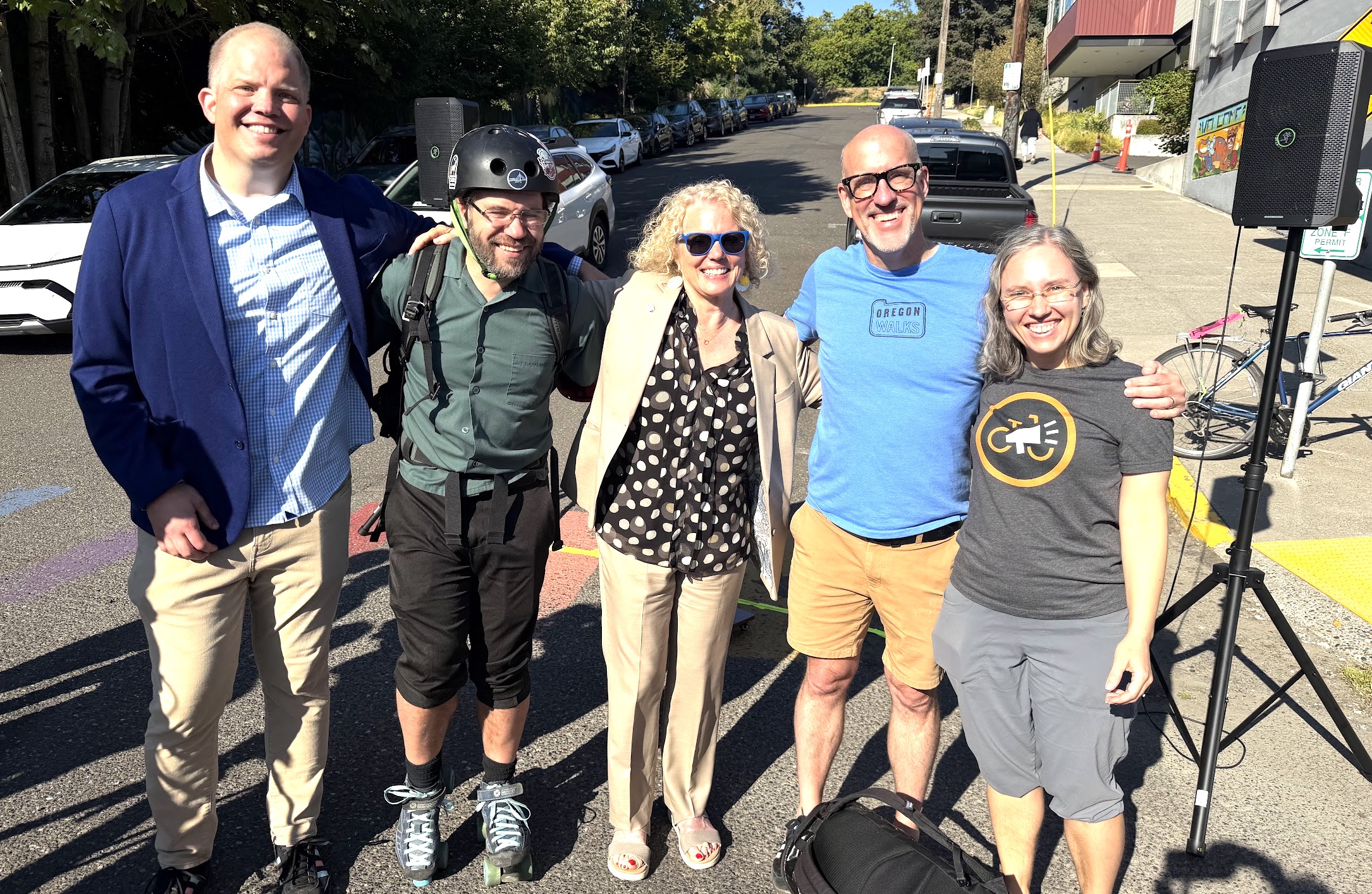
The Better Block PSU Project Pathway is supported by TREC – the Transportation Research and Education Center – led by Jennifer Dill and John MacArthur, with Nathan McNeil as the Better Block PSU liaison.
The project was eventually handed to PBOT staff, including project managers and traffic engineers William Tabajonda and Patrick Wong, who worked on the design and implementation. Other PBOT staff involved included Liz Hoekstra, Scott Cohen and Abra McNair.
For Heiliger, the project demonstrates what can happen when students, educators, government agencies and community members work together around a shared idea.
“Better Sheridan is a beautiful example of that mission in action,” he said. “People across our school, city, universities, and neighborhood working together to make our little corner of Portland safer, more connected, and more joyful.”
What began as an idea from ISP students ultimately became a built project—giving pedestrians and cyclists a safer way through a corridor shaped for decades by Portland’s highways, ramps and other large-scale infrastructure.