During Crankworx Whistler, I attended the launch party for the Nighttrain, which is Rocky Mountain Underground (RMU)’s first mountain bike. RMU went straight to Dave Weagle for their suspension linkage, and he came up with the Orion mid-pivot, dual-idler design for their debut enduro bike. I recently got a chance to ride the Nighttrain, and it seems RMU is off to a promising start!
The Nighttrain is unabashedly built to excel on descents, and it is truly a standout bike in terms of sheer bump-absorbing capability. What’s great is how the bike massively softens impacts without sacrificing all its playfulness, and it proved to climb more efficiently than it feels.
I had one afternoon with the Nighttrain (enduro build), so this article is focused on suspension performance with some notes on geometry. I did not attempt to fully assess the components, but I had no mechanical issues or lacking performance from any part of the bike.
Key Specs:

To start, here’s a quick rundown of the Nighttrain’s main features and specs. This enduro bike is built around an aluminum frame, and it rides on 29” wheels. It offers 170mm travel front and rear, with the latter controlled by its new Orion linkage. Of course, the dual-idler design is a standout feature of this bike as well… and it’s a worthy addition!
I should note the demo bike I rode was mostly built to the Deore spec, but it had a different rear wheel and derailleur than the stock bike. The bike weight I’ve listed below may be slightly off from the stock build.
Bike Setup:
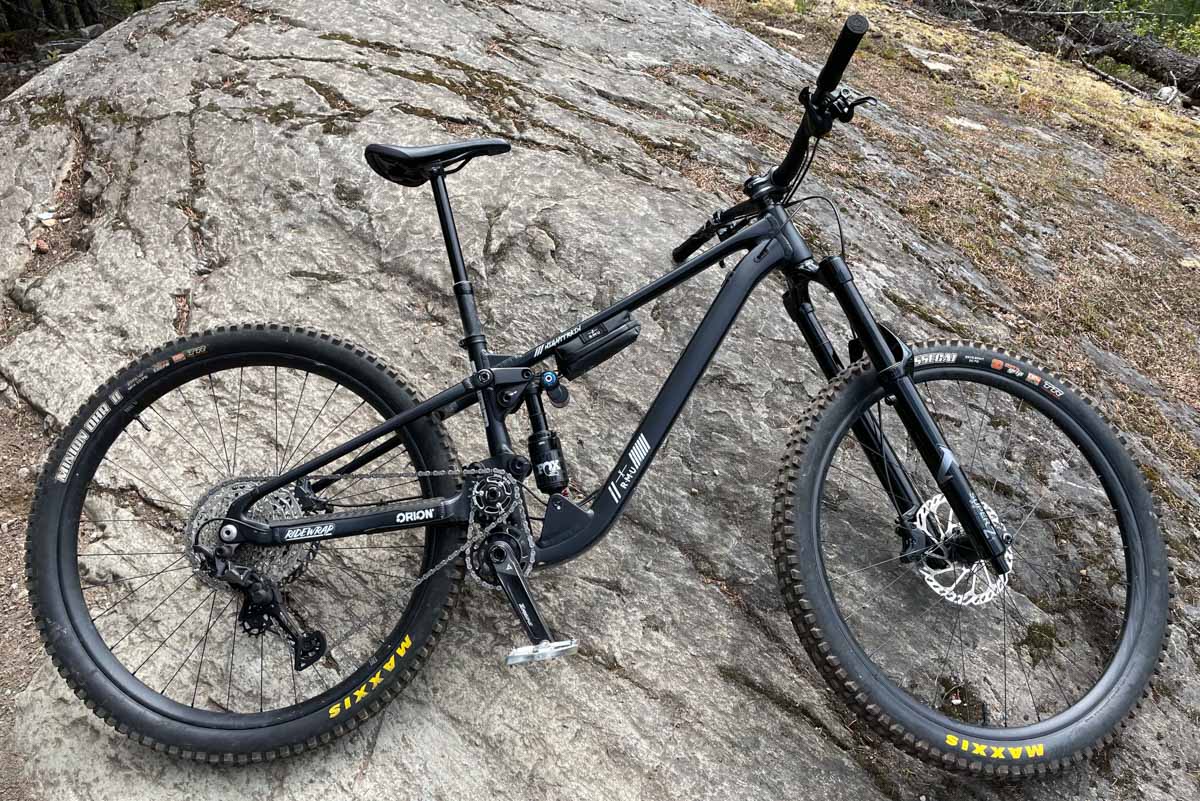
After giving my body weight to RMU’s staff, I received the Nighttrain basically set up, but I did make adjustments to both the fork and rear shock. Exact settings will vary for every rider, but it’s safe to say I didn’t have to do anything atypical to set up this bike properly. I just pulled the fork tokens out, then followed my usual recipes for compression and rebound, and it rode great. I did reduce the rear shock’s air pressure between my two descents, as described below. Despite the bike’s unique linkage and drivetrain setup, there’s no special knowledge required to get it dialed in.
Ride Impressions – Climbing:

I started my ride by climbing the Nighttrain, so as I typically do on any MTB, I put the rear shock in Firm mode. As I was setting up the bike, I noticed this shock’s Firm position offers a lot of extra support, and strongly resists diving into its travel.
With the shock in Firm, the Nighttrain behaved typically for a modern enduro bike. After climbing a technical singletrack trail, I had used about 50% travel. Rocks and roots on the trail were noticeable as the rear wheel impacted them and lifted itself up and over. With the shock firmed up, I still had ample traction over rocks and roots, but the ride remained firm enough that trail inputs were obvious in the saddle. Riding in Firm definitely maximizes this big bike’s pedalling efficiency, but as I soon found out after opening up the shock, it’s almost disappointing to firm up this amazingly smooth rear end!
Continuing my climb, I flipped the shock into Open mode, and there was an immediate ‘wow’ moment! Even on a moderately bumpy section of a climb, the Nighttrain’s impressive ability to absorb bumps was apparent right away. I’d say this bike is the closest thing I’ve ridden to achieving those marketing claims like ‘magic carpet ride smoothness’ or ‘erases the bumps’, as it truly offers incredible bump absorption.
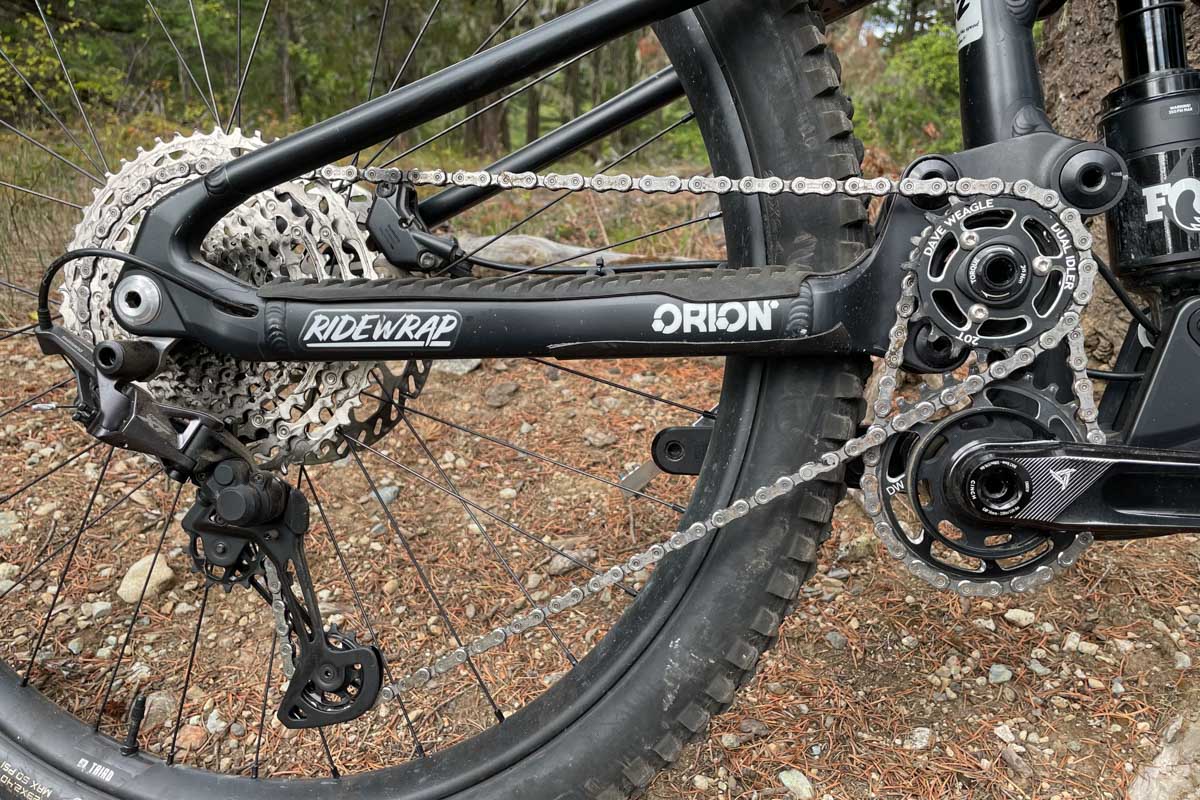
There is clearly merit to the dual-idler design, as it feels like there’s zero resistance when the Nighttrain’s rear wheel moves around a bump. The feel of the rearward axle path is noticeable, but the dual chain layout does allow the rear end to move so freely that this bike truly stands out in that regard.
The Nighttrain rolls over roots and smaller rocks with incredible softness, and the linkage actually makes bumps feel smaller than they are. With the shock left open, the Nighttrain provides a very comfortable ride on climbs! As the bike nearly deletes small bumps and chatter, you enjoy excellent comfort in the saddle. At this point, I was getting really excited about descending on this bike.
Now softness is nice for bumps, but the Nighttrain did retain good efficiency without any help from the shock. Left wide open, the rear end only dipped to roughly 60% on my climb. This was only surprising because the super supple rear end is deceiving – You’d think it was bobbing around since it eats up impacts so eagerly, but the bike carried itself uphill without wallowing excessively.

While it pedals pretty well, the Nighttrain is not likely to blow you away as a climber since it’s a hefty ride at 38.03 lbs with pedals and a tool bag. I noticed the bike felt a bit rear-end heavy, and it took some effort to pull it up the climbs.
I rode an S2 frame size, and the Nighttrain’s geometry is pretty typical for today’s enduro bikes. The 63° head tube angle does feel a bit slack on climbs, but the shorter 430mm rear end keeps this bike from feeling lengthy through tighter corners. The 77.5° effective seat angle is steep enough to put you in a good pedalling position.
Descending:

My first descent on the Nighttrain was a mix of fast sections and berms, plus chunky rocks and rootbeds. Right away it was apparent there is definitely something behind this linkage/drivetrain design! The bike took all kinds of hits very smoothly, but particularly medium-sized bumps and repeated hits. I jumped onto a patch of roots, and the bike buttered through the roughness far more smoothly than any bike I’ve ridden with a traditional drivetrain.
I did get two harsh knocks on the rear wheel during this run, but the bike I rode has Maxxis EXO+ casing tires front and rear. Given the Nighttrain’s weight and how much its smoothness encourages you to thrash through rough terrain, heavier casings would be suitable for this bike. With 150psi in the rear shock, I did not quite use full travel on this run, but it still felt amazingly plush!

I dropped the rear shock to 142 psi before more climbing and a second descent. I did not notice any significant difference while climbing in Open or Firm mode from the air pressure adjustment.
My next descent started with fast, chattery rock gardens and ended up on a flowy jump trail. Again, I found the bike felt amazingly capable of softening and absorbing impacts in chunky sections. As the Orion linkage butters through rough stuff, the Nighttrain’s rear wheel feels solidly planted over any small or medium-sized bumps. It takes bigger hits in stride too, and I felt no harsh impacts on this run at all.

The Nighttrain was sucking up bumps so nicely that partway down my second descent, I was consciously telling myself to stay off the brakes and dive right into rock gardens as fast as possible! And it was rewarding every time! It’s something special when a bike or component works so well it encourages you to ride faster, and the Nighttrain quickly had me pinning it with confidence.
While the Nighttrain definitely plows through rough stuff exceptionally well, RMU wanted to maintain a lively, poppy ride too. I would say they succeeded in that – A few years ago I rode the high-pivot Trek Slash, and I remember it was close to the Nighttrain in bump absorption, but it felt a bit soft popping off jumps. The Nighttrain does maintain a fairly lively ride, feeling reasonably poppy for a big enduro bike.
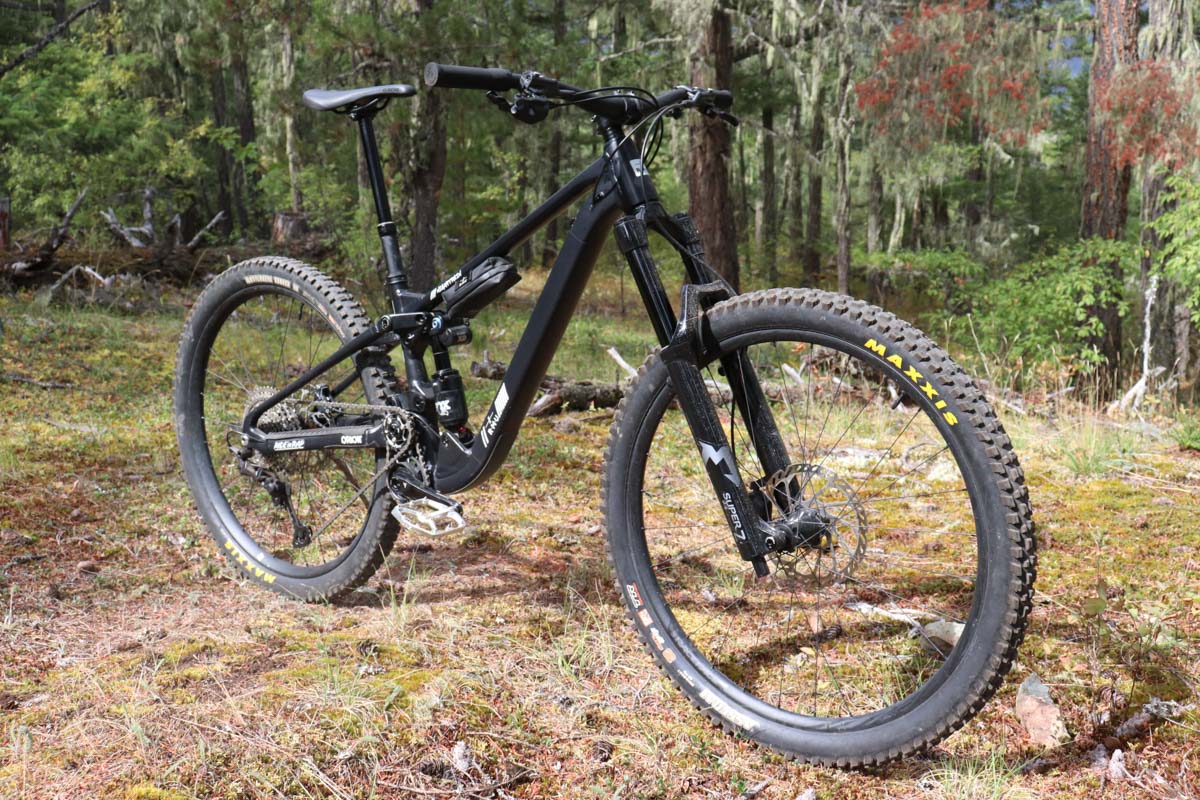
I also liked how the bike handles jump or drop landings very smoothly and softly, despite me running my rebound pretty fast. It feels like landings are absorbed slowly and the suspension feels bottomless. I did use all the shock’s travel on my second descent, but I never felt any harsh bottom-outs on the bike.
When descending, the Nighttrain’s slack head tube offers great stability and confidence diving into steep descents. The frame’s reach of 465mm is perfect for me, feeling roomy but not overextending my arms. Overall, this bike rides like an enduro, but the shorter rear end keeps it fairly playful and agile through corners.
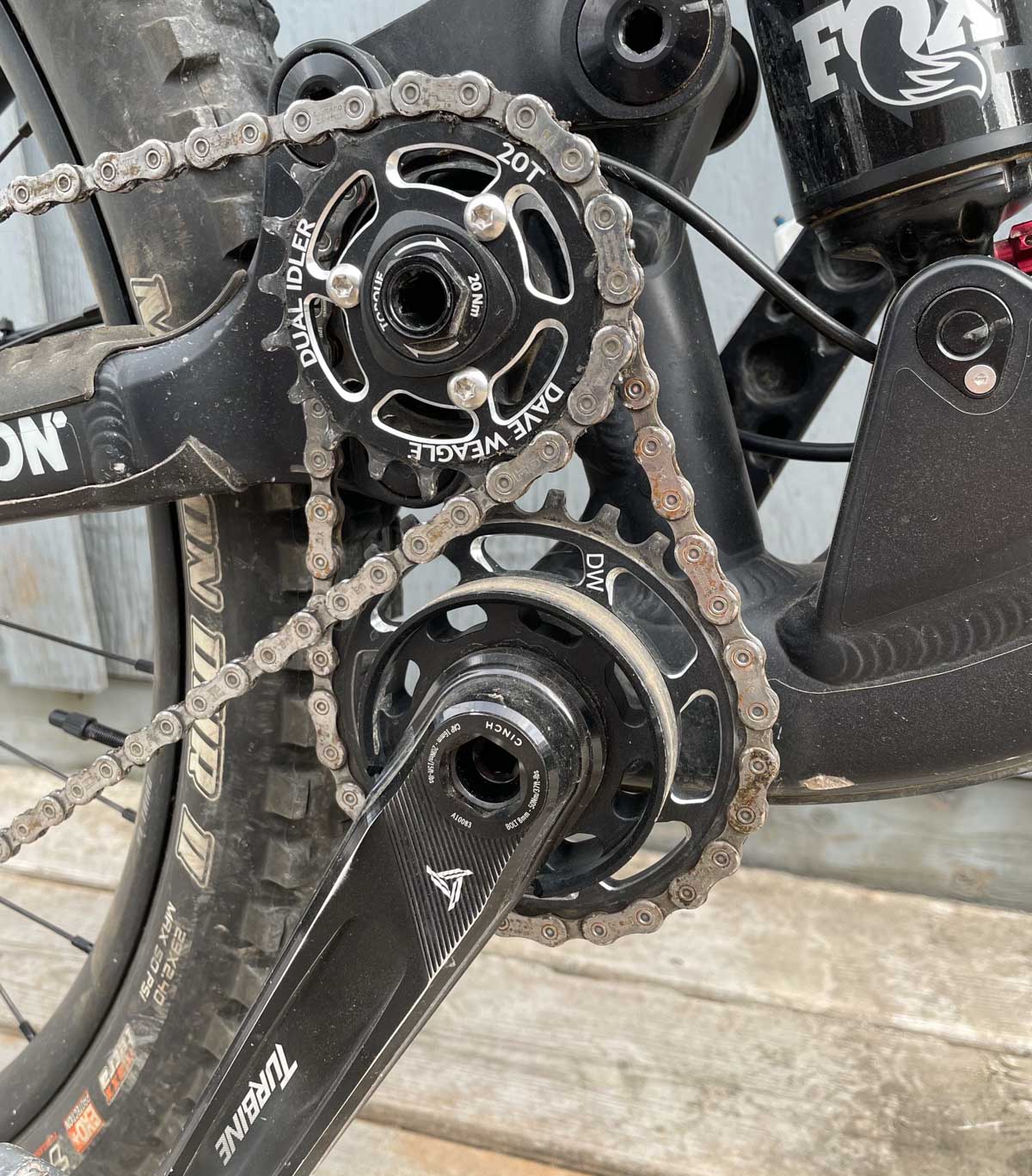
I’m no pro XC racer, but I did not notice any significant amount of drag from the dual-chain, dual-idler drivetrain. Pedalling around in front of my house, there certainly wasn’t a blatant difference between the Nighttrain and any typical MTB.
The only odd thing I noticed from the dual idler was a bit more slack than I would have expected in that short chain. I inquired about this and found out the demo bike I rode could have used an adjustment to prevent the issue I detected. Apparently that short chain is supposed to be taut.
On the demo bike, I could push the chain in and out by about 6- 8 mm, and I could feel that slack tighten up and the idler engage on abrupt starts. RMU confirmed a simple adjustment should eliminate that chain slack and provide immediate engagement.
Visit RMU’s website for complete details on the Nighttrain lineup.