At Sea Otter, Giro introduced several new models of road and off-road cycling shoes. Among them was the Stylus XC, the entry-level model in the brand’s lineup of off-road shoes. With a smooth one-piece upper, lace closure, and a moderately stiff nylon/glass fiber sole, the Stylus XC is aimed squarely at cross-country and gravel riders. At a quick glance, they look nearly identical to the top-of-the-line Empire XC shoes, but at $125, the Stylus costs $250 less.
I got my hands on a pair of the Stylus XC shoes a couple of weeks ago, and I’ve taken a few rides in them so far. They’re lightweight and very comfortable, with a balanced performance that I feel exceeds the asking price. Of course, at ⅓ the price, the Stylus’s sole is not quite as stiff as the Empire XC, nor is it expected to be. Still, they look great, and I’d argue they’re one of the best values around for cross-country and/or gravel riders looking to save a bit of cash.

-
MSRP:
$125 -
Weight (pair):
620g (size 44) -
Closure:
Tubular laces -
Sole:
Nylon and glass fiber with co-molded rubber tread -
Intended use:
Cross-country, gravel, light trail -
Available sizes:
36 – 48 EU -
Colors:
Black, Dark Sage, White
Pros
-
Reasonable price
-
Good-looking
-
Balanced sole stiffness
-
Surprisingly good ventilation
-
Supple uppers
-
Comfortable lace closure
Cons
-
No half sizes
-
Basic footbed
Giro Stylus XC Details
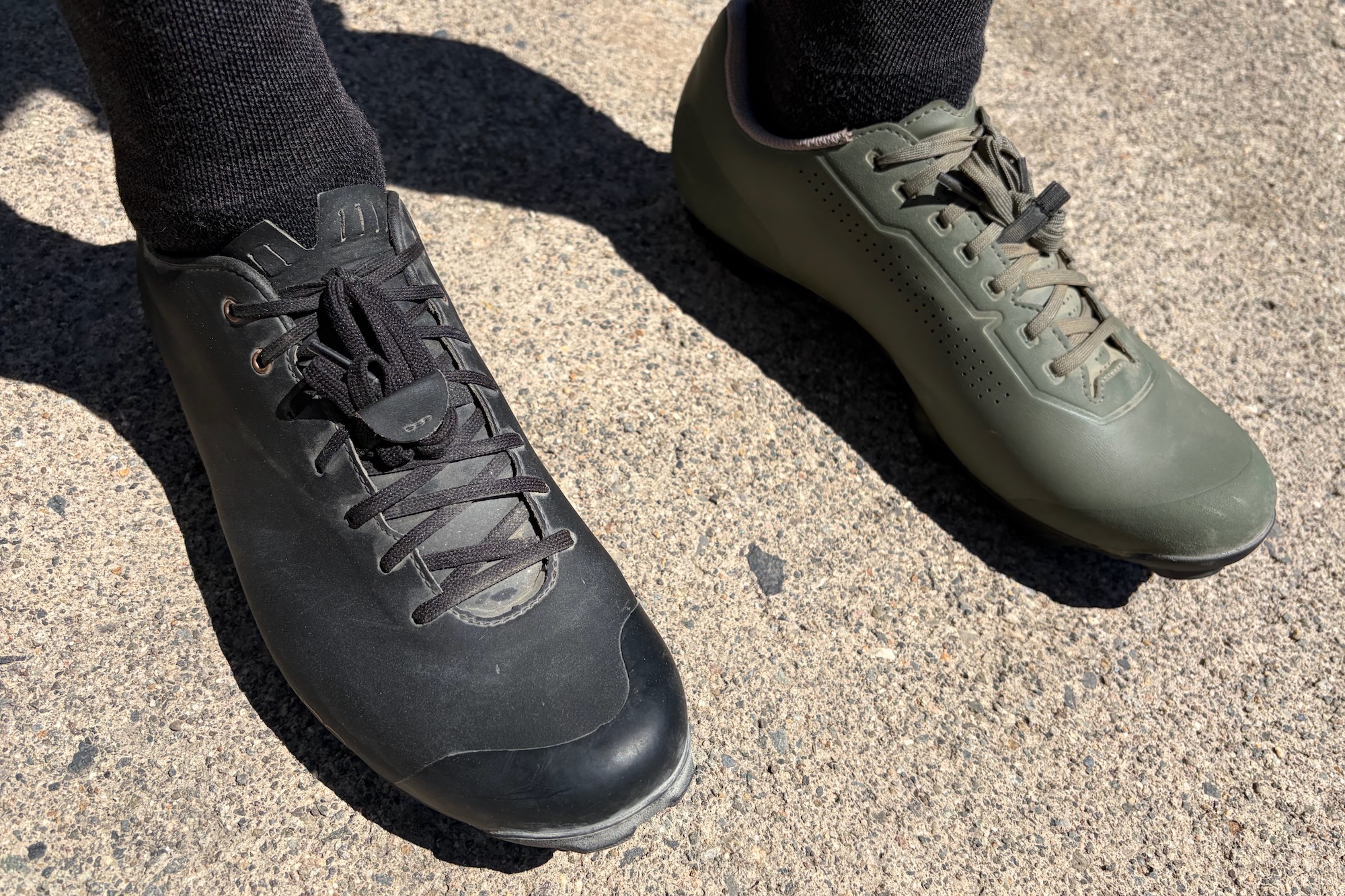
The Stylus XC is the most affordable model in Giro’s lineup of off-road footwear. While they retail for just $125, they share very similar styling to their more expensive siblings, with a consistent design language throughout the line. As mentioned, they are a spitting image of Giro’s Empire XC shoes, which retail for $375.
The Stylus XC has a one-piece synthetic upper with some light reinforcement over the toes and around the heel. There are perforations on both sides of the midfoot, along with more on the lightly padded tongue for ventilation and breathability. Simple tubular laces secure the shoe on the foot, with an elastic retainer to keep them tidy.

Underfoot, an injection-molded nylon and glass fiber sole provides the pedaling platform. The sole has a standard two-bolt cleat mount with hash marks to help with alignment. A grippier rubber tread is co-molded to the nylon/glass fiber sole, with sturdy lugs at the toe, heel, and bordering the cleat box.
The Stylus XC shoes come in whole EU sizes 36 to 48, not half sizes here. They are relatively average in width in the heel, midfoot, and forefoot, before narrowing pretty sharply at the toes. Inside, Giro included a simple, thin foam footbed.

Fit and Comfort
I typically wear a size 43.5 in Giro shoes, including the aforementioned Empire XC. With whole sizes only for Stylus XC, it was recommended that I size up to a 44, and I’m glad I did. The 44 is just a touch long in the toe compared to my typical 43.5, but not so roomy that it’s problematic. The way the shoe narrows toward the toes results in a secure, slop-free fit regardless.
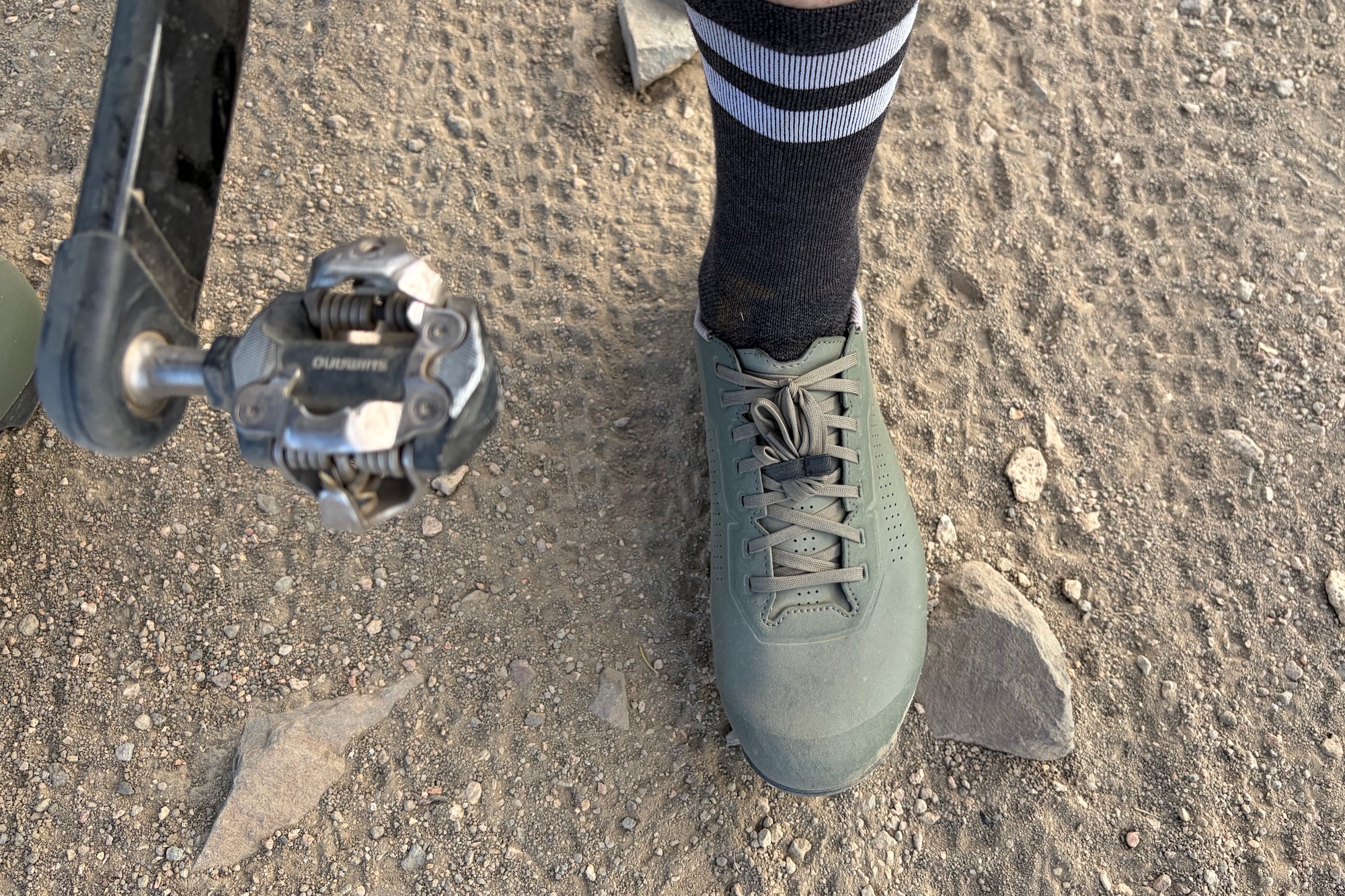
The synthetic uppers felt supple and comfortable right out of the box, and the laces have provided even tension and a snug hold of my foot while riding. While I do love the convenience of BOA systems, I can’t deny the comfort of laces, plus I’m a pretty big fan of the classic looks. My heels have stayed firmly in place in the deep and lightly padded heel pocket; my feet haven’t moved around at all in these shoes.
My only real complaint about the Stylus XC is the flat, thin footbed, which doesn’t really have any contouring or provide much in the way of support. I suppose that’s to be expected at this price point, and I’ll be putting a more supportive aftermarket footbed in for future rides.
Ride Impressions

On the pedals, I’ve found the Stylus XC to provide an excellent balance of pedaling efficiency and comfort. There’s a touch of sole flex when really smashing on the pedals, especially when compared to the super-stiff soles of the Empire XC, but they don’t feel nearly as flexy as I expected for the price. I often find that I can feel the pedal through the sole of some entry-level XC shoes, not so with the Stylus XC.
While they may not be race shoe stiff, they’re also not meant to be. I think the Stylus’s moderately stiff sole and snug fit will provide most non-competitive riders with plenty of efficiency on the pedals, without feeling overly stiff or punishing the way some super rigid soles can. For a couple of quick comparisons, they are much stiffer underfoot than the Fizik Terra Atlas, and they feel pretty much on par with the Crankbrothers Candy Lace, another similar lace-up off-road shoe.
The cleat mount area has plenty of adjustment for my needs. The lugs bordering the cleat box interfaced with both the Shimano XT and Wolf Tooth DEL gravel pedals I’ve tried them with, providing some extra lateral support. Off the bike, a little rocker in the sole and a bit of flex by the toes allow for a fairly normal gait. The rubber lugs grip well enough on most surfaces, but like any other XC shoes, I wouldn’t go out of my way to walk long distances in them.
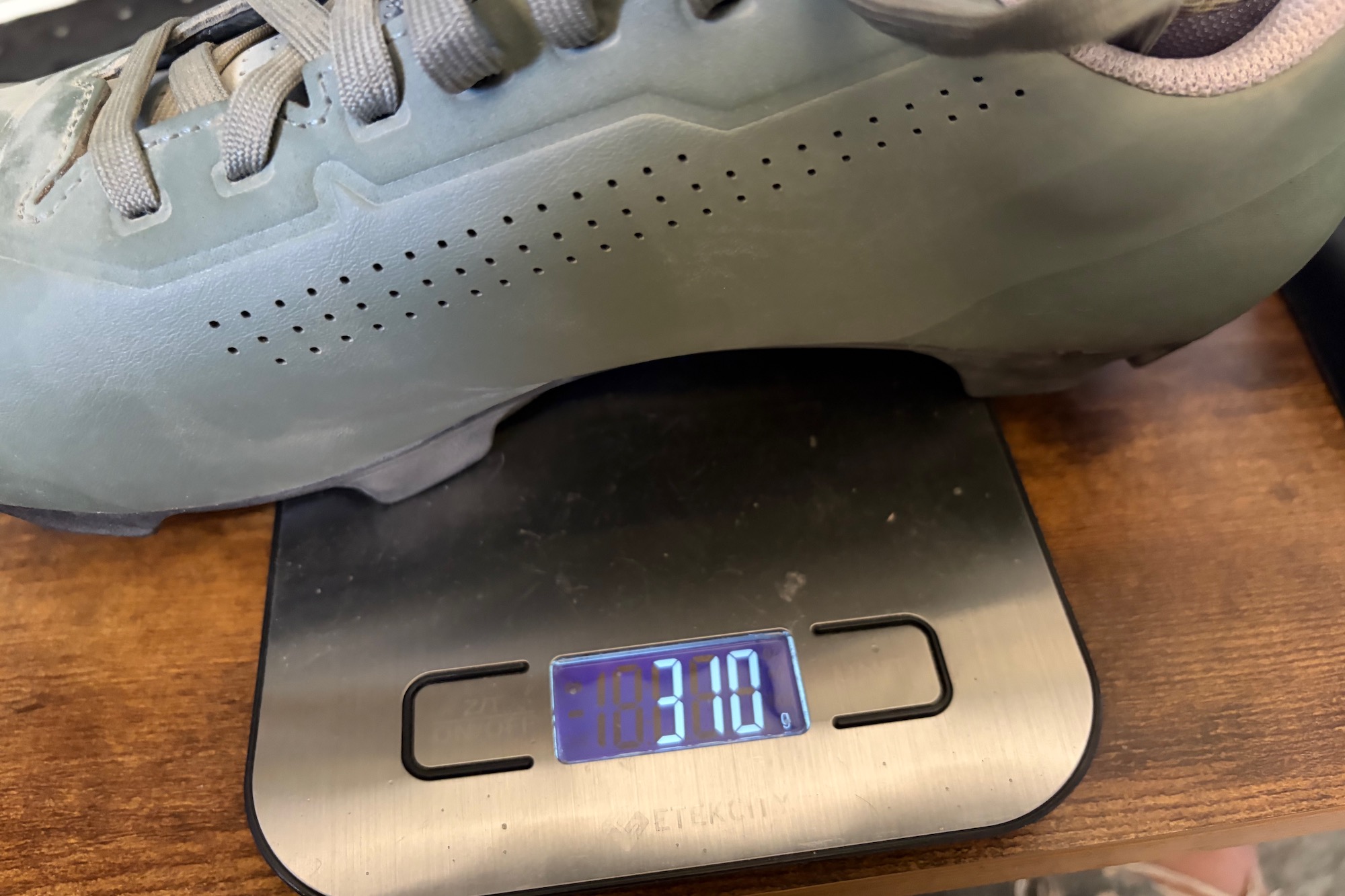
At just 310 grams per shoe in a size 43.5, they’re also very light on the feet. In this case, the budget-friendly price certainly doesn’t come with a weight penalty. Nor does it come with a style penalty. I think Giro nailed it by giving the Stylus XC a timeless look that hides their budget-friendliness. They look strikingly similar to other shoes on the market that cost two to three times the price, including Giro’s own Empire XC.
My Takeaway
You can easily spend $400+ on a new pair of bike shoes, but unless you’re racing or seeking very specific performance attributes or marginal gains, you probably don’t need to. For most riders, a shoe like the Giro Stylus XC will get the job done while keeping a bunch of money in your pocket. Beyond the basic footbed, I really don’t have any other complaints about these shoes.
I’d be happy to wear these on any XC or gravel ride that doesn’t involve a number plate or timing system. I think their combination of comfort, solid pedaling efficiency, classic looks, and affordability makes them one of the best values on the market.