The first summit finish awaits. As long as you are patient because today’s stage is a marathon by modern grand tour standards at 246km so it will take some time before the riders tackle the slopes of the Blockhaus.

Polemica napoletana: the Giro went to Naples for the fifth consecutive year with a flat finish by the sea. When the route was announced it was easy to assume the finish would be the same as usual. Only it wasn’t, and everyone who discovered this change – be it over winter, this spring or yesterday morning – could see the cobbled U-turn and thought: “that’s risky” and “it better not rain”.
It started to rain as the race approached, Italian TV commentators reported umbrellas going up at the finish while the peloton was 2.5km away. Going into by then infamous last corner Elmar Reinders fell first, his back wheel washing out and taking his sprinter Dylan Groenewegen with him – have the Rockets uploaded a video with screeching tire sound effects and a sad trombone? – prompting others to brake and more fell. Davide Ballerini and Jasper Stuyven took a tighter line and stayed upright and Ballerini was able to sprint for the win with Stuyven later complaining he couldn’t change gears. As the two got round it’s proof the bend was rideable, but equally the propensity for a crash was high. The good news is that nobody was badly injured.
Despite almost coming to a halt, Paul Magnier calmly clipped a foot back in and rampaged past the traffic to take third place. Perhaps he would have won? More certainly he took plenty of points and now has 134, more than double that of Jonathan Milan.

The Route: A long day at 246km – the longest grand tour stage since 2021 – so there’s plenty to tire the riders before they reach the final climb of the day with 4,600m of vertical gain, most of it before Roccamorice and the final climb. Part of the distance comes from doing a 50km loop at the start out of Formia.

The Finish: 18km at over 8% so comparable to Mont Ventoux in terms of stats; and anecdotally often windy too. The road goes on to over 2,000m to the Blockhaus peak proper but the finish today at 1,665m is plenty for the first week.
Blockhaus? a lot of Italian military officers trained with the Austro-Hungarian empire and imported various techniques, including fortifications such as a Blockhaus, German for a log cabin.

The Contenders: Jonas Vingegaard (Visma-LAB) is the obvious pick, today serves as confirmation for his status as the runaway pick and we’ll know plenty this evening.
If Giulio Pellizarri (Red Bull-Bora-Hansgrohe) can out-climb him then we’ve got a race on.
Others? Yes, from the breakaway because if a solid group can go clear then have a chance of being able to stay away but this will require no GC contenders or outsiders, and then then take molto minutes during the stage so that they start the last climb with a cushion of at least five minutes. A stage winner last year Chris Harper (Pinarello-Q36.5) fits the bill, as does another winner in Einer Rubio (Movistar). Darren Rafferty (EF) and Alessandro Pinarello (NSN) could be worth watching.
 |
Vingegaard |
 |
– |
 |
Pellizzari, Harper, Rubio, Pinarello |
Weather: a cold day in the Apennines, weak sunshine and often cloud, 12°C and some rain showers too.
TV: KM0 is at 10.55 and the finish is forecast for 5.15pm CEST. Castel di Sangro is where the climb to Roccaraso begins around 2.20pm and the final climb of the Blockhaus starts around 4.30pm.
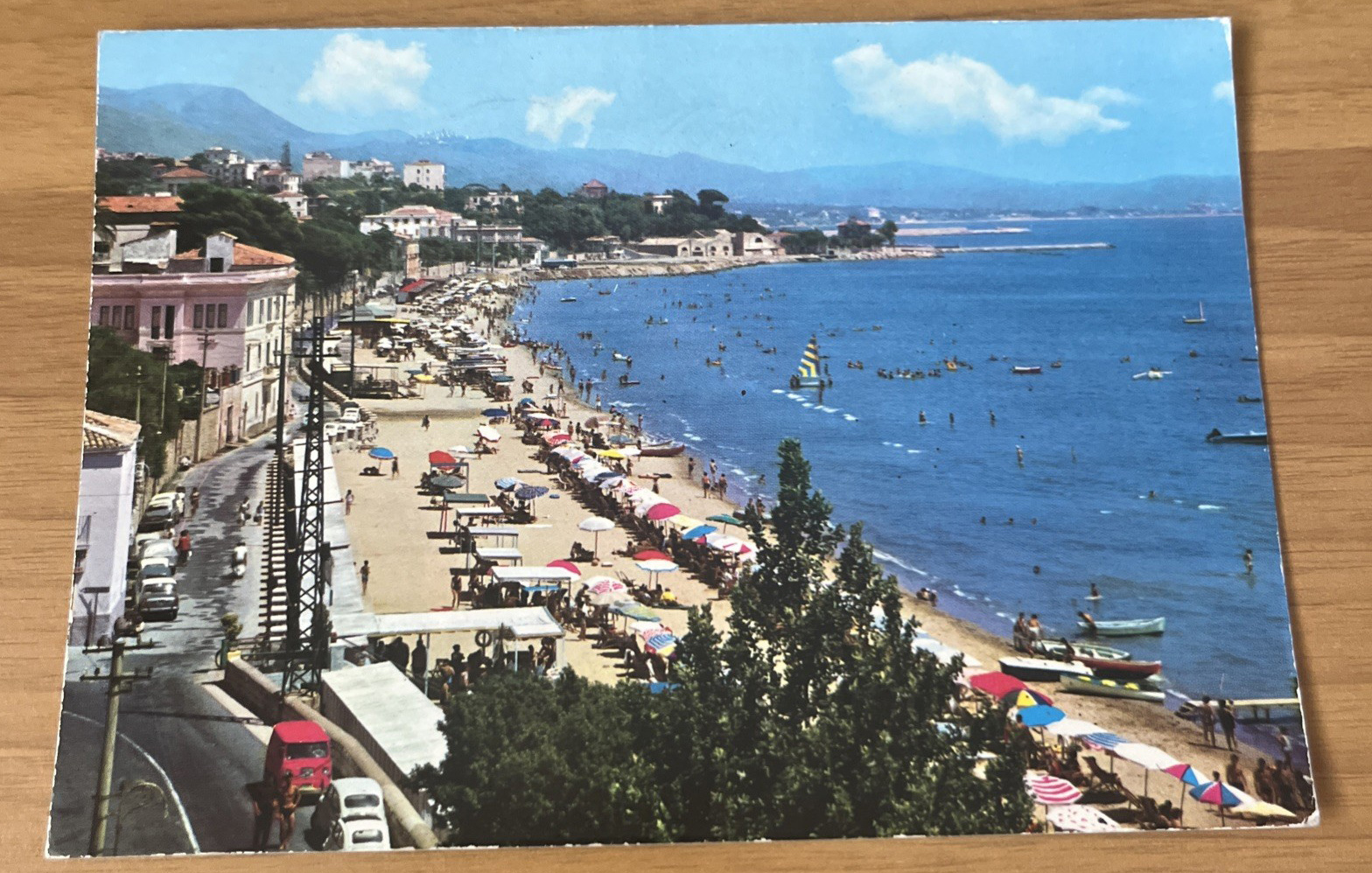
Postcard from Formia
Today’s postcard comes from the start town. Many riders might want to linger around town, if only to grab more for breakfast. The stage is 246km and could be the longest race of the year. It’s certainly the longest grand tour stage since the 2021 Tour de France did 248km from Vierzon to Le Creusot.
The Monuments are regularly normally longer when it comes to distance – Lombardia can be under 250km – but they’re one day races of course. Today could be the longest day of racing when measured by time. The start is at 10.55 and the finish is due for 17.15 which is six hours and twenty minutes, this year’s Milan-Sanremo was done in 6:35. If today takes less time, it’ll be only just. With the cold and rain, plus teams unlikely to take the fight to Visma it could be longer.
It’s a challenge for riders. Everyone in the peloton is used to high calorie consumption, often the talk is of 120 grams of carbs per hour, a round number which varies from rider to rider and different terrain and phases of the race. Being able to fuel more means being able to ride harder for longer. But how much to take on today? Just as the race can finish ahead of schedule or behind it, riders may need a wide variety of calories today depending on how hard the racing is. Better to just eat more in case? Sure but do this a few times and a rider can put on a kilo before race reaches the Alps; or their intestinal system struggles to cope with the load well before.
It’s a lot of broadcast hours. What do the commentators talk about? The hardest job is probably the moto camera crew. Holding a camera is hard work on foot, now try it on a motorbike which is moving. The worst role is Moto 2. If Moto 1 goes to cover the breakaway, Moto 2 is often filming in front of the peloton. This is done backwards, the motorbike is riding forwards but the camera has to be turned the other way. Camera operators have different techniques, some want to sit facing forward on the bike while rotating as much as they can to see what is happening behind, others find it easier to turn while standing. Remember all this the next time you’re on the sofa for six hours with snacks close to hand.