Manitou’s 37mm-stanchion Mezzer enduro fork has long offered a unique alternative for mountain bikers looking for something a little different, with its reverse arch lowers and the unique ability to easily change travel to your riding style, plus surprisingly light weight. Now in Mezzer 2.0, Manitou has fine-tuned the fork even more, creating two separate platforms. One lighter chassis tuned for racing and one heavy-duty LT long travel chassis for riders looking to push their enduro bikes harder, and into the bikepark.
Manitou Mezzer G2 is really 2 adjustable 140-190mm forks

The real headline of the new Manitou Mezzer 2.0 fork is simply that it’s actually two different forks now.
Manitou has always stood out for the ease of adjusting the travel of their air forks – just pop open the air spring and clip spacers onto the internal shaft in 10mm increments. That makes their forks versatile for mountain bikers who might want to tinker more with their setup, or even swap the fork from one bike to the next. It is also great for bike shops that don’t have to stock a bunch of different travel options to satisfy customers. But the downside has been that building one fork with 40-50mm of travel range adjustment meant that, at the low end of the travel settings, you ended up with a relatively heavy fork. And at the long end, a fork that probably wasn’t as stiff as the competition.
But Manitou had faith in their wide-ranging 37mm stanchion Mezzer. Their reverse arch design makes it as stiff but lighter than 38mm competitors, with the added suppleness bonus of 5% less seal contact area because of the smaller diameter. So they created a 2nd-generation family that gives mountain bike riders the option to prioritize lighter weight and slightly reduced travel adjustability or a Longer Travel version with increased stiffness and even more travel than ever!
What’s new?
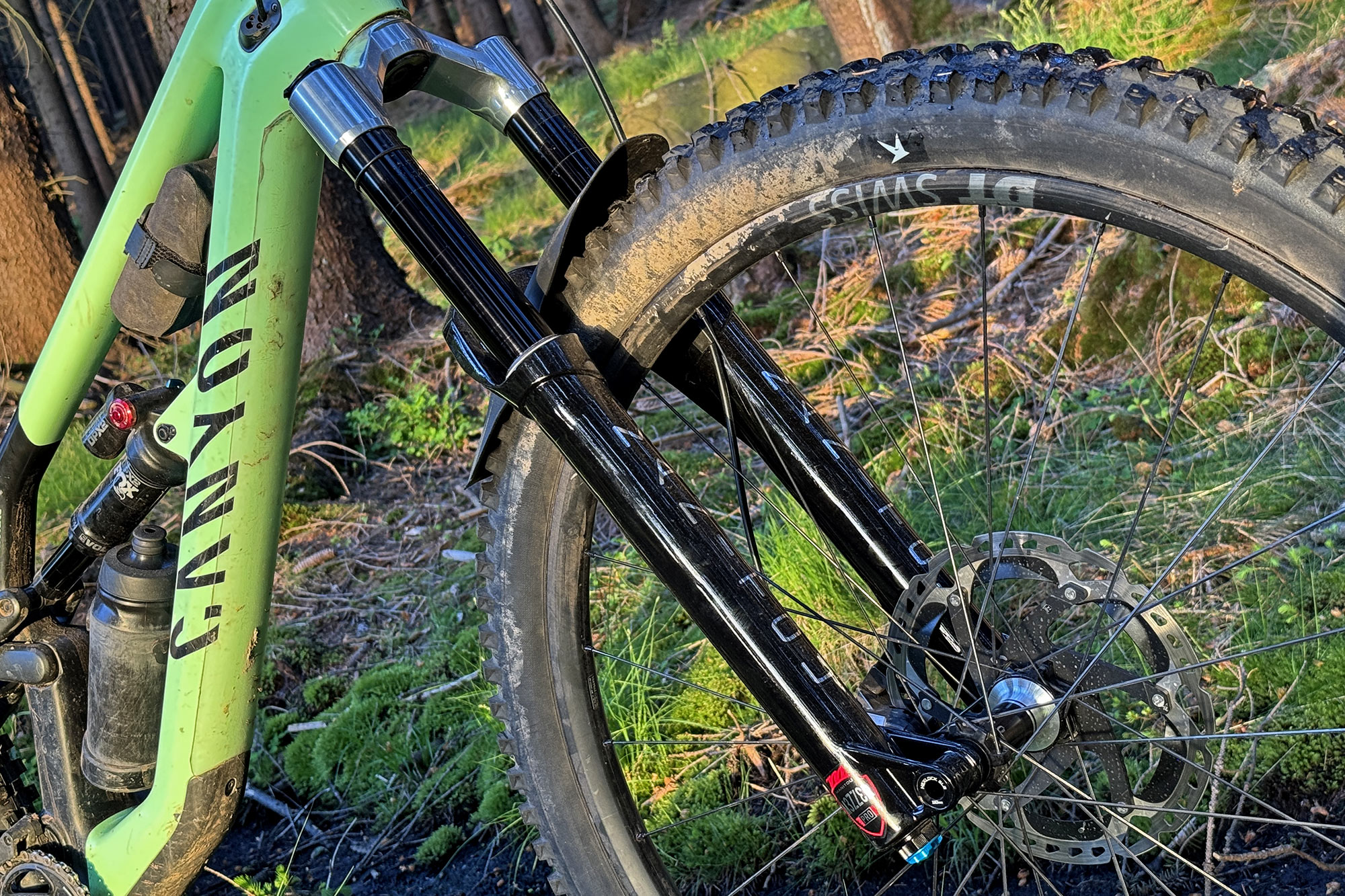
On the outside, the new Manitou Mezzer 2.0 looks almost exactly like the previous model. Sure, the top Pro spec forks now get the same polished silver crowns, like we’ve seen on the latest Mattoc, Mastodon & R8. There was even a limited edition all-silver version of the Mezzer a couple of years after it first launched with a silver tease seven years ago.
But really, Manitou is super low-key with their fork designs – even to the point that the model name is only written on a small shield logo on the side of the fork legs, just above the axle.
What’s new, really, is happening inside.
Active Spring Piston

You still get the great Dorado Air spring that makes for easy tuning with a separate air chamber and Infinite Rate Tune (IRT) chamber that lets you effectively change air spring volume with a shock pump instead of internal volume spacers. But now, on top of (or actually below) the Dorado Air is a new Active Spring Piston (ASP) that adds a small light coil spring to overcome seal stiction, reducing breakaway force in those critical first millimeters of travel. Think of it like RockShox Buttercups, or better yet, like DT Swiss’ Coilpair, since they are the ones that actually developed and patented this technology.
It’s a really effective tech that greatly improves small-bump compliance, so it’s great to see it added to Manitou forks here.
MC2 Pro-X & TPC2, plus HBO and an ABB
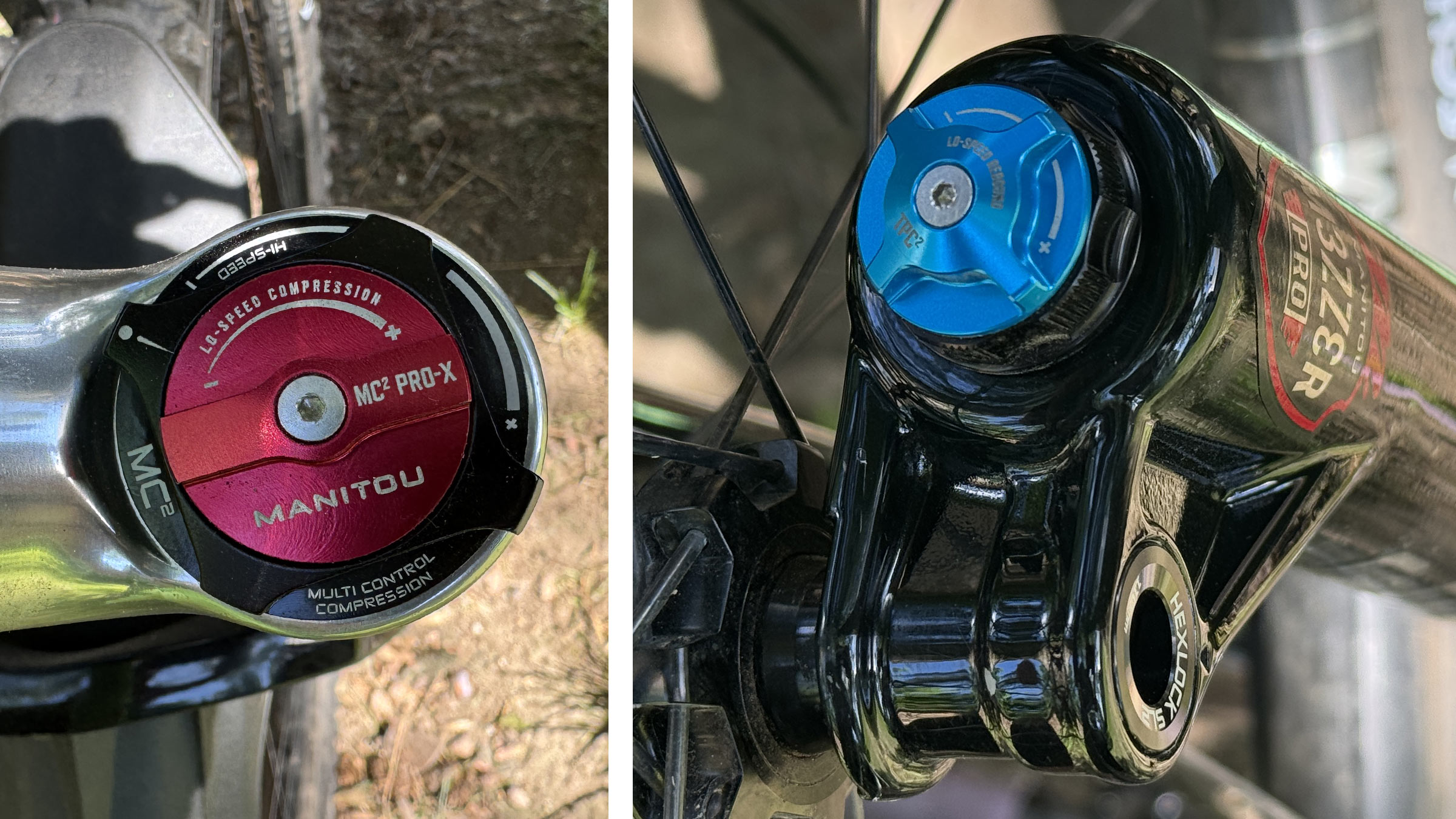
Gotta love a bunch of silly acronyms, right?
Basically, this just means that the Mezzer’s top-tier damper cartridge in its right leg is better than ever. It has a wider damping adjustment range, and it now adds independent external high-speed and low-speed rebound damping (HSR & LSR) controls. Plus, there’s new hydraulic bottom-out protection.
And the forks get a new “air-backed bladder system (ABB) to maintain oil pressure and eliminate cavitation” as opposed to a conventional IFP (internal floating piston) for faster damping, more consistency, increased sensitivity, and less internal friction.
More precise manufacturing and an MBA
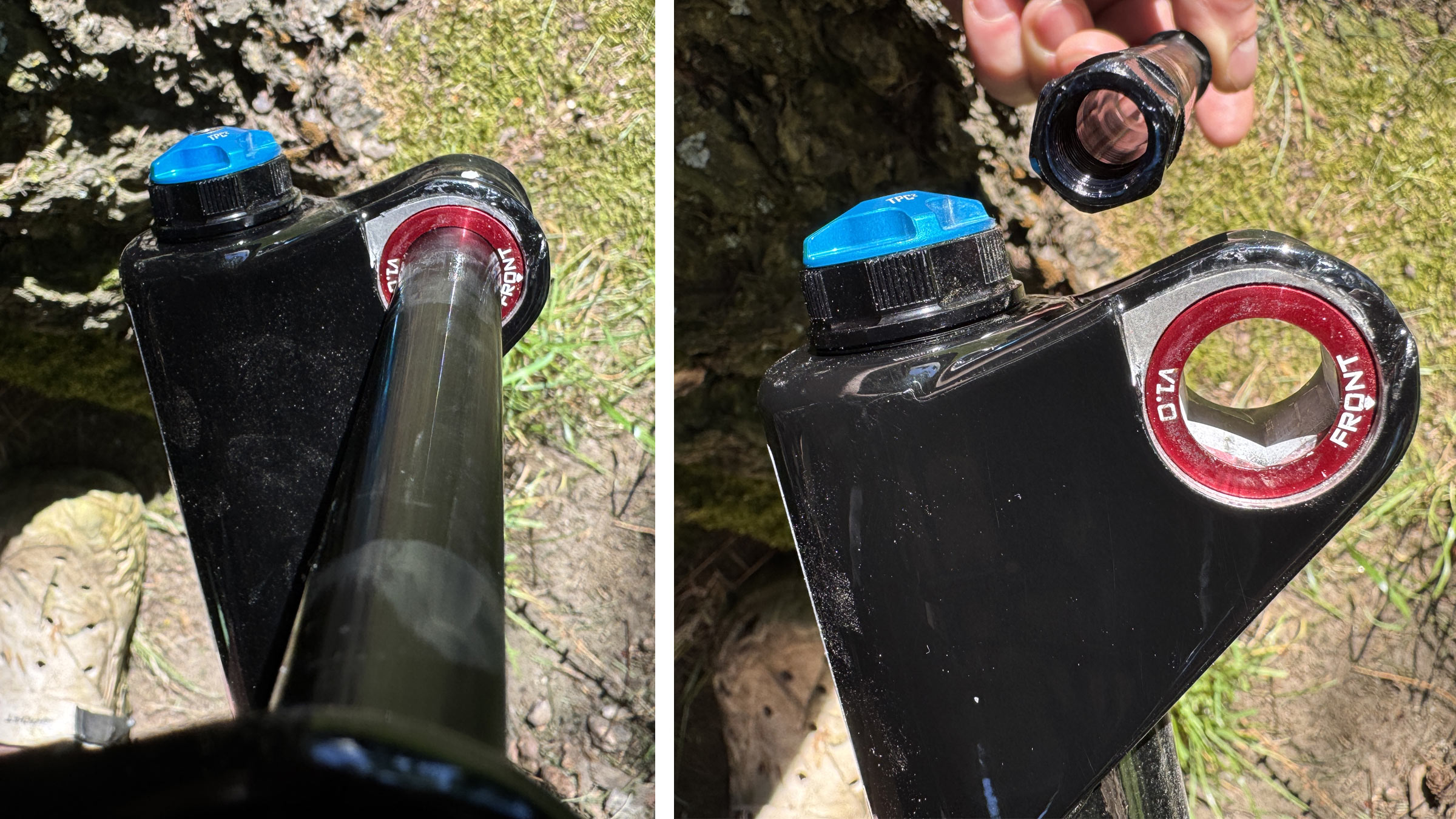
OK, the acronyms are out of hand. The MBA here is a new Micromanager Bushing Alignment solution. Smooth functioning of bushings is critical inside long-travel forks. So first, Manitou increased bushing overlap on the Mezzer G2 to increase smooth action. But them, they also introduced more precise quality control of their machined lowers castings to make sure everything stays aligned perfectly.
And to make sure the stanchions, lowers & bushings stay aligned, Manitou added a small new red insert at the dropout of the Pro- & Expert-level forks, so when you tighten down the axle, you don’t pull the legs out of alignment. It’s a small but often overlooked topic that small dropout misalignment can introduce friction into your fork and increase wear. It’s the reason why many longer-travel forks use a floating axle design – where you have to first attach the thru-axle, then separately tighten a pinch bolt to secure it, even leaving what seems like play between the hub endcaps & dropout faces to ensure fork alignment and smooth action.
So, Manitou selects the perfect MBA inserts, measured precisely to fit during their fork assembly, so your hub gets tightened into place with the Hexlock thru-axle, without pulling the legs out of perfect alignment.
New Tech Details
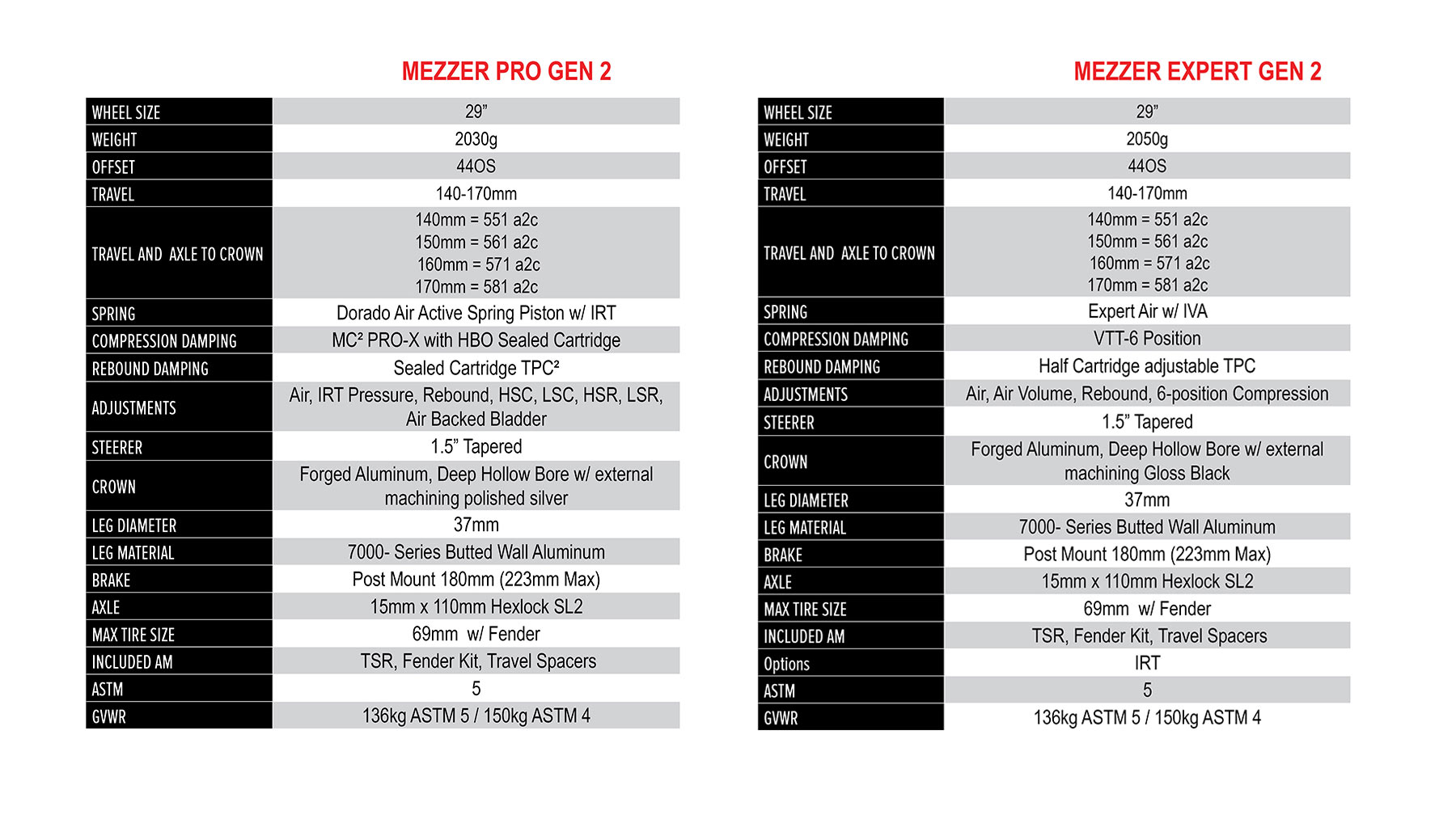
- more travel adjustment ranges: 140-170mm for Pro & Expert, 150-190mm for LT Pro & 140-190 for LT Comp
(internal travel adjust spacers included with all forks) - same 37mm butted 7000-series alloy stanchions
- Dorado Air Active Spring Piston with IRT
- MC2 Pro-X with HBO sealed cartridge compression damping
- sealed cartridge TPC2 rebound damping
- more adjustability: air spring pressure, IRT pressure, new air-backed bladder, HSR & LSR rebound damping, HSC & LSC compression damping
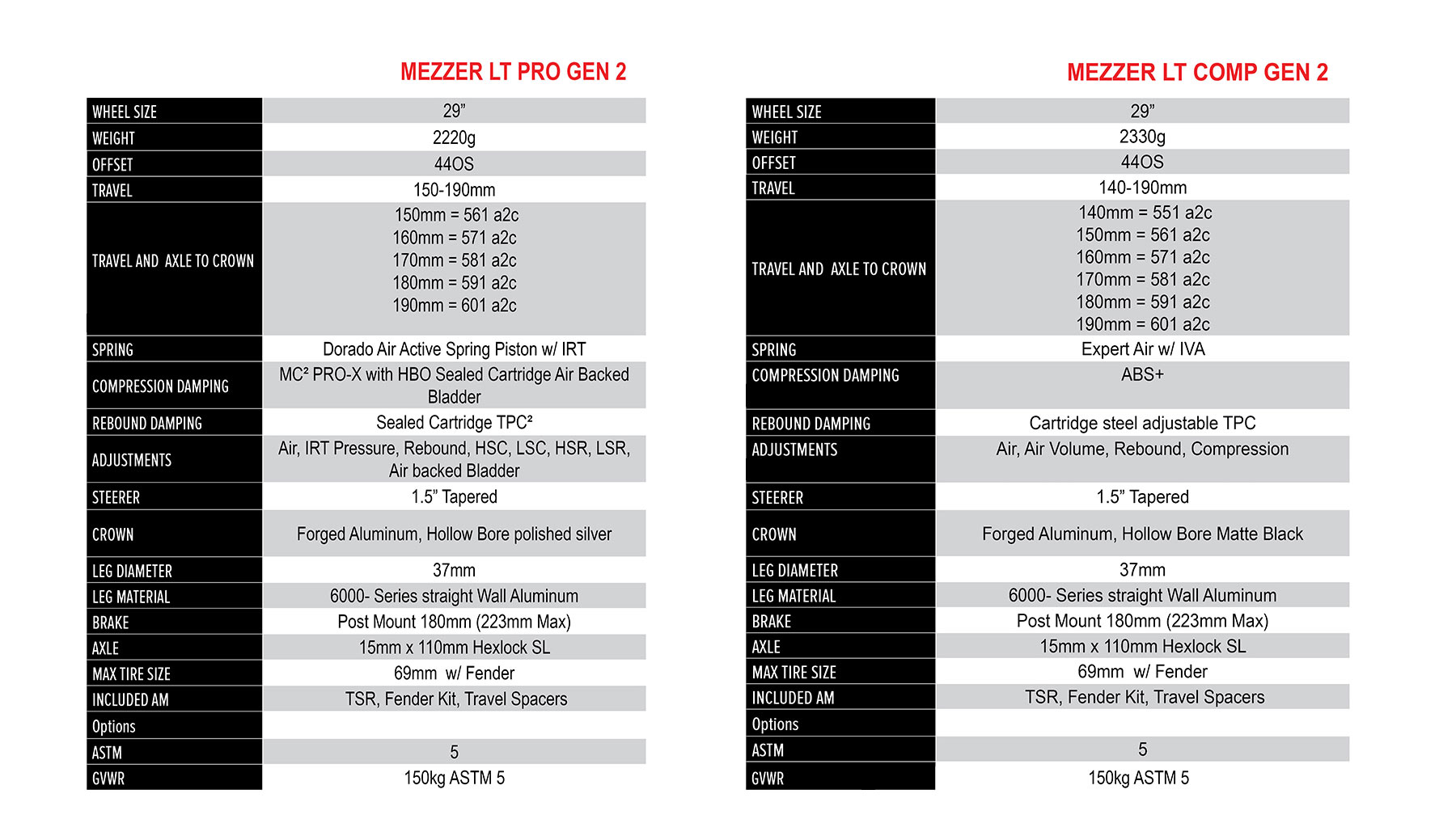
- new polished silver crown for Pro models
- new forged & CNC-machined deep hollow bore crown for all lightweight chassis models
- Hexlock SL2 15x110mm Boost thru-axle now on lightweight chassis models, and Hexlock SL for LT models
- now 29er-only, with just one 44mm offset available
- same 2.7″ max tire width (69mm)
- lightweight chassis now rated ASTM Category 5 (Bikepark & DH) for combined rider+bike weights up to 136kg/300lb, or Cat 4 (~enduro) up to 150kg/350lb. LT forks all rated Cat 5 up to 150kg/350lb.
First Plush Rides
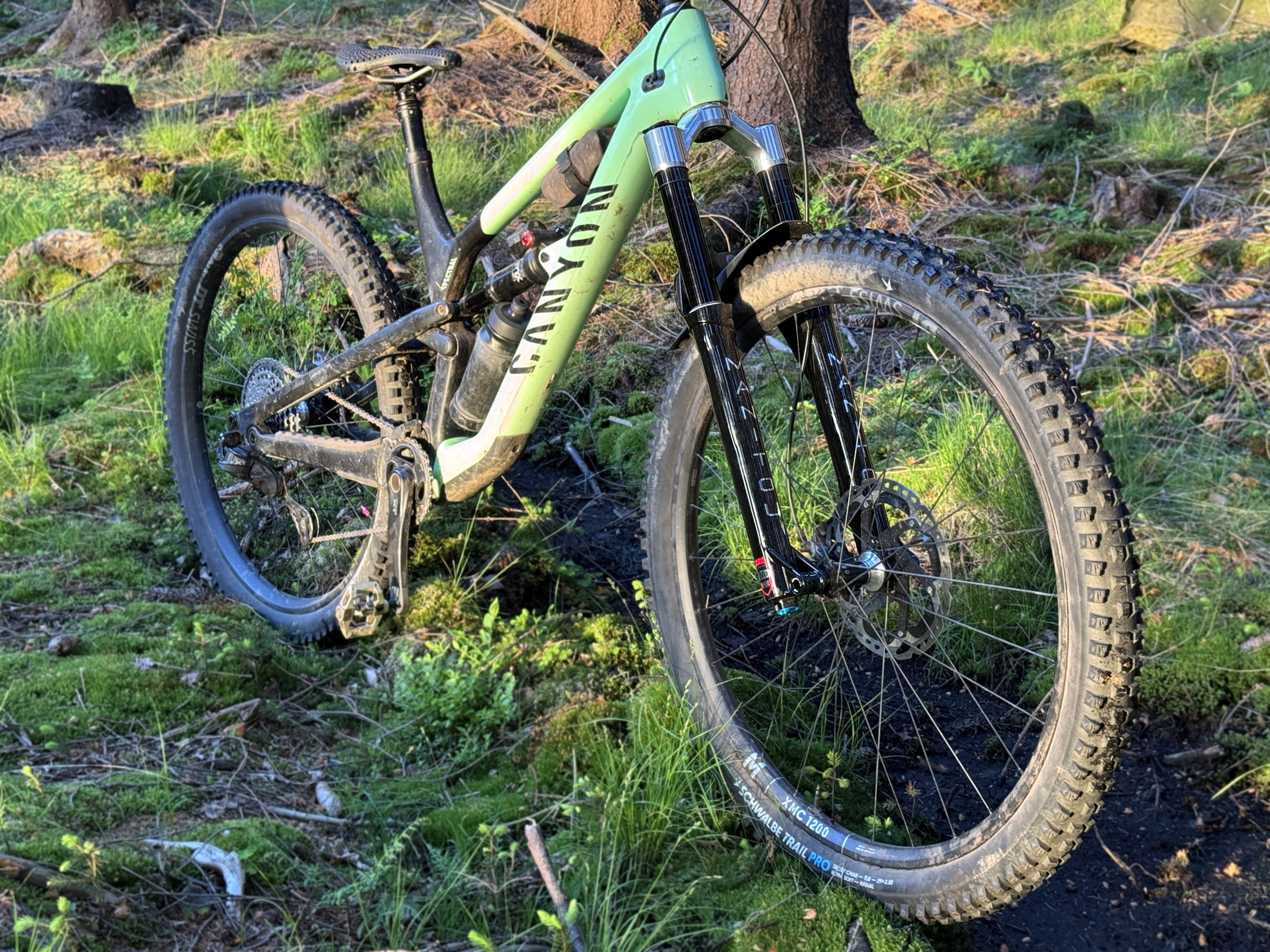
Altogether, there’s a lot of smart new tech in these two new Mezzer 2.0 fork families, promising overall suspension improvements that we look forward to digging deeper into over the next few months.
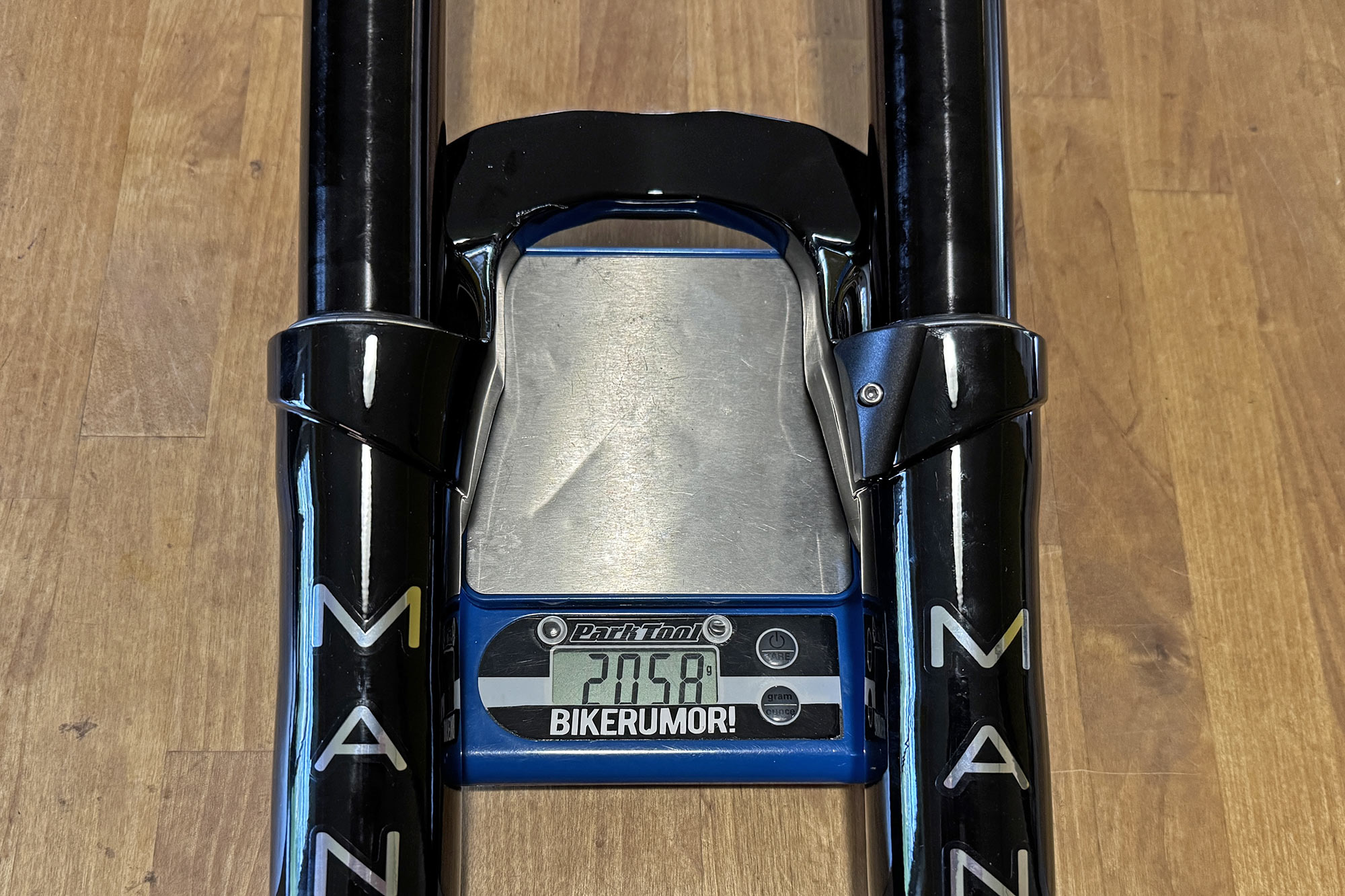
We’ve just now received a Mezzer Pro gen2 fork to test (actual weight 2058g, uncut steerer with 10mm spacer added to reduce travel to 160mm). And the first couple of rides can be described as incredibly plush.

Now it’s time to dig a bit more into fine-tuning the IRT for the optimal mid-stroke support. And then to test out the wider range of external damping controls.
And after that, to pop it back up to 170mm of travel on a bigger bike and get to some enduro racing on a lighter fork!
2026 Manitou Mezzer 2.0 forks – Pricing, options & availability

The new gen 2 do-it-all trail to enduro to gravity fork is available in four models – two each of the lighter or longer-travel versions.
The simply named Manitou Mezzer (not listed as G2, even though it is) with 140-170mm travel adjustability comes in a top-spec Pro version for $1200 / 1200€ at a claimed 2030g, or a more affordable $900 / 900€ Expert spec that’s just 20g heavier.
The longer travel Mezzer LT G2 comes in the 150-190mm travel $1200 /1200€ Pro model at a claimed 2220g, and in an even more travel adjustable 140-190mm Comp fork for just $600 / 600€ at a claimed 2330g.
There is no entry-level Comp fork in the lighter chassis, or a mid-spec version of the longer travel chassis. Manitou seems to have rightly surmised that those seeing the lightest weight would go for the more premium builds, and those looking for maximum value would be happy with more money in their wallets at the cost of just a hundred grams.
All 4 versions of the 2nd-generation Manitou Mezzer fork are available now in the USA & Europe from your local dealer shop, or directly from the Hayes group, now.
The post Manitou Mezzer 2.0 MTB Forks Ride Trail to Gravity on Light & Adjustable Long Travel appeared first on Bikerumor.